How Do I Know If My Baby Is Getting Enough Milk?
One of the most common worries for new parents is whether their baby is getting enough breast milk. Since you can't measure what's going into your baby the way you can with a bottle, it helps to understand the signs of healthy intake.
Signs Your Baby Is Feeding Well
If your baby is getting enough milk, you'll notice the following signs:
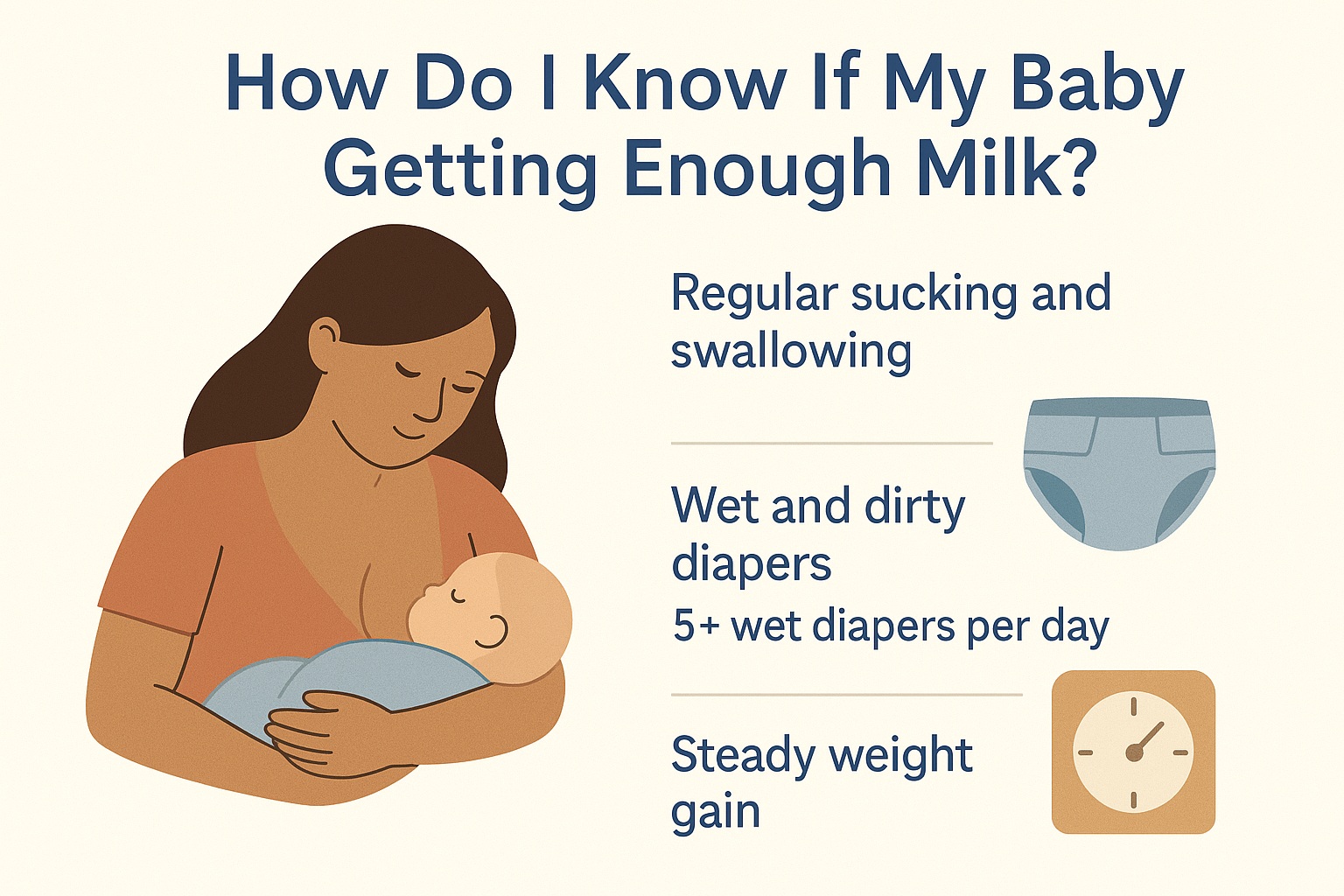
- Frequent feeding: Your newborn feeds 8–12 times in 24 hours.
- Swallowing sounds: You can hear rhythmic sucking and swallowing while nursing.
- Content after feeding: Your baby seems satisfied and relaxed after a feed.
- Steady weight gain: After the first week, your baby steadily gains weight.
Diaper Output as a Key Indicator
One of the best indicators of milk intake is diaper output. Here's what to expect:
- Day 1–2: At least 1–2 wet diapers per day
- Day 3–4: At least 3–4 wet diapers, and stools begin turning from black to greenish
- After Day 5: At least 6 wet diapers and 3 or more yellow, seedy stools per day
Stools may become less frequent as the baby gets older, but wet diapers should stay consistent.
Weight Gain Patterns
Typical weight milestones include:
- First week: It's normal for babies to lose up to 10% of their birth weight.
- By 10–14 days: Most babies regain their birth weight.
- Afterward: Expect a gain of about 150–200 grams (5–7 ounces) per week.
What If You're Not Sure?
If you have any of these concerns, it's best to contact your pediatrician or a lactation consultant:
- Your baby is sleepy and hard to wake for feeds
- Not enough wet or dirty diapers
- Weight gain is slow or stagnant
- Baby seems unsatisfied after every feed
Tips to Ensure Adequate Intake
- Offer both breasts during each feeding
- Make sure your baby has a good latch
- Avoid early introduction of bottles or pacifiers if you're establishing breastfeeding
- Breastfeed on demand, not on a strict schedule
Conclusion
Monitoring your baby's behavior, diaper output, and weight gain gives you a good picture of how well they are feeding. When in doubt, don't hesitate to consult a professional. Every baby is different, but with support and information, you'll gain confidence in your breastfeeding journey.
Frequently Asked Questions
Can I trust diaper output over feeding length?
Yes. Diaper output is a much more reliable indicator than how long your baby nurses. Some babies feed efficiently in minutes; others take longer.
Do I need to weigh my baby at home?
It's not required, but weekly weight checks at your pediatrician's office are helpful in the early weeks. If you're concerned, some clinics offer free weight checks.
What if I think I have low milk supply?
Low milk supply is often mistaken for normal behavior like cluster feeding. Work with a lactation consultant before assuming your supply is low—they can help you assess and boost it if needed.
It takes a village to raise a child !
Join our WhatsApp Parenting Chat Groups By Area in Singapore.
Subscribe to Our Newsletter to get important information about pregnancy and parenting.