

Cognitive Dissonance in Parenting: Managing Conflicting Advice in the Digital Age
Babyment
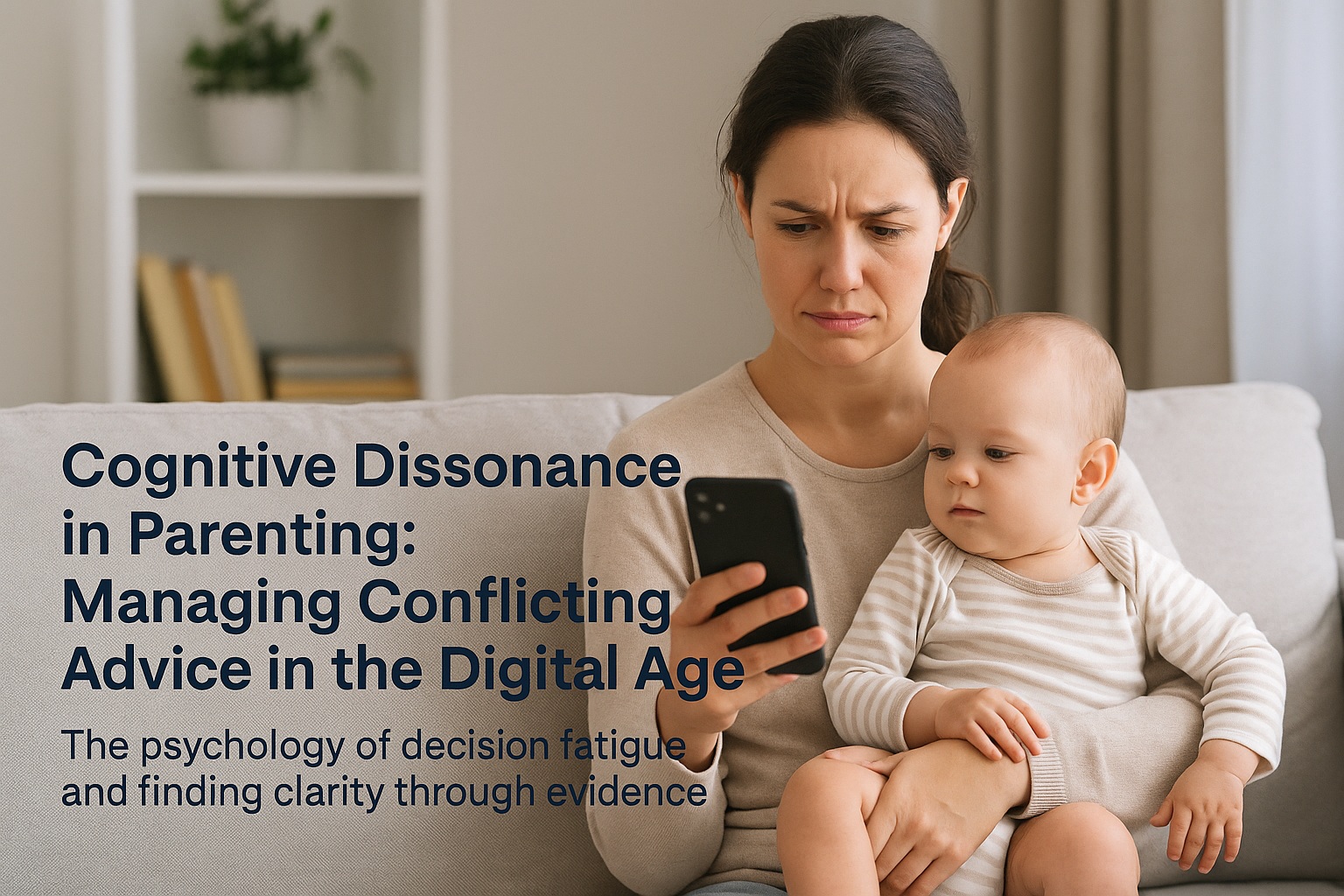
Modern parents are bombarded with parenting advice from all directions — social media, parenting blogs, relatives, pediatricians, and even strangers online. While access to information can be empowering, it can also lead to cognitive dissonance — the psychological discomfort that arises from holding conflicting beliefs or receiving contradictory guidance.
What Is Cognitive Dissonance?
Coined by psychologist Leon Festinger, cognitive dissonance occurs when a person experiences internal conflict due to inconsistent thoughts, beliefs, or attitudes. For parents, this might mean questioning their choices when exposed to opposing viewpoints, like breastfeeding vs. formula feeding, screen time limits, or sleep training methods.
Decision Fatigue in the Age of Information Overload
With the explosion of parenting content online, parents often face decision fatigue — a state of mental exhaustion caused by the need to make too many choices. This fatigue can increase anxiety, reduce confidence, and even lead to parental burnout.
Common Sources of Parenting Conflict
- Social Media Influencers: Highlight curated, often unrealistic standards of parenting.
- Family Traditions: May clash with modern evidence-based practices.
- Conflicting Medical Advice: Varying pediatric guidelines across countries and professionals.
The Psychology of Finding Clarity
Studies show that parents who reflect on their values and trust well-sourced, science-backed information are better equipped to manage conflicting advice. Clarity comes from self-awareness, emotional regulation, and community support — not simply from accumulating more information.
Evidence-Based Strategies to Cope
- Filter information sources: Prioritize reputable health organizations (AAP, WHO, etc.) and avoid sensationalism.
- Practice reflective parenting: Pause and evaluate what aligns with your family’s values and your child’s unique needs.
- Limit exposure: Reduce social media usage if it causes anxiety or self-doubt.
- Seek professional guidance: When in doubt, consult a trusted pediatrician or licensed child psychologist.
Conclusion
Parenting in the digital age offers incredible resources, but also overwhelming choices. Recognizing cognitive dissonance, managing decision fatigue, and relying on evidence-based strategies can help parents find peace and confidence in their decisions.
Frequently Asked Questions (FAQ)
Q1: What is cognitive dissonance in parenting?
A1: It refers to the mental discomfort that arises when parents encounter conflicting advice or beliefs about how to raise their children.
Q2: Why is parenting advice often so contradictory?
A2: Parenting styles are influenced by culture, personal values, evolving research, and social trends — leading to varied perspectives and disagreements.
Q3: How can I know which parenting advice to trust?
A3: Look for recommendations based on large-scale studies, endorsed by reputable institutions (like AAP or WHO), and backed by peer-reviewed evidence.
Q4: What are the signs of decision fatigue in parents?
A4: Feeling overwhelmed, emotionally drained, avoiding choices, or second-guessing every decision can indicate decision fatigue.
Q5: How can I reduce anxiety from conflicting parenting advice?
A5: Set boundaries around information intake, focus on your values, and talk to a pediatric expert to gain perspective and reassurance.

© Babyment. All Rights Reserved. 