

How Mirror Neurons Shape Child Behavior
Babyment
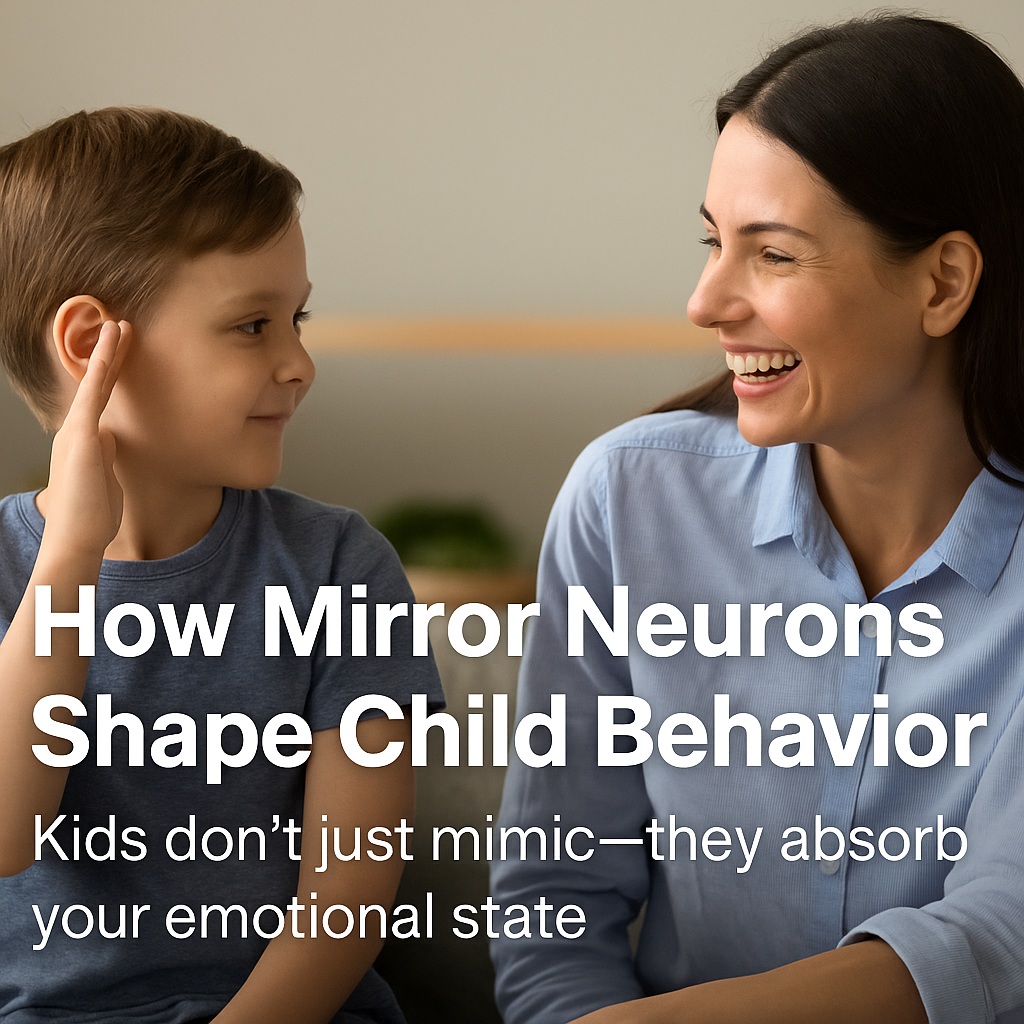
Children are natural imitators. But beneath their mimicking lies a powerful neurological system—mirror neurons—that allows them to not only copy actions but also absorb emotions, intentions, and mental states. These neurons form the foundation for empathy, language, and emotional intelligence. Understanding this system can help caregivers and educators nurture healthy development and behavior in children.
What Are Mirror Neurons?
Mirror neurons are specialized brain cells that fire both when a person performs an action and when they observe someone else performing the same action. First discovered in macaque monkeys by Italian neuroscientists in the 1990s, researchers later found a similar system in humans, particularly in the premotor cortex and inferior parietal lobule.
For example, when a toddler watches a parent pick up a spoon, the toddler's mirror neurons simulate the same motion in their brain—even if they don’t physically move. This creates an internal rehearsal that aids motor development, learning, and social understanding.
The Role of Mirror Neurons in Child Development
In children, the mirror neuron system helps develop:
- Motor skills – Watching others walk, eat, or stack blocks teaches children how to perform these actions themselves.
- Language – Children observe lip movements and vocal tones, mirroring the rhythm and pitch of speech during language acquisition.
- Empathy and emotions – By mirroring facial expressions, posture, and tone of voice, children begin to feel what others feel—laying the groundwork for empathy and emotional intelligence.
Emotional Contagion: How Children Absorb Feelings
Mirror neurons are central to emotional contagion, the process by which children “catch” the emotional states of those around them. A parent’s stress, joy, or anger can trigger corresponding brain activity in the child, leading to similar emotional responses.
This neural empathy helps explain why:
- A parent’s consistent calmness fosters emotional regulation in children.
- Exposure to frequent yelling may result in increased aggression or anxiety in a child.
- Even infants respond to a caregiver’s sadness with changes in mood or behavior.
Important: Young children don’t yet have the cognitive maturity to separate their feelings from others’, so they often internalize what they observe without fully understanding it.
Real-World Parenting Implications
Understanding mirror neurons offers actionable strategies for caregivers:
- Model behaviors you want to see: Children mimic tone, body language, and habits—whether helpful or harmful. Your patience becomes their patience; your kindness becomes their default response.
- Practice emotional labeling: Say things like “I feel frustrated, but I’m going to take a deep breath.” This teaches children how to recognize and manage emotions.
- Repair after mistakes: It’s okay to lose your temper—what matters is how you respond. Apologizing shows children how to take responsibility and rebuild trust.
- Minimize harsh discipline: Harsh or inconsistent punishment activates fear responses. Positive reinforcement and calm correction activate mirror neurons in safer, more effective ways.
Neuroscience Meets Discipline
Discipline styles shape the development of the mirror neuron system:
- Authoritative parenting (high warmth, firm boundaries) supports healthy neural mirroring and self-regulation.
- Authoritarian parenting (high control, low warmth) may lead to anxiety, compliance without empathy, or emotional suppression.
- Gentle discipline methods like emotion coaching, reflective listening, and modeling respectful behavior align closely with how mirror neurons function.
Early Signs of Mirror Neuron Activity in Kids
- Babies mimic facial expressions within weeks of birth.
- Toddlers “pretend play” by feeding dolls or dressing up like adults.
- Children laugh when others laugh—even without understanding the joke.
- They imitate posture, hand gestures, and accents just from exposure.
Mirror Neurons and Neurodiversity
Some research suggests children with autism spectrum disorder (ASD) may show differences in mirror neuron activity, particularly related to facial mimicry and empathy. However, this is an evolving area of research, and many neurodivergent children still learn effectively through observation and modeling with the right supports.
FAQs
1. Can mirror neurons explain tantrums?
Yes. Children exposed to yelling or chaotic emotions may mirror those behaviors when they feel overwhelmed. Calm, responsive parenting helps rewire this cycle over time.
2. Is it enough to just model good behavior?
Modeling is powerful, but children also need boundaries, explanations, and support to understand context. Combine modeling with discussion, emotional coaching, and consistent expectations.
3. Can screen time affect mirror neuron development?
Possibly. Children learn more effectively from real-life human interaction. Excessive passive screen use may limit opportunities to activate mirror systems that require face-to-face cues like eye contact, tone, and gesture.
4. How can I repair when I’ve lost my cool?
Say something like, “I was feeling really upset and shouted. That wasn’t okay, and I’m sorry. Next time I will try to calm down first.” Children learn by watching your repair, not your perfection.
Conclusion
Mirror neurons are a biological reminder that children learn with their eyes, ears, and hearts. Every expression, tone, and reaction you offer is shaping their developing minds. By choosing connection, self-regulation, and compassion in your daily parenting, you lay the foundation for empathy, resilience, and emotional health that lasts a lifetime.
Children may not always do what we say—but they will become what we model. That’s the power of mirror neurons—and the power of mindful parenting.

© Babyment. All Rights Reserved. 