

Language Lags & “Frequent/Severe” Tantrums: When to Screen for Speech
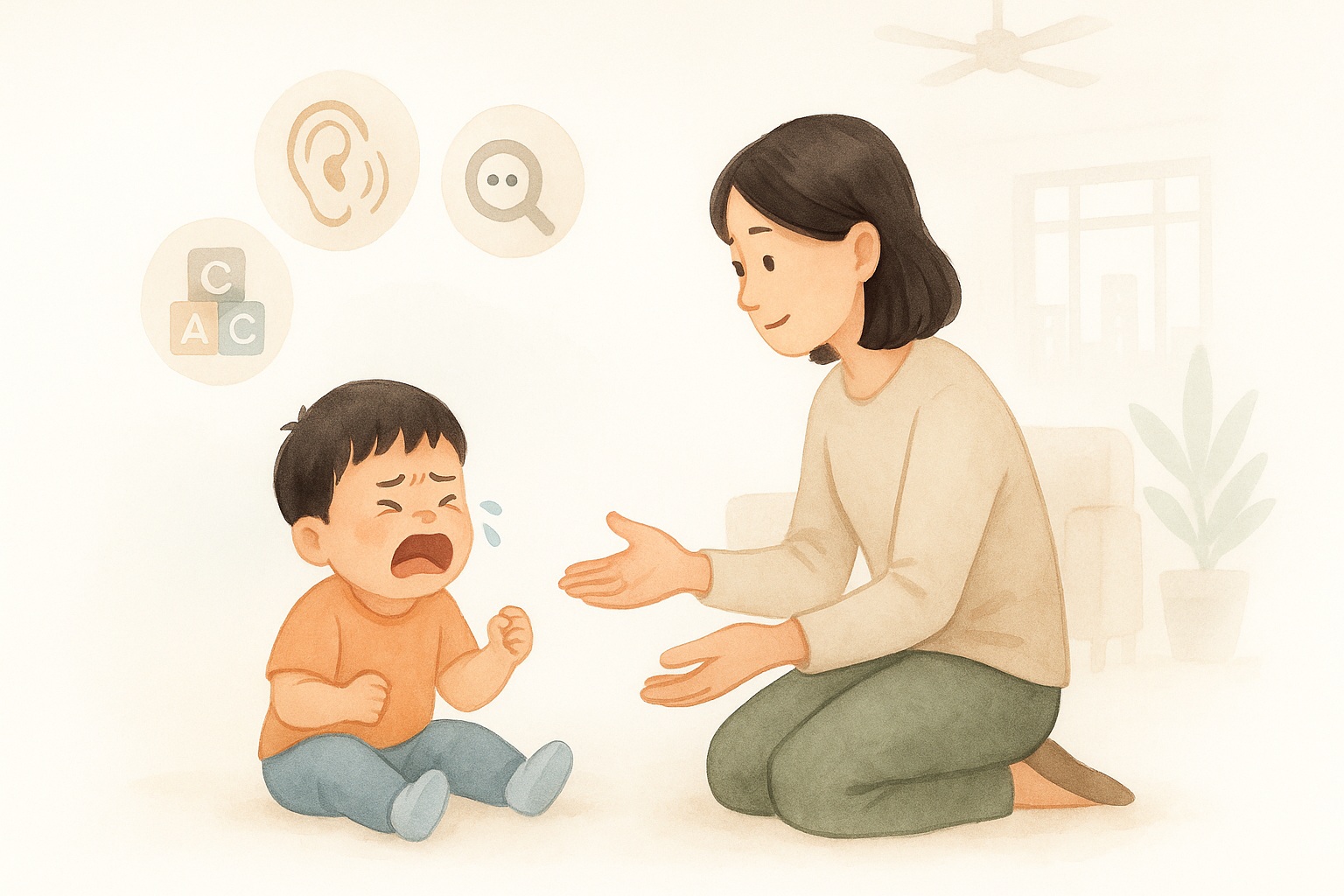
TL;DR: Toddlers who talk less tend to have more frequent or more dysregulated tantrums. If tantrums feel “more than typical,” or your child is missing language milestones, book a speech-language screening (and a hearing check) instead of waiting it out.
What the research shows
A large Northwestern study of 2,001 toddlers found that children with smaller spoken vocabularies had more frequent and more severe tantrums than peers with typical language. “Late talkers” (around 24–30 months) were nearly twice as likely to have severe tantrums. The link was seen as early as 12 months, underscoring how communication struggles can fuel big feelings and blow-ups.
So… what counts as “frequent” or “severe” tantrums?
- Frequency: Occurring most days of the week (e.g., more than or equal to 4 days/week) or clustered many times per day.
- Duration: Lasting more than about10–15 minutes regularly.
- Intensity/Content: Self-injury, aggression toward others, or significant property destruction.
- Context: Tantrums that erupt “out of the blue,” across settings, or are very hard to recover from without adult help.
Short, situational meltdowns (e.g., at transition time, under 5–10 minutes) are common in early childhood; it’s repeated, pervasive, or injurious patterns that warrant closer look.
Language & communication “screen-now” triggers
If any of the following are present—especially alongside the tantrum pattern above—request a speech-language evaluation and a formal hearing test:
- No single words by 15–18 months, or few words by 18 months.
- Not combining 2 words by 24 months (e.g., “more milk,” “mummy up”).
- By age 2, not understood by unfamiliar listeners at least about50% of the time, or vocabulary clearly lagging.
- Any loss of words or social skills at any age.
What to do next (Singapore pathway)
- See your GP/polyclinic or paediatrician to discuss milestones and tantrum patterns. Ask for:
- A hearing assessment (hearing issues can masquerade as language delay).
- A referral to a hospital-based Child Development Unit (KKH or NUH) for developmental and speech-language evaluation.
- If your child is in preschool, ask about the ECDA Development Support–Learning Support (DS-LS) Programme for targeted help within school.
- You can also seek private speech-language therapy while waiting; don’t pause early strategies while on a waitlist.
Home strategies while you queue
- Pre-teach words for feelings & needs: model simple scripts (“help”, “stop”, “all done”, “my turn”). Pair words with gestures.
- Serve-and-return: follow your child’s lead, label what they’re looking at or doing (“You want the blue ball!”).
- Offer choices with words: “banana or apple?”—then expand their choice into a short phrase (“banana please”).
- Reduce overload: add routines, prep for transitions, and meet basics (sleep, snacks, movement) to lower tantrum triggers.
- Coach calm: narrate what’s happening, keep language short, and praise tiny steps toward using words or gestures.
FAQ
Isn’t it normal for boys to talk later?
Individual variation exists, but “boys talk later” shouldn’t delay screening if milestones are missed or tantrums are frequent/severe. Early checks are low-risk and high-benefit.
Will bilingualism cause speech delay?
Bilingual children may distribute words across two languages, but they should still meet broad communication milestones. Screen if total vocabulary and combinations lag or tantrums are concerning.
Should I wait and see?
No. If you’re worried, act. Request hearing testing and a speech-language evaluation; therapy and parent coaching can start early and make a big difference.
Who can help?
Start with your GP/polyclinic or paediatrician for referrals to KKH/NUH Child Development services. If your child is in preschool, ask about DS-LS. Private SLPs are another option.

