

Time outs vs Time ins: What the Evidence Actually Says
Babyment
Positive Discipline - Evidence Review
Time-outs vs time-ins: what the evidence actually says
Bottom line: The American Academy of Pediatrics (AAP) supports properly used time-outs as a safe, effective tool within a broader positive-discipline plan. High-quality studies find no long-term harm when done right. Time-ins (staying with the child to co-regulate and teach) are great as an everyday default; use brief, boring time-outs for unsafe or clearly noncompliant behaviour.
What the AAP recommends
- Time-out is endorsed—when used correctly. The AAP policy on effective discipline lists time-out among non-violent, developmentally appropriate strategies, and advises against physical punishment or shaming.
- How to do it: Give a clear warning, name the behaviour, use a safe, boring spot (not the bedroom/playroom), keep it brief (about 1 minute per year of age), give minimal attention during the time-out, and calmly return to normal interaction once the child is calm.
- Best ages: Typically most effective around 2–5 years (sometimes up to 8) and paired with lots of positive attention and skill-building.
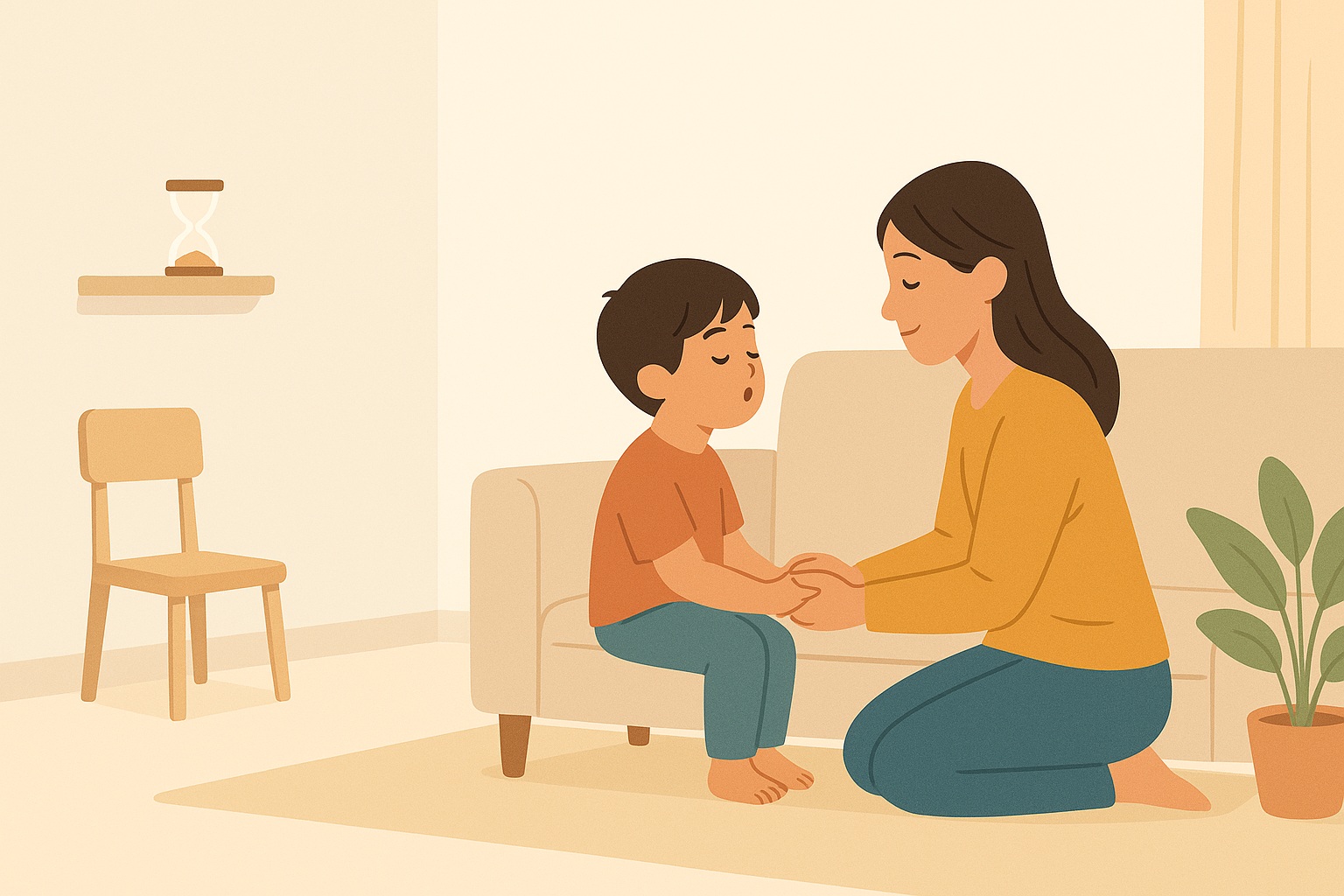
Time-in vs time-out: Think “connection first, then correction.” Use time-ins throughout the day to coach feelings and skills. Use a brief, calm time-out when a clear rule is broken (e.g., hitting, dangerous defiance), then reconnect and practice the right behaviour.
What the evidence shows
- No long-term harm found: A longitudinal study tracking children over years found that appropriate parental use of time-outs was not associated with later anxiety, depression, aggression, or poorer self-control.
- Works even in tougher contexts: In a clinical study, parenting programs that include time-out were effective for families whose children had high exposure to adversity (e.g., trauma), with benefits comparable to—or greater than—those with lower adversity.
- Common pitfalls: Lecturing during time-out, making it too long, giving lots of attention, or using it angrily undermines effectiveness. Implementation quality matters.
Step-by-step: doing time-outs well
- Pre-teach rules at a calm time; model and role-play.
- Warn once: “No hitting. If it happens again, time-out.”
- Guide to the spot (boring, safe). Start the short timer.
- Minimal attention during time-out; no lectures.
- End & reset: When calm, return to normal and practice the right behaviour (“gentle hands”).
- Use time-ins the rest of the day: label feelings, coach problem-solving, praise specific positives.
Quick FAQ
- Are time-outs harmful?
- Not when used properly. The AAP includes time-out within positive discipline, and longitudinal data show no long-term negative effects.
- What age is appropriate?
- About 2–5 years (sometimes to 8). Under-2s need redirection and co-regulation rather than time-out.
- How long should it be?
- Roughly one minute per year of age. Longer doesn’t work better.
- Can I use time-outs if my child has experienced adversity?
- Time-out embedded in supportive parent-training programs has shown benefits even with high adversity. Individualise and emphasise connection; consult your clinician if you’re unsure.
Note: This article is informational and not a substitute for personal medical or developmental advice. For specific concerns, speak with your child’s clinician.
References & further reading
- American Academy of Pediatrics. Effective Discipline to Raise Healthy Children. Pediatrics (Policy Statement).
- HealthyChildren.org (AAP). How to Give a Time-Out and related positive-discipline guides.
- Knight R, et al. Longitudinal study of time-outs and child outcomes. Journal of Developmental & Behavioral Pediatrics.
- Roach AC, et al. Using Time-out for Child Conduct Problems in the Context of Adversity. JAMA Network Open.
- CDC Essentials for Parenting: Tips for Using Time-Out.

© Babyment. All Rights Reserved. 