

Bilingual Brains: What Neuroscience Tells Us About Raising Multilingual Kids
Babyment
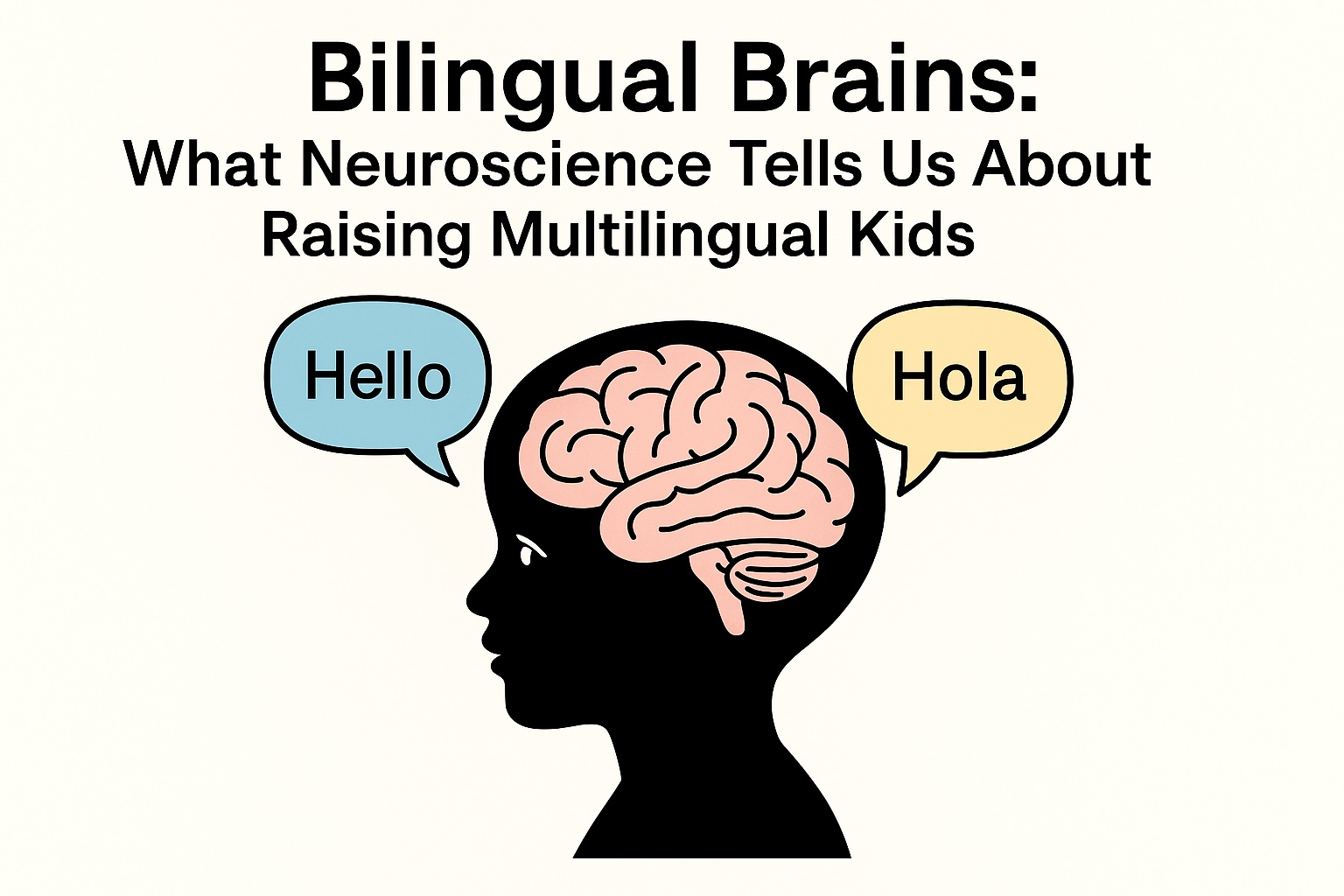
In an increasingly globalized world, many parents are choosing to raise their children to speak more than one language. But is bilingualism just a communication tool—or does it actually reshape the brain? Neuroscience now offers a resounding answer: bilingual and multilingual environments can enhance cognitive development in powerful, lasting ways.
What Is a Bilingual Brain?
A bilingual brain refers to a brain that actively uses and switches between two or more languages. Research shows that this kind of brain adapts structurally and functionally to manage multiple linguistic systems. These adaptations begin in infancy and can have lifelong benefits.
How Early Does the Brain Adapt?
According to studies using fMRI and EEG, the brain begins distinguishing between different languages as early as six months old. Babies exposed to two languages can detect rhythmic and phonetic differences faster than monolingual babies. This early exposure leads to enhanced auditory processing and attention control.
Key Milestones:
- 0–6 months: Babies differentiate sounds from each language they hear regularly.
- 6–12 months: Bilingual infants retain sensitivity to phonetic contrasts in both languages, while monolingual babies start tuning out unfamiliar ones.
- 12–24 months: Vocabulary may develop more slowly in each language, but total word count across both languages matches or exceeds monolingual peers.
Benefits of Bilingualism in Brain Development
1. Enhanced Executive Function
Executive function refers to a set of mental skills—including attention control, working memory, and problem-solving. Bilingual children regularly practice switching between languages and inhibiting one language while using another, which strengthens these skills.
- A 2022 meta-analysis in Developmental Science found that bilinguals consistently outperformed monolinguals on tasks requiring cognitive flexibility and inhibitory control.
- This advantage is often referred to as the “bilingual executive function boost.”
2. Better Attention and Focus
Bilingual children tend to develop stronger selective attention. They are more practiced in ignoring irrelevant stimuli (like an unused language) and focusing on what’s contextually important.
3. Greater Metalinguistic Awareness
Children who grow up with multiple languages are more aware that words are symbolic and that meanings can shift between contexts. This can lead to:
- Stronger reading comprehension
- Faster acquisition of additional languages later in life
- More nuanced understanding of grammar and sentence structure
Myths About Bilingualism—Debunked
“Bilingual kids are delayed in speaking.”
Not true. While bilingual children might take slightly longer to form words in each language, their total vocabulary (across both languages) is often equal to or greater than monolingual children. This is not a language delay, but a distribution of words across systems.
“Kids will confuse the two languages.”
Code-switching (mixing languages) is a normal and healthy part of bilingual development. It shows language control and flexibility—not confusion.
“It’s too late to raise a child bilingual after infancy.”
While early exposure is ideal, the brain remains plastic well into adolescence. Children can still develop strong bilingual abilities with consistent exposure and practice.
Does Bilingualism Change Brain Structure?
Yes. Neuroimaging studies reveal that bilingual individuals show greater density in brain areas responsible for language, attention, and memory. These include:
- Anterior cingulate cortex: Involved in error detection and task switching
- Dorsolateral prefrontal cortex: Supports executive function and attention
- Hippocampus: Plays a role in memory and learning new vocabulary
Practical Tips for Raising a Bilingual Child
1. Consistent Exposure
Children need regular and meaningful exposure to both languages. This can come from caregivers, books, media, or community interaction.
2. Use the “One Person, One Language” (OPOL) Strategy
Assign one language to each caregiver to provide clarity and consistency.
3. Read in Both Languages
Books help reinforce vocabulary and offer visual context. Try storybooks, rhymes, and audiobooks in both languages.
4. Celebrate Cultural Identity
Language is tied to culture. Celebrating traditions, music, and stories in both languages reinforces positive associations and strengthens motivation.
5. Be Patient and Supportive
Language learning is a marathon, not a sprint. Support your child’s efforts without pressuring for perfection.
Long-Term Advantages of a Bilingual Brain
In adulthood, bilingualism is associated with:
- Improved career opportunities in global markets
- Better problem-solving and adaptability
- Delayed onset of age-related cognitive decline (e.g., dementia)
According to a study in Neurology (2013), bilingual individuals showed symptoms of Alzheimer’s disease an average of 4.5 years later than monolingual individuals, despite similar brain pathology.
Conclusion
Raising a bilingual or multilingual child is one of the greatest gifts you can offer—not only in communication but in brain development, emotional intelligence, and cultural understanding. Neuroscience clearly shows that bilingualism shapes stronger, more flexible minds. With consistency, patience, and a supportive environment, parents can nurture a truly bilingual brain that thrives from infancy into adulthood.
FAQs
- Is it confusing for my child to hear two languages at once?
- No. Infants are capable of distinguishing and learning multiple languages if exposure is consistent.
- Will my child fall behind in school if they’re bilingual?
- Research shows that bilingual children perform as well or better academically in the long run, especially in reading and problem-solving.
- Can my child become truly fluent in both languages?
- Yes, especially if both languages are spoken regularly and meaningfully throughout childhood.
- Should I correct code-switching?
- No need—code-switching is normal. Children learn to separate languages more over time.
- How many languages is “too many” for a young child?
- There is no strict limit. Children can learn 3 or more languages if each is used consistently in meaningful contexts.



© Babyment. All Rights Reserved. 