

Breastfeeding Positions
Babyment
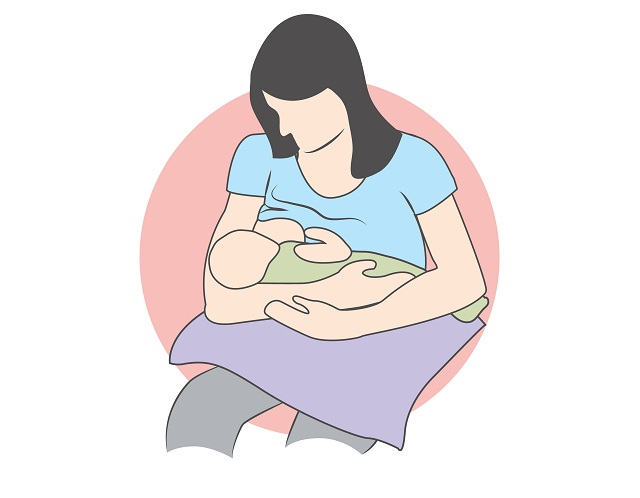
In the first few days after your child’s birth, optimal positioning is especially important for successful breastfeeding and prevention of many problems associated with breastfeeding such as sore nipples.
Basics for Correct Positioning
- A correct position must be comfortable to you and it should be pain-free. If you feel pain, detach your baby gently and try again.
- Position yourself comfortably with proper back support, pillows supporting your arms and in your lap and your feet supported by a footrest or a small chair.
- Position your baby close to you, with his hips flexed, so that he does not have to turn his head to reach your breast. His mouth and nose should be facing your nipple. If possible, ask your helper to hand you the baby once you are comfortable.
- Support your breast so it is not pressing on your baby's chin. Your baby's chin should drive into your breast. (See "Breast Support Techniques" below for descriptions.)
- Attach or latch baby onto your breast. Encourage him to open his mouth wide and pull him close by supporting his back (rather than the back of his head) so that his chin drives into your breast. His nose will be touching your breast. Your hand forms a "second neck" for your baby.
- If you are feeling pain, detach baby gently and try again.
- In any of these positions, it is very important to bring the baby to your nipple height. Leaning over your baby can cause backaches, neck/shoulder strain or sore nipples.
Cradle Position – Breastfeeding Position
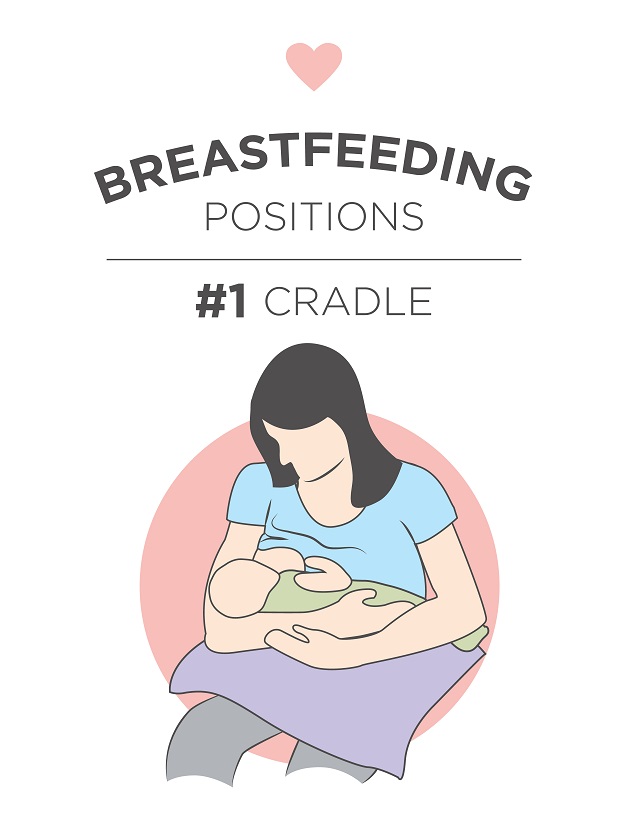
The cradle position is most commonly used after the first few weeks.
In this position, you should hold your baby across your lap. Your baby should be lying on his side and resting on his shoulder with his mouth level with your nipple. Make sure that his ear, shoulder, and hips should be in a straight line.
To make yourself more comfortable, you should use pillows to lift your baby and support your elbows to bring your baby up to nipple height especially during the first few weeks.
Your baby's head will be on your forearm and his back will be along your inner arm and palm.
Make sure his mouth should be covering at least a half inch of the dark area around your nipple.
Cross-cradle Position– Breastfeeding Position
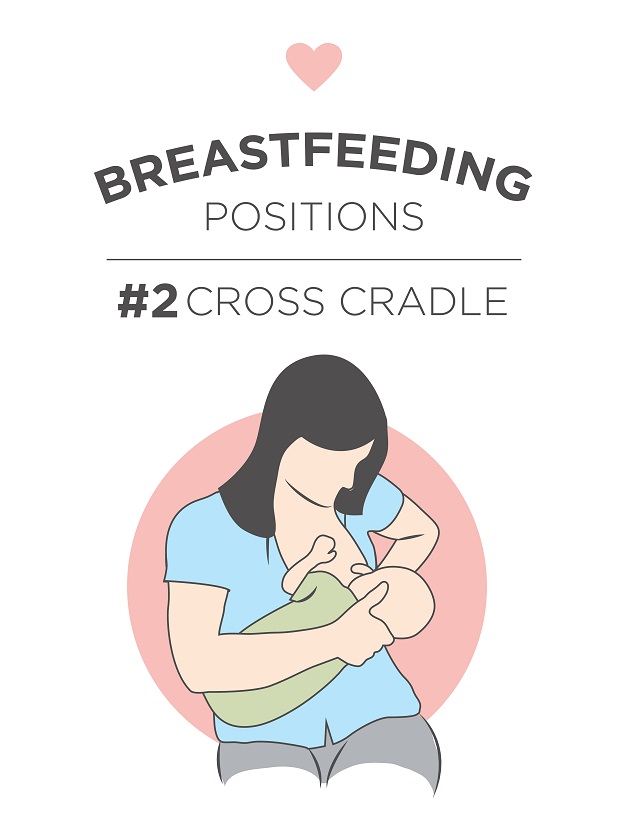
In this position, mummy should sit up straight in a comfortable chair with armrest. You can use a pillow to raise your baby to your nipple level. Pillows can also support both elbows so your arms don't hold the weight of the baby;
If you intend to breastfeed on the left breast, you should hold your baby in the crook of the and your left hand supports your breast from the underside in a U-shaped hold.
Guide the baby's mouth to your breast. Don't bend over or lean forward.
Lying back position – Breastfeeding Position
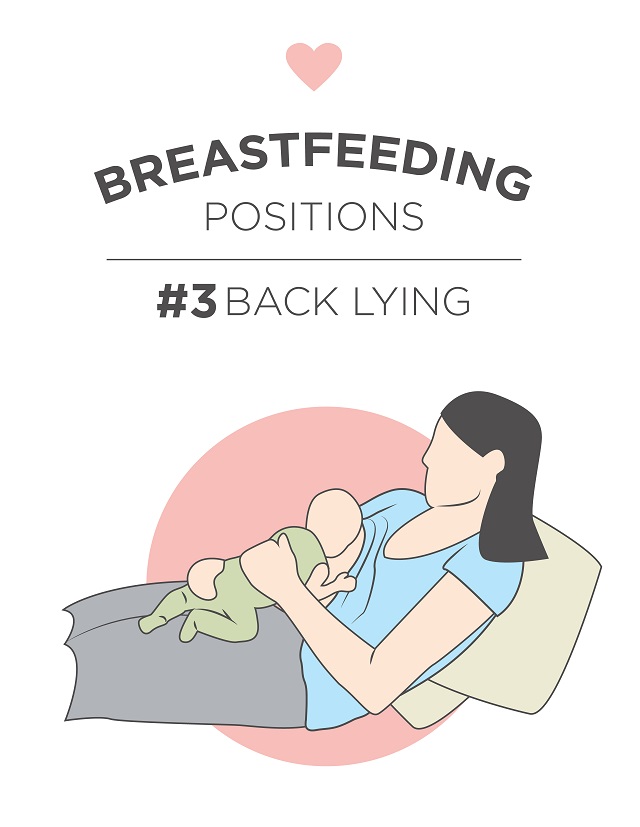
Lie back on a comfy sofa or bed. Don't lie flat on your back, but prop yourself into a semi-reclining position with pillows and cushions. Have your head and shoulders well supported. Let your baby’s whole front touch your whole front.
You may choose to hold your breast.
Clutch or Football Position – Breastfeeding Position
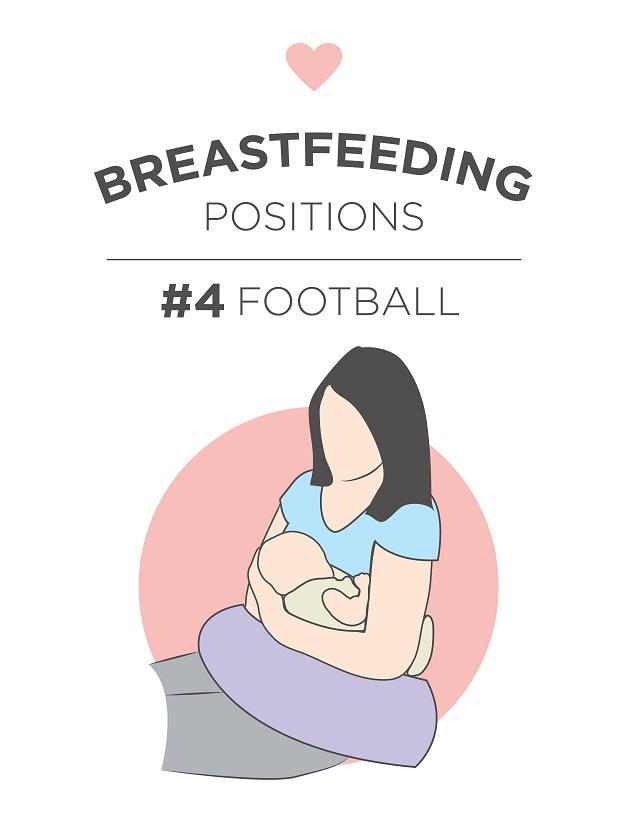
This position might be a good choice if you're recovering from a C-section as it keeps the baby away from the incision.
Hold your baby beside you, with your elbow bent. With your open hand, support your baby's head and face him or her toward your breast with his mouth at nipple height. Your baby's back will rest on your forearm. It might help to support your breast in a C-shaped hold with your other hand. For comfort, put a pillow on your lap and use a chair with broad, low arms. Pillow also help bring the baby to the correct height for optimal latching.
Australian Hold-Breastfeeding Position
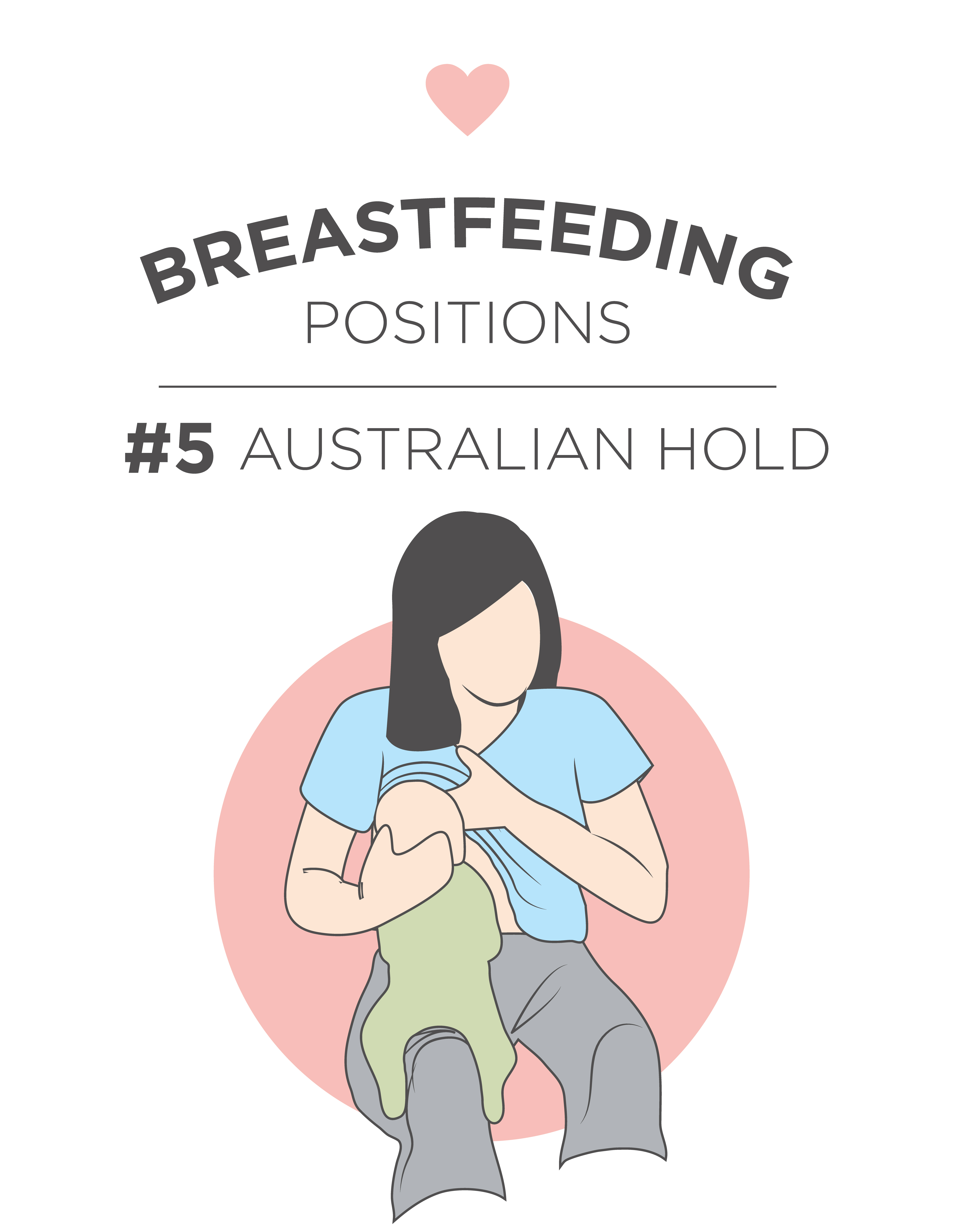
In this position, your baby is held vertically and straddles your thigh. Your knee supports your baby on his bottom. One of your hands is low on the baby's head to give control as you help your baby to latch onto the breast, the other hand supports and narrows the breast to help the baby form a good, deep latch on the areola.



© Babyment. All Rights Reserved. 