

How Mirror Neurons Shape Child Behavior: The Neuroscience of Imitation
Babyment
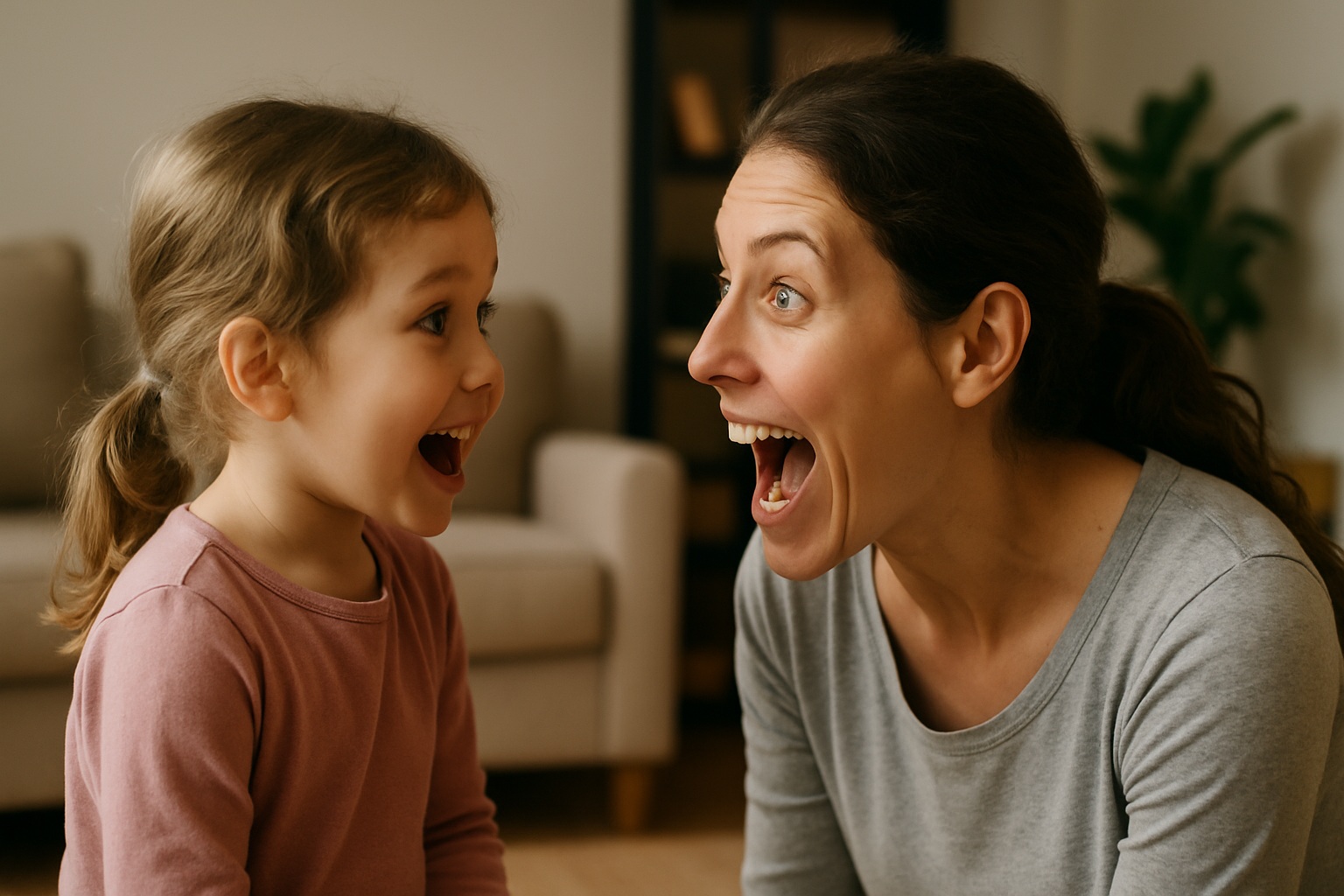
Ever noticed how your child copies your gestures, facial expressions, or even your moods? It's not just mimicry — it's neuroscience at work. Mirror neurons, a specific class of brain cells, help explain how children absorb not just our actions, but also our emotional states. Understanding how these neurons function can give parents powerful insight into how behavior and emotional regulation are developed.
What Are Mirror Neurons?
Mirror neurons are brain cells that fire both when we perform an action and when we observe someone else performing that same action. First discovered in the 1990s by researchers in Italy, these neurons were initially identified in monkeys and later found to exist in the human brain, particularly in the premotor cortex and inferior parietal lobule.
For example, when a child sees a parent smile, their mirror neurons light up as if they themselves are smiling — helping them “mirror” the behavior internally. Over time, this system becomes the foundation for learning through observation.
Imitation: The First Teacher
Imitation is one of the earliest and most critical forms of learning. Even newborns as young as a few days old have been shown to mimic facial expressions like sticking out the tongue or widening the eyes. This type of learning allows children to:
- Acquire language and motor skills
- Understand social cues and behaviors
- Build empathy and emotional intelligence
Through repetition and social interaction, these mirrored actions get internalized and become part of a child's behavioral repertoire.
Absorbing Emotions: More Than Just Actions
One of the most remarkable aspects of the mirror neuron system is its role in emotional contagion. Children don’t just copy behaviors — they absorb feelings. If a parent is anxious, irritable, or stressed, children often mirror those emotional states unconsciously.
Research using functional MRI (fMRI) scans has shown that observing someone in pain or distress activates similar brain regions in the observer — especially in children whose mirror systems are highly plastic. This is why a calm, emotionally regulated parent can significantly shape a child’s ability to manage their own feelings.
Why This Matters for Parenting
Knowing that children are wired to mirror adults can empower parents to model the kinds of behaviors and emotional responses they hope to see in their children. Here’s how:
1. Model Self-Regulation
- Take deep breaths during conflict
- Use calm tones when upset
- Express emotions verbally: “I feel frustrated, so I’m going to take a moment”
2. Display Positive Social Behaviors
- Show kindness, patience, and gratitude
- Use respectful communication
- Resolve disagreements without yelling
3. Be Mindful of Nonverbal Signals
- Facial expressions and body language matter — children pick up on subtle cues
- Physical presence, eye contact, and touch all reinforce emotional connection
Neurodiversity and Mirror Neurons
Studies suggest that the mirror neuron system may function differently in children with autism spectrum disorder (ASD). Some researchers hypothesize that reduced mirror neuron activity could be linked to challenges in imitation, empathy, or social reciprocity. However, this theory is still evolving, and not all experts agree on its role in autism.
Regardless, children with ASD can and do learn social-emotional skills, often with tailored support that uses visual modeling, repetition, and explicit emotional labeling.
Conclusion
The science of mirror neurons underscores a simple but profound truth: children become what they see. They don’t just listen to our words — they watch our every move, feel our emotional states, and internalize our reactions. By being conscious of what we model, we shape not just behavior, but emotional resilience, empathy, and lifelong learning habits.
FAQ
At what age do mirror neurons begin functioning in children?
Mirror-like responses are seen in newborns, especially through facial mimicry. These systems continue to develop and refine throughout early childhood.
Can positive modeling really help with tantrums and aggression?
Yes. Children who observe calm, self-regulated responses in adults are more likely to learn those behaviors themselves, even if it takes repetition and time.
What if I lose my temper sometimes?
No parent is perfect. What matters is repair — apologizing, naming emotions, and showing how to recover from emotional outbursts models powerful skills.
Are mirror neurons the only explanation for child imitation?
No. While mirror neurons play a role, other brain networks and social learning processes also contribute to imitation and behavior shaping.
Scientific and Professional Sources
- Rizzolatti, G. & Craighero, L. (2004). The Mirror-Neuron System. Annual Review of Neuroscience.
- Decety, J., & Jackson, P.L. (2004). The functional architecture of human empathy. Behavioral and Cognitive Neuroscience Reviews.
- Pfeifer, J.H. et al. (2008). Mirror neuron activity and empathy in children. NeuroImage.
- Oberman, L.M., Ramachandran, V.S. (2007). The simulating social mind: the role of the mirror neuron system. Cognitive Science.



© Babyment. All Rights Reserved. 