

How to Bathe a Newborn Safely at Home
Babyment
Bathing a newborn can feel intimidating for new parents, especially when the baby is still so small and fragile. However, with the right preparation and technique, it can become a safe, soothing routine that supports hygiene and bonding. This guide walks you through everything you need to know to confidently bathe your baby at home.
When Can You Start Bathing a Newborn?
You can give your baby a sponge bath from day one. However, a full bath in a baby tub should only begin after the umbilical cord stump falls off (typically between 1–3 weeks after birth) and the area has healed.
Until then, stick to sponge baths using a soft cloth and lukewarm water to gently clean your baby's face, neck, diaper area, and skin folds.
How Often Should You Bathe a Newborn?
Newborns don't get very dirty, so 2–3 baths per week is usually enough. Over-bathing can dry out your baby's sensitive skin. On other days, you can use a damp cloth to clean their face, neck, and diaper area.
What You'll Need for a Baby Bath
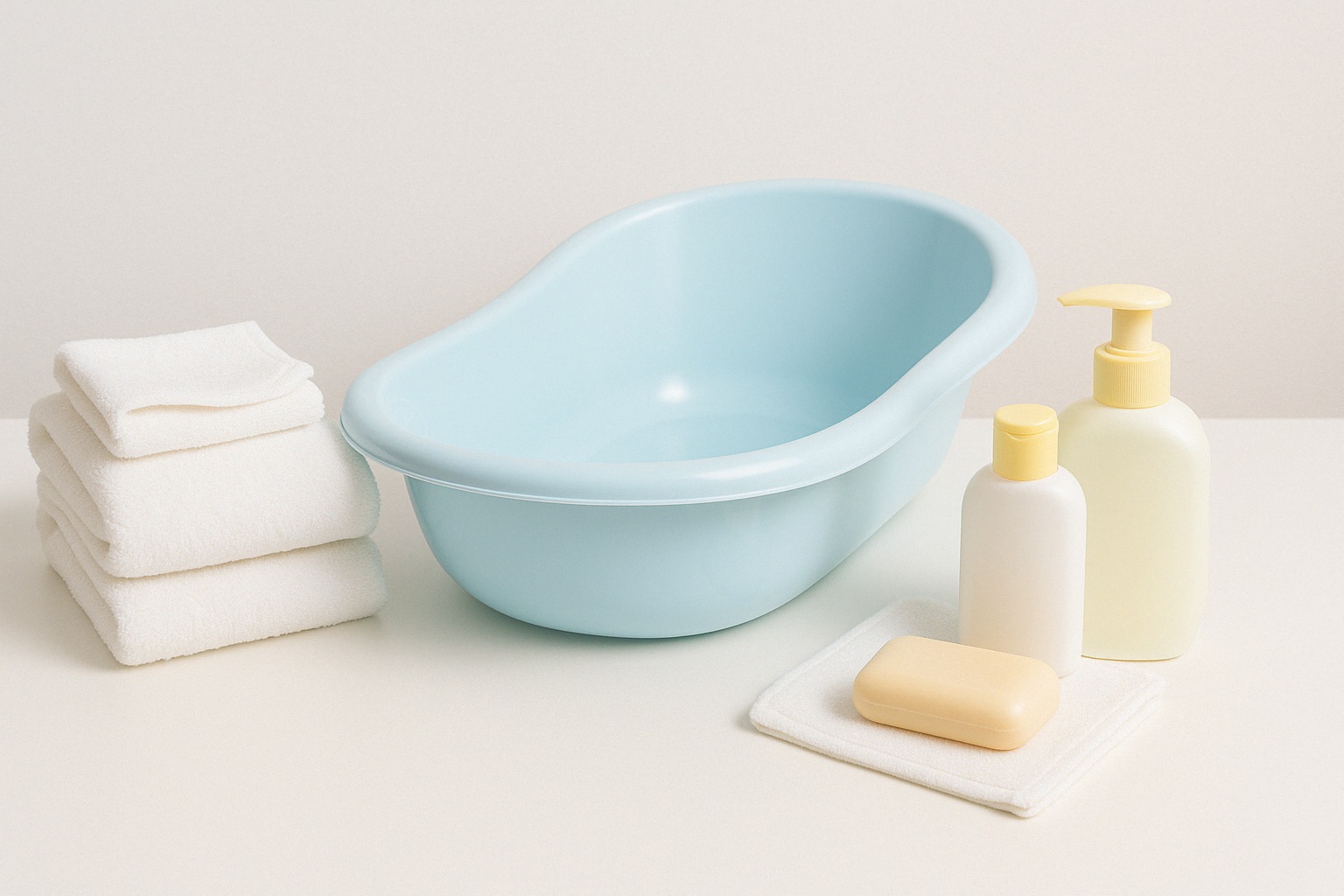
- A baby bathtub or clean basin
- Two clean towels (one for drying, one for backup)
- Washcloths or soft sponges
- Cotton balls for cleaning eyes
- Fragrance-free baby soap and shampoo (optional)
- Clean clothes and a diaper
- Room heater (optional, if the room is cool)
Preparation Steps Before Bath Time
Preparation is key to making the process smooth and safe:
- Choose a warm, draft-free room. Babies lose heat quickly, so keep the room temperature around 24°C to 26°C.
- Place the baby bath tub on a stable surface. Fill it with 5–7 cm of warm water (around 37°C to 38°C). Test it with your elbow or a bath thermometer.
- Have all items within arm's reach. Never leave your baby unattended during bath time, even for a second.
- Undress your baby and wrap them in a towel. Hold them securely and talk softly to keep them calm.
Step-by-Step: How to Bathe Your Newborn
1. Clean the Face First
Use a clean cotton ball dipped in warm water (no soap) to wipe each eye gently from the inner corner to the outer corner. Use a new cotton ball for each eye.
Use a soft washcloth to clean the face, ears, and neck folds. Avoid inserting anything into the ears or nostrils.
2. Undress and Gently Lower Baby into the Bath
Remove the towel and gently place your baby into the water, feet first. Support the head and neck with one hand and use the other hand to gently lower the rest of the body.
3. Wash the Body
Use a small amount of fragrance-free baby wash, if needed. Start from the top—neck, chest, arms, and work your way down to the legs. Pay attention to skin folds under the neck, behind the ears, and around the diaper area.
4. Wash the Hair Last
If your baby has hair, tilt the head back gently and use a wet washcloth to rinse it. Add a small amount of baby shampoo if desired, but this is optional in the first weeks.
5. Rinse and Remove Gently
Use a clean washcloth or small cup to rinse the body with clean water. Carefully lift your baby from the bath, supporting the head and neck. Immediately wrap them in a warm, dry towel.
6. Dry and Dress
Pat your baby dry—don't rub. Pay special attention to creases and folds to prevent moisture buildup. Once dry, apply baby lotion if needed and dress your baby in clean clothes and a fresh diaper.
Safety Tips
- Never leave your baby alone in the bath. Always keep a hand on them or within arm's reach.
- Use mild, fragrance-free products. Babies have sensitive skin that can be easily irritated by harsh soaps or perfumes.
- Keep bath time short. 5–10 minutes is sufficient to clean a newborn.
- Don't bathe immediately after feeding. Wait at least 30 minutes to avoid discomfort or spit-up.
Tips for Bathing in Singapore
In warm climates like Singapore, babies may sweat more, especially in the neck and diaper areas. You can do quick wipe-downs on non-bath days to keep them fresh. If using air-conditioning, make sure your baby stays warm during and after the bath to prevent chills.
Bonding Through Bath Time
Bathing is more than just a cleaning routine—it's also a great opportunity to bond. Talk to your baby, sing soft lullabies, and maintain eye contact. Over time, your baby will begin to enjoy the calming sensation of warm water and your gentle touch.
Conclusion
Bathing a newborn doesn't have to be stressful. With preparation, safety precautions, and practice, it can become a cherished daily ritual. Every baby is different, so take your time to discover what makes your little one most comfortable. Before long, bath time will be a joyful part of your everyday routine.



© Babyment. All Rights Reserved. 