
Screen Time and Early Brain Development: What Parents Need to Know
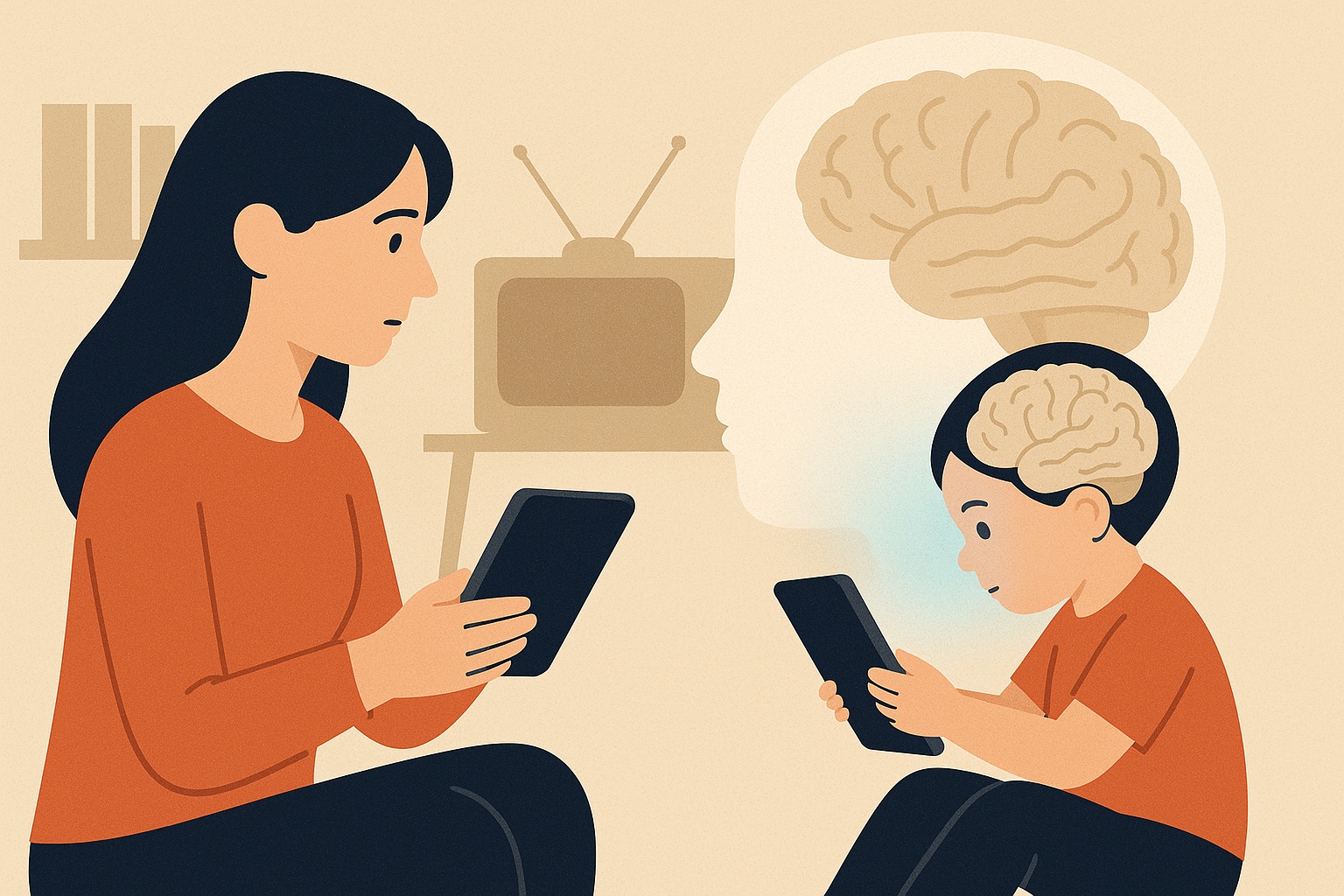
In today's digital age, it's common to see toddlers tapping on tablets or watching cartoons on smartphones. While technology can offer convenience and even educational opportunities, increasing research raises concerns about its impact on early brain development. What does the science say? And how much is too much?
Why Early Brain Development Matters
The first five years of life are critical for brain development. During this period, a child's brain forms more than one million neural connections every second. These connections are shaped by experiences—particularly through play, movement, interaction, and human communication. Excessive screen time can interfere with these foundational activities.
What Pediatric Associations Recommend
- World Health Organization (WHO): For children under 1 year, screen time is not recommended at all. Children aged 1 to 2 years should not exceed one hour of screen time per day—and less is better.
- American Academy of Pediatrics (AAP): For children younger than 18 months, avoid screen time except for video chatting. From 18 to 24 months, choose high-quality programming and watch it with your child. For children aged 2 to 5, limit screen time to one hour per day of high-quality content, with co-viewing encouraged.
What Neuroscience Research Reveals
- Attention and Executive Function: Studies have linked prolonged screen use in toddlers with difficulties in attention span and impulse control. These are essential functions for learning and emotional regulation.
- Language Development: Human interaction—like talking, singing, and reading aloud—is far more effective for language development than passive screen exposure. Screens do not respond or adapt to a child's cues like a caregiver does.
- Sleep Disruption: Exposure to screens, especially before bedtime, can disrupt melatonin production and negatively impact sleep quality—a key component in healthy brain growth.
- Gray Matter Changes: Imaging studies suggest that high screen use may alter brain structure in areas related to language, cognitive control, and reward processing.
When Screen Time Can Be Beneficial
Not all screen time is harmful. When used mindfully, it can support learning:
- **Interactive Content:** Programs that encourage movement, repetition, or problem-solving may enhance cognitive engagement.
- **Co-viewing and Co-playing:** Watching or playing together allows parents to reinforce learning, ask questions, and provide context.
- **Video Chatting:** Live interaction with family members over video calls supports social bonding and language exposure.
Tips for Healthy Screen Habits
- Prioritize unstructured, screen-free playtime.
- Designate media-free zones, such as bedrooms and dining areas.
- Turn off screens 60 minutes before bedtime to protect sleep.
- Model healthy tech use—children often mimic adult behavior.
- Choose slow-paced, age-appropriate, non-violent content.
- Use screens as a tool—not a babysitter.
Bottom Line
While screens are now a part of modern life, it's essential for parents to recognize that not all screen time is created equal. Passive, unsupervised viewing can hinder developmental milestones, while intentional, interactive use can support early learning in moderation. What matters most is the quality of content, parental involvement, and ensuring screen time doesn't replace the critical real-world experiences children need to thrive.
Frequently Asked Questions (FAQ)
1. How much screen time is safe for babies and toddlers?
According to the World Health Organization and American Academy of Pediatrics, babies under 18 months should avoid screen time except for video calls. Toddlers aged 2 to 5 should be limited to one hour per day of high-quality, supervised content.
2. Is video chatting harmful for young children?
No. Video chatting is encouraged because it involves real-time interaction, helping to support social, emotional, and language development—especially when connecting with close family members.
3. What type of screen content is considered “high-quality”?
High-quality content is age-appropriate, slow-paced, free of violence or advertising, and encourages learning, participation, or problem-solving. Examples include educational programs like “Sesame Street” or interactive learning apps with a caregiver present.
4. Can screen time cause speech delay?
Yes, studies have shown a link between excessive passive screen time and speech delays, especially when screen time replaces face-to-face interaction, which is critical for language development.
5. What if my child throws a tantrum when I limit screen time?
It's common for children to resist limits, especially if they're used to unrestricted screen use. Set consistent boundaries, offer engaging alternatives like outdoor play or books, and give them transition warnings before turning screens off.
6. Is educational screen content enough for learning?
No. While educational media can support learning, it should never replace real-world exploration, movement, creative play, or human interaction—all of which are vital for brain development.
7. Does screen time affect sleep in babies and toddlers?
Yes. Screen exposure, especially before bed, can delay sleep onset and reduce sleep quality. Avoid screens at least one hour before bedtime and keep devices out of sleeping areas.
8. How can I balance screen time with other activities?
Make a daily schedule that prioritizes free play, social interaction, reading, and physical activity. Use screen time as a planned part of the day, not an automatic default.
It takes a village to raise a child !
Join our WhatsApp Parenting Chat Groups By Area in Singapore.
Subscribe to Our Newsletter to get important information about pregnancy and parenting.