

Sensory Play for Infants: What It Is and Why It Matters
Babyment
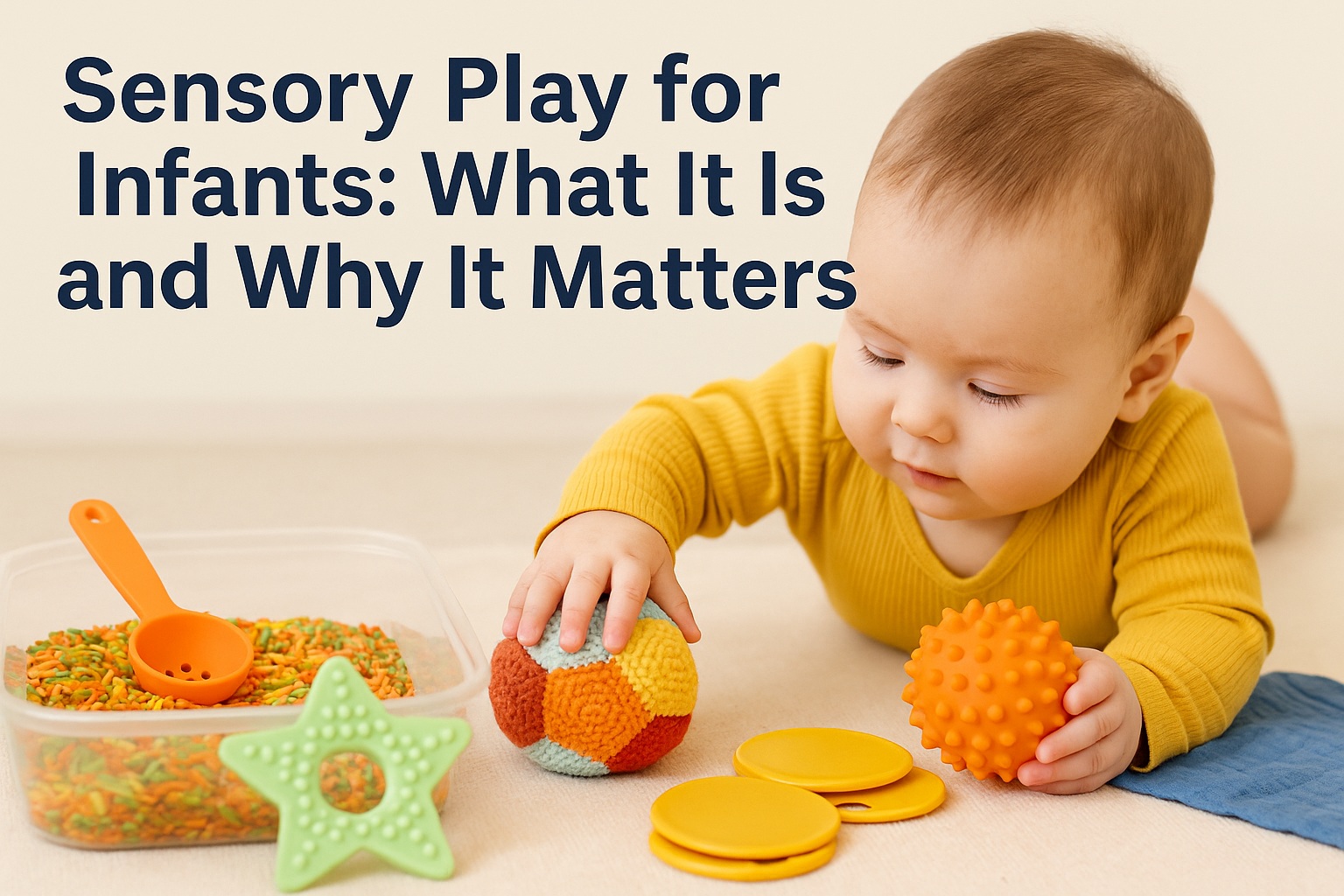
From the moment they are born, babies are gathering information about the world through their senses. Sensory play provides rich, hands-on experiences that help wire their developing brains, laying the foundation for future learning, social skills, and problem-solving.
What Is Sensory Play?
Sensory play refers to activities that engage one or more of a baby’s senses: touch, sight, sound, smell, and taste. It also includes the senses of movement (vestibular) and body awareness (proprioception). For infants, sensory play might be as simple as feeling a soft blanket, listening to gentle music, or watching bubbles float in the air.
Why Sensory Play Matters for Infants
Evidence shows that sensory experiences support neural connections in the brain, which are especially active in the first three years of life.
- Brain Development: Repeated sensory experiences strengthen neural pathways, aiding memory, attention, and problem-solving (Shonkoff & Phillips, 2000).
- Motor Skills: Activities like grasping textured toys help refine fine and gross motor skills.
- Language Growth: Sensory play encourages caregivers to talk about textures, sounds, and sights, expanding vocabulary.
- Emotional Regulation: Calm sensory experiences (like gentle rocking or soft lighting) can help babies self-soothe.
- Social Interaction: Shared sensory play promotes bonding between caregiver and child.
Safe Sensory Play Ideas for Infants (0–12 months)
- Tummy time on a textured blanket to encourage movement and exploration.
- Soft fabric swatches (silk, cotton, fleece) for touch exploration.
- Water play with shallow trays, supervised closely.
- Visual tracking games like moving a colorful scarf slowly across their field of vision.
- Sound bottles with rice or beans inside sealed containers for shaking.
- Scent jars with safe herbs like lavender or rosemary (keep sealed to prevent ingestion).
Tips for Parents
- Always supervise sensory play to prevent choking or injury.
- Follow your baby’s cues—stop if they seem overstimulated or tired.
- Keep it simple—everyday household items can be engaging.
- Repeat experiences—babies learn through repetition.
FAQ: Sensory Play for Infants
- Is sensory play only about touch?
- No. It involves all senses, including sight, sound, taste, smell, movement, and body awareness.
- When should I start sensory play with my baby?
- You can start from birth with gentle, age-appropriate activities, such as skin-to-skin contact or soft music.
- Can sensory play be overstimulating?
- Yes. Signs include turning away, fussing, or rubbing eyes. If this happens, stop and try again later with a calmer activity.
- Do I need special toys?
- No. Many safe household items, like measuring spoons or scarves, can be great for sensory exploration.
- How long should sensory play last?
- For young infants, even 3–5 minutes can be enough. Let your baby’s interest guide the duration.



© Babyment. All Rights Reserved. 