

Starting Solids at 6 Months: Baby Led Weaning vs. Purees
Babyment
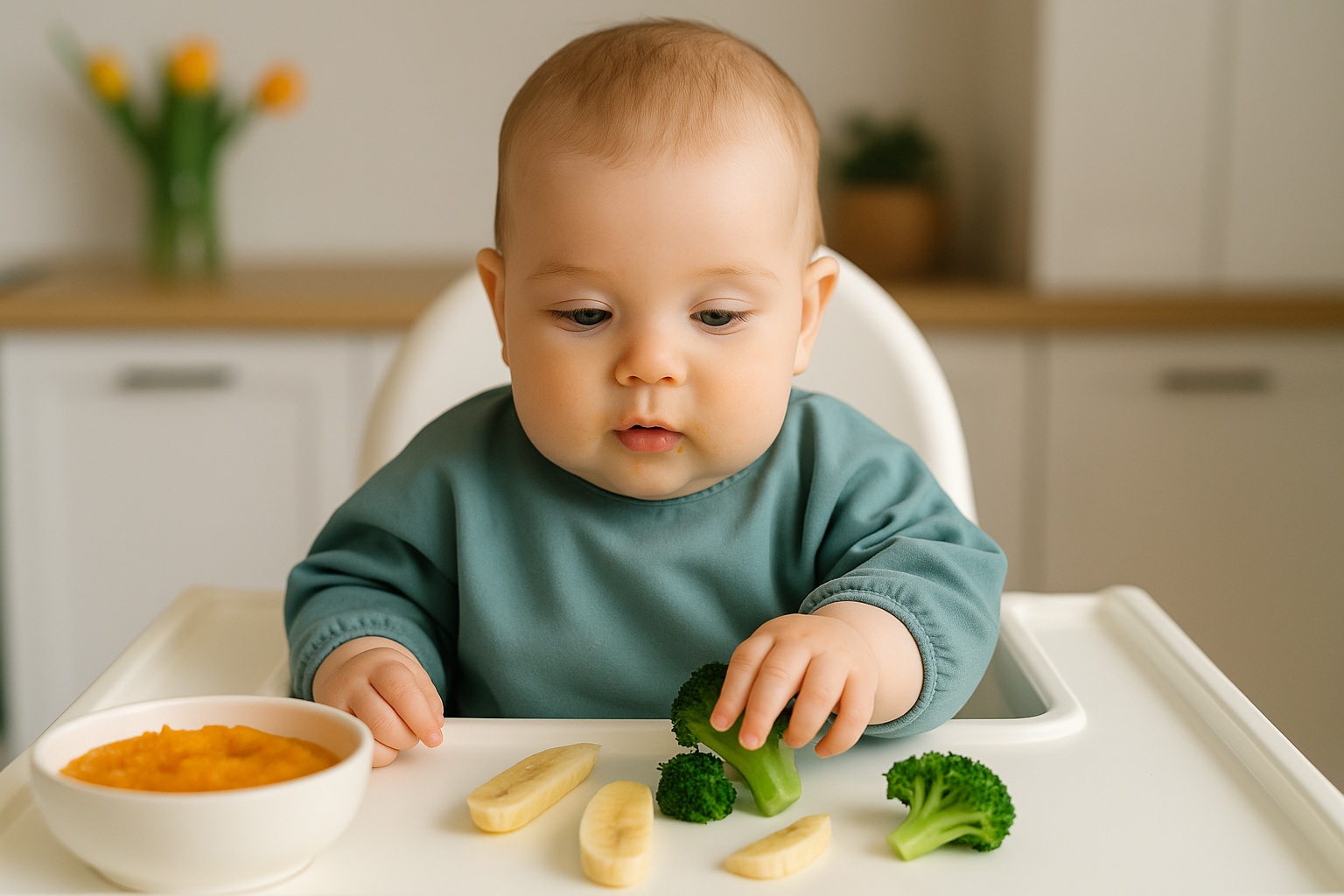
Introducing solids is a major milestone in your baby’s development. Around 6 months, most babies are ready to begin exploring foods beyond breast milk or formula. Parents are often faced with a decision: should they start with traditional spoon-fed purees or try baby-led weaning (BLW)? Both approaches have benefits and considerations. Here's what the evidence says.
When Is Your Baby Ready for Solids?
The World Health Organization (WHO) and health authorities like the CDC and Singapore’s Health Promotion Board recommend starting solids around 6 months of age, when babies show signs of readiness, such as:
- Good head and neck control
- Sitting up with minimal support
- Interest in food (reaching out or opening mouth)
- Loss of tongue-thrust reflex (pushing food out automatically)
What Is Baby-Led Weaning?
Baby-led weaning is an approach where babies self-feed soft, appropriately sized pieces of whole food from the beginning, skipping spoon-fed purees. The baby leads the process, choosing what and how much to eat.
Benefits of Baby-Led Weaning
- Improved motor skills: Encourages hand-eye coordination and chewing from an early age
- Responsive eating: May lead to better appetite regulation and reduced risk of overeating
- Exposure to textures: Helps reduce pickiness through early exposure to different textures and tastes
- Family meals: Promotes inclusion by allowing baby to eat what the family eats (with adjustments)
Challenges of Baby-Led Weaning
- Gagging vs. choking: Gagging is common and safe, but caregivers must be educated on signs of choking
- Nutrient tracking: Harder to measure exact intake of iron, protein, and calories
- Messiness: Self-feeding is messy and time-consuming at first
What About Traditional Purees?
The traditional method involves offering smooth purees and gradually transitioning to lumpier textures and finger foods over time. This method is often guided by caregivers who control the pace and amount eaten.
Benefits of Purees
- Precise nutrition: Easier to track iron intake and portion sizes
- Gradual transition: Allows cautious introduction of new foods and textures
- Convenient: Easier for parents to prepare and feed, especially on the go
Challenges of Purees
- Delayed self-feeding: May postpone oral-motor development if not combined with finger foods early on
- Picky eating: Some studies suggest prolonged puree feeding may contribute to texture aversions
- Overfeeding risk: Spoon-feeding can bypass hunger cues if parents urge baby to finish
Is One Better Than the Other?
There’s no single “best” approach—what matters most is safety, nutritional adequacy, and responsiveness to your baby’s cues. In fact, many families adopt a combined approach: starting with purees and gradually offering soft finger foods for self-feeding.
Research published in journals like Pediatrics and the British Medical Journal shows that when done safely, both BLW and traditional weaning can support healthy growth and development.
Tips for a Safe Start
- Always supervise your baby while eating
- Offer soft, age-appropriate finger foods (e.g., steamed carrots, avocado slices, banana strips)
- Avoid choking hazards (whole grapes, nuts, hard raw vegetables, etc.)
- Include iron-rich foods like lentils, egg yolk, tofu, or iron-fortified cereal
- Introduce one new food at a time to watch for allergies
Conclusion
Whether you choose baby-led weaning, purees, or a mix of both, the goal is to support your baby's curiosity, safety, and nutritional needs. Follow your baby’s lead, be patient, and make mealtime a positive experience. This stage sets the foundation for a lifelong healthy relationship with food.
FAQ
Q1: Can I start with both BLW and purees?
Yes! A combined approach can offer the benefits of both methods while allowing flexibility based on your baby’s preferences and developmental pace.
Q2: Isn’t BLW dangerous because of choking risks?
Gagging is a natural part of learning to eat. True choking is rare when safe foods are offered, and babies are supervised. Learning infant CPR is recommended for all parents.
Q3: What are good first foods for baby-led weaning?
Soft, graspable foods like avocado slices, steamed sweet potatoes, banana strips, and soft-cooked broccoli florets are great first choices.
Q4: How can I make sure my baby gets enough iron?
Include iron-rich foods daily, such as meat, tofu, lentils, and fortified cereals. Pair them with vitamin C sources (e.g., fruits) to boost absorption.
Q5: How many times a day should I feed solids at 6 months?
Start with 1–2 small meals a day. Focus is still on breast milk or formula, with solids offered for exploration and learning.


© Babyment. All Rights Reserved. 