Transitioning to Solid Foods: Evidence-Based Weaning
Introducing solid foods—also called complementary feeding or weaning—is a major developmental milestone. Evidence-based weaning focuses on timing, textures, and techniques that promote healthy growth, prevent choking, and support lifelong eating habits.
When to Start Solids
International health authorities, including the World Health Organization (WHO) and the Health Promotion Board (HPB Singapore), recommend starting solids at around 6 months of age when the following signs of readiness appear:
- Sits upright with minimal support
- Has good head and neck control
- Shows interest in food (reaches for food, watches others eat)
- Can open mouth and lean forward when food is offered
- Loses the tongue-thrust reflex (no longer pushes food out automatically)
Tip: Introducing solids too early (before 4 months) may increase choking and allergy risk, while starting too late (after 7–8 months) may delay chewing skills and increase picky eating later.
Best First Foods (Nutrient-Dense)
Iron needs increase sharply at 6 months, so first foods should be iron-rich:
- Iron-fortified baby cereals (rice, oats)
- Puréed or minced beef, chicken, pork, or fish
- Mashed egg yolk (fully cooked)
- Mashed lentils, beans, tofu
- Soft fruits (banana, papaya, avocado) and vegetables (pumpkin, sweet potato, broccoli)
Continue breastfeeding or formula as the main milk source while gradually increasing solids.
Feeding Methods: Spoon-Feeding & Baby-Led Weaning (BLW)
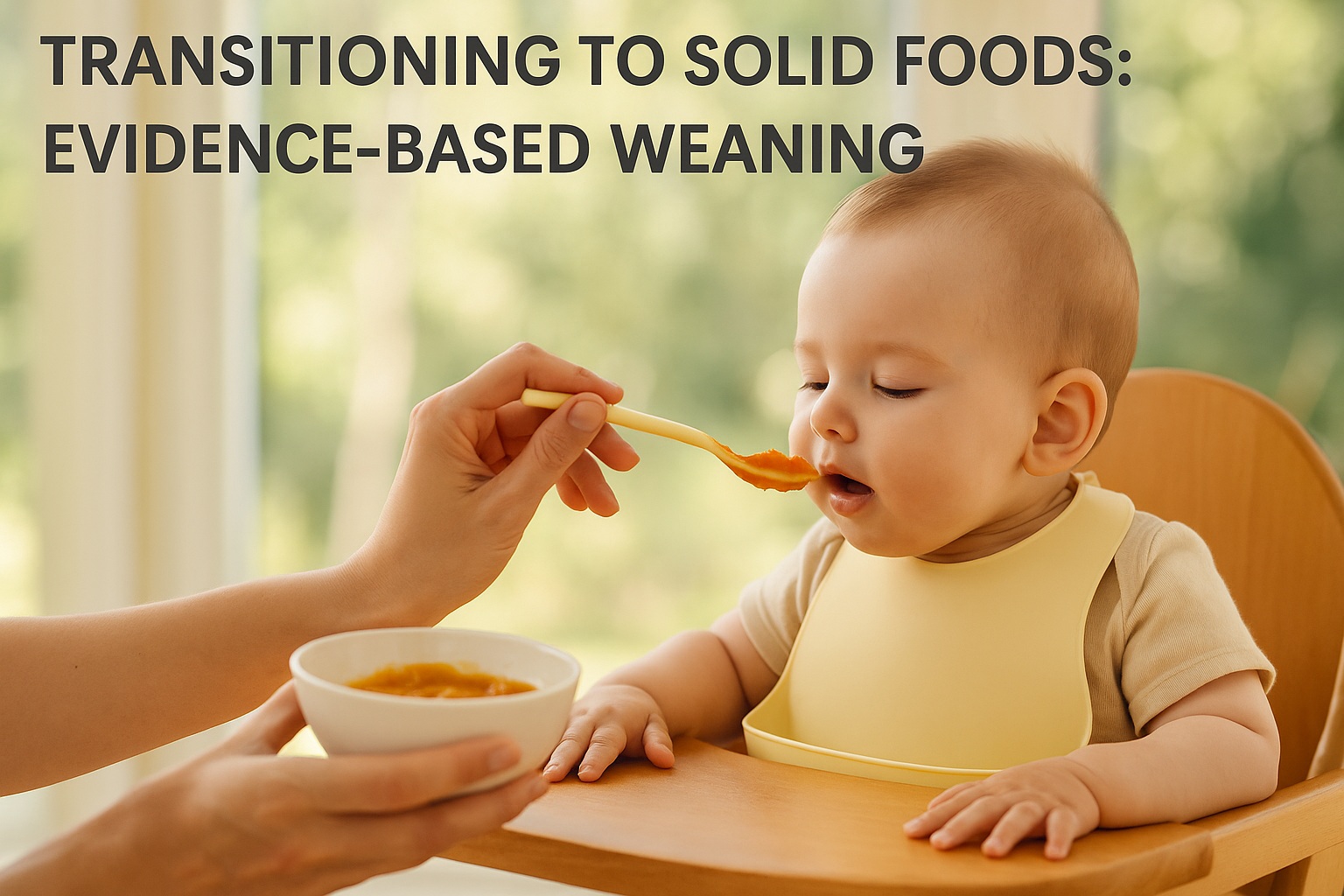
- Spoon-feeding: Caregiver feeds smooth purées and gradually thickens textures. Supports iron intake and easier for early starters.
- Baby-led weaning (BLW): Babies self-feed soft finger foods from the start. Encourages independence, chewing skills, and self-regulation of appetite.
Evidence shows both methods can be safe and effective when done responsively—watching baby’s hunger and fullness cues, and never forcing. Many families use a combination approach.
Progressing Textures Safely
Gradually increase texture complexity to build chewing skills and prevent feeding delays:
- 6–7 months: smooth purées or mashed
- 7–8 months: thicker mashed or soft lumps
- 8–10 months: soft finger foods (steamed carrot sticks, banana pieces, tofu)
- 10–12 months: chopped family foods, encouraging self-feeding
Key rule: All foods should be soft enough to mash between fingers and cut into baby fist-sized sticks (for BLW) to reduce choking risk.
Introducing Allergenic Foods
Evidence from large trials (LEAP, EAT studies) shows early introduction of allergenic foods around 6 months may reduce allergy risk. Introduce one new allergen at a time, during the day:
- Cooked egg
- Peanut (thinned smooth peanut butter mixed into puree)
- Wheat, dairy (cheese, yogurt), soy, fish, shellfish
Watch for reactions (rash, swelling, vomiting, breathing difficulty) and seek immediate medical care if severe. Get a doctor’s advice first if your baby has severe eczema or existing food allergies.
Foods to Avoid Under 1 Year
- Honey (risk of infant botulism)
- Added salt, sugar, sweet drinks
- Whole nuts, popcorn, hard/raw vegetables (choking risk)
- Undercooked eggs, meat, fish (infection risk)
- Unpasteurised milk or cheese
Responsive Feeding Principles
- Offer small amounts, let baby guide pace and stop when full
- Eat together as a family to model healthy eating
- Do not pressure, bribe, or distract baby to eat
- Offer a variety of flavours repeatedly, even if rejected at first
FAQ
1) How many meals should my baby eat?
Start with 1 small meal/day, then increase to 2–3 meals/day by 8 months and 3 meals + 1–2 snacks/day by 12 months, while continuing milk feeds.
2) Should I start with rice cereal or vegetables?
Either is fine as long as iron-rich foods are included from the start. Focus on nutrient density and variety, not a specific order.
3) Is baby-led weaning safe?
Yes, when done with soft age-appropriate foods and close supervision. BLW does not increase choking risk if safety guidelines are followed.
4) How long should milk feeds continue?
Breast milk or formula should remain the main drink until 12 months. After that, whole cow’s milk (about 500–700ml/day) can be introduced if breastfeeding is stopped.
5) My baby is not eating much solids. Is that normal?
Yes. Milk is still the main source of nutrition until 9–12 months. Focus on exposure and skills, not volume. Appetite will gradually increase.
Scientific & Professional Sources
- World Health Organization (WHO) — Guiding Principles for Complementary Feeding of the Breastfed Child
- Health Promotion Board Singapore — Weaning and Complementary Feeding Guidelines
- American Academy of Pediatrics (AAP) — Starting Solid Foods
- LEAP Study (Du Toit et al., 2015, NEJM) — Early peanut introduction
- EAT Study (Perkin et al., 2016, NEJM) — Early allergen introduction