

Why HFMD Keeps Circulating in Centres
Babyment
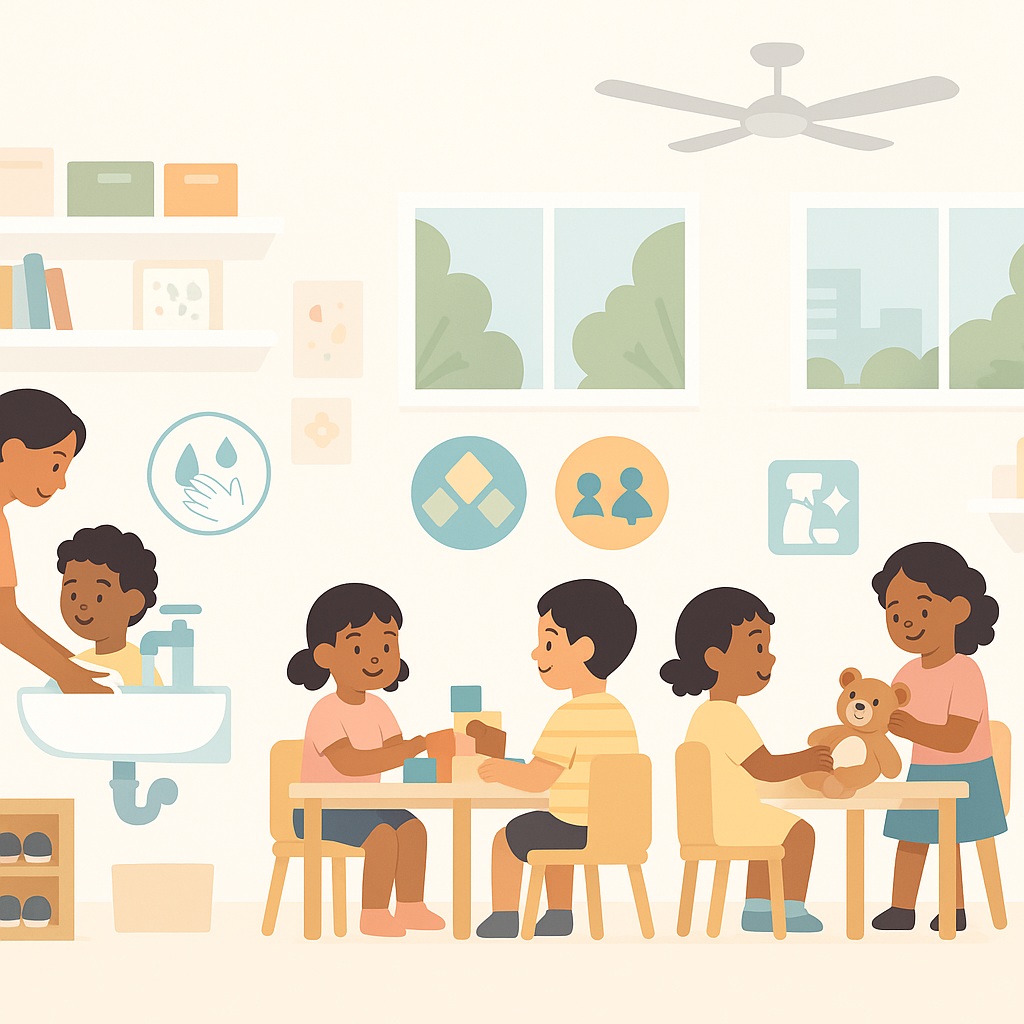
Class size, new admissions, and simple risk factors—explained in plain English for Singapore parents and preschool operators.
In one minute
- HFMD spreads easily through close contact, droplets, saliva, blister fluid and contaminated hands/surfaces/toys.
- Kids can spread the virus before they look sick, and even after they’re better, stool shedding can last weeks.
- Reinfections happen because different viruses cause HFMD (e.g., EV-A71, Coxsackie A6/A16). Immunity is strain-specific.
- Centres see repeated waves when there are large classes, frequent mixing, and new children joining who haven’t met these germs yet.
- What works: quick detection & exclusion of sick kids, smaller/stable groups, supervised handwashing, targeted cleaning, ventilation, and clear parent–centre communication.
Why do outbreaks keep coming back?
1) Class size & density
When more children share the same room, there are simply more close contacts per day and more shared touchpoints (tables, toys, craft tools). Bigger classes create more “opportunities” for a virus that already spreads efficiently.
2) Admission cycles & new entrants
Centres constantly welcome new children (e.g., around ages two to three). New joiners are still developing immunity and have not yet “met” these enteroviruses. That fresh pool of susceptible children lets HFMD re-ignite even after a quiet spell.
3) Prolonged & silent shedding
Children are most infectious in the first week, but the virus can continue to shed—especially in stools—for weeks. Some children carry and spread enteroviruses without obvious symptoms, so chains of transmission can continue under the radar.
4) Shared surfaces, play, and diapering
Toddlers touch their faces, drool, share toys, and need help with toileting. Without tight routines for handwashing and cleaning, the virus lingers on hands and high-touch surfaces.
5) Different strains each year
HFMD isn’t one virus. Strain patterns change from year to year. A child who already had HFMD can still catch it again from a different strain.
Biggest risk factors in centres—at a glance
| Risk factor | Why it matters | What to do |
|---|---|---|
| Large class size / frequent mixing | More contacts per day; faster spread once a case appears. | Keep stable small groups; avoid inter-class mingling during spikes. |
| New admissions | New children are more susceptible, seeding fresh waves. | Give onboarding hygiene briefings to parents; watch new joiners closely for early symptoms. |
| Hands, toys, high-touch surfaces | Viruses transfer via hands and objects used by many children. | Scheduled cleaning (toys, tables, door handles); individual play sets where possible for toddlers. |
| Toileting/diapering | Stool shedding can persist for weeks. | Gloves for diapering; handwashing after every change; dedicated nappy bins and sanitising routines. |
| Poor ventilation & crowded indoor time | Close, poorly ventilated spaces raise exposure. | Open windows/airing where safe; add outdoor time; consider HEPA filtration in small rooms. |
| Delayed detection | Early mouth ulcers/fever missed = more days of spread. | Daily visual checks at drop-off; fast parent pick-up of unwell children. |
Practical steps that actually help
For centres
- Daily screening: look for fever, sore mouth, drooling, new rashes on hands/feet/buttocks.
- Hand hygiene schedule: upon arrival; before food; after toilet/diapering; after outdoor play; before going home (20 seconds soap & water; supervise toddlers).
- Targeted cleaning: disinfect high-touch points 2–3× daily during spikes; clean shared toys between classes; launder soft items more often.
- Cohorting: keep groups consistent; pause inter-class activities and water play during outbreaks.
- Ventilation: open windows or use mechanical ventilation/HEPA in small rooms.
- Clear return-to-centre criteria: child is fever-free, well enough to participate, drinking adequately, and drooling from mouth sores has stopped; follow the attending doctor’s advice/documentation.
- Communicate quickly: notify families of cases, what to watch for, and hygiene steps being taken.
For parents
- Keep sick children at home and inform the centre immediately.
- Home hygiene: help your child wash hands regularly; clean high-touch surfaces and shared toys; handle diapers carefully; dispose of wipes properly.
- Expect reinfections: different strains can cause repeat HFMD—this is frustrating but common.
- Hydration & comfort: offer cool fluids/soft foods; seek medical care if your child shows dehydration, persistent high fever, lethargy, limb weakness, or if you’re worried.
HFMD – Frequently Asked Questions
1) Why does my child get HFMD more than once?
Different viruses cause HFMD. Immunity after one infection does not always protect against another strain. Reinfections are common in preschool years.
2) How long is my child contagious?
Most contagious in the first week of illness. However, stool shedding can continue for weeks. Good hand hygiene—especially after toileting/diapering—remains important even after the child feels better.
3) Do centres have to close to stop spread?
Public-health authorities may direct closures for larger/longer clusters. Day-to-day control relies on rapid detection, exclusion of sick children, small/stable groups, strong hygiene, and ventilation.
4) Must all blisters be gone before returning?
Not necessarily. What matters is that the child is clinically well—no fever, able to drink/eat, active, and no excessive drooling. Follow your doctor’s advice and your centre’s policy.
5) Are adults at risk?
Adults can be infected (often mildly). Practise hand hygiene and avoid sharing utensils/towels when someone at home is ill.
6) Is there a vaccine?
There is no HFMD vaccine available for routine use in Singapore. Prevention rests on hygiene, cohorting and early exclusion of ill children.
References (selected)
- Communicable Diseases Agency, Singapore – HFMD.
- HealthHub Singapore – HFMD overview.
- ECDA – Infection control guidelines.
- CDC – About HFMD.
- Min N. et al., PLOS NTD (2021): Singapore cohort & asymptomatic carriage.
- Zou Q. et al., 2025: Class size & kindergarten transmission dynamics.
- NUHS+ (2022): HFMD in Singapore; attack-rate note.
- Journal of Infection (2019): Hand-hygiene intervention reduces HFMD.
For Singapore readers. Educational information; not a substitute for medical advice. Follow your clinic’s guidance and MOH/ECDA advisories.



© Babyment. All Rights Reserved. 