Dental Care for Children: Brushing Battles, Fluoride and the First Dentist Visit
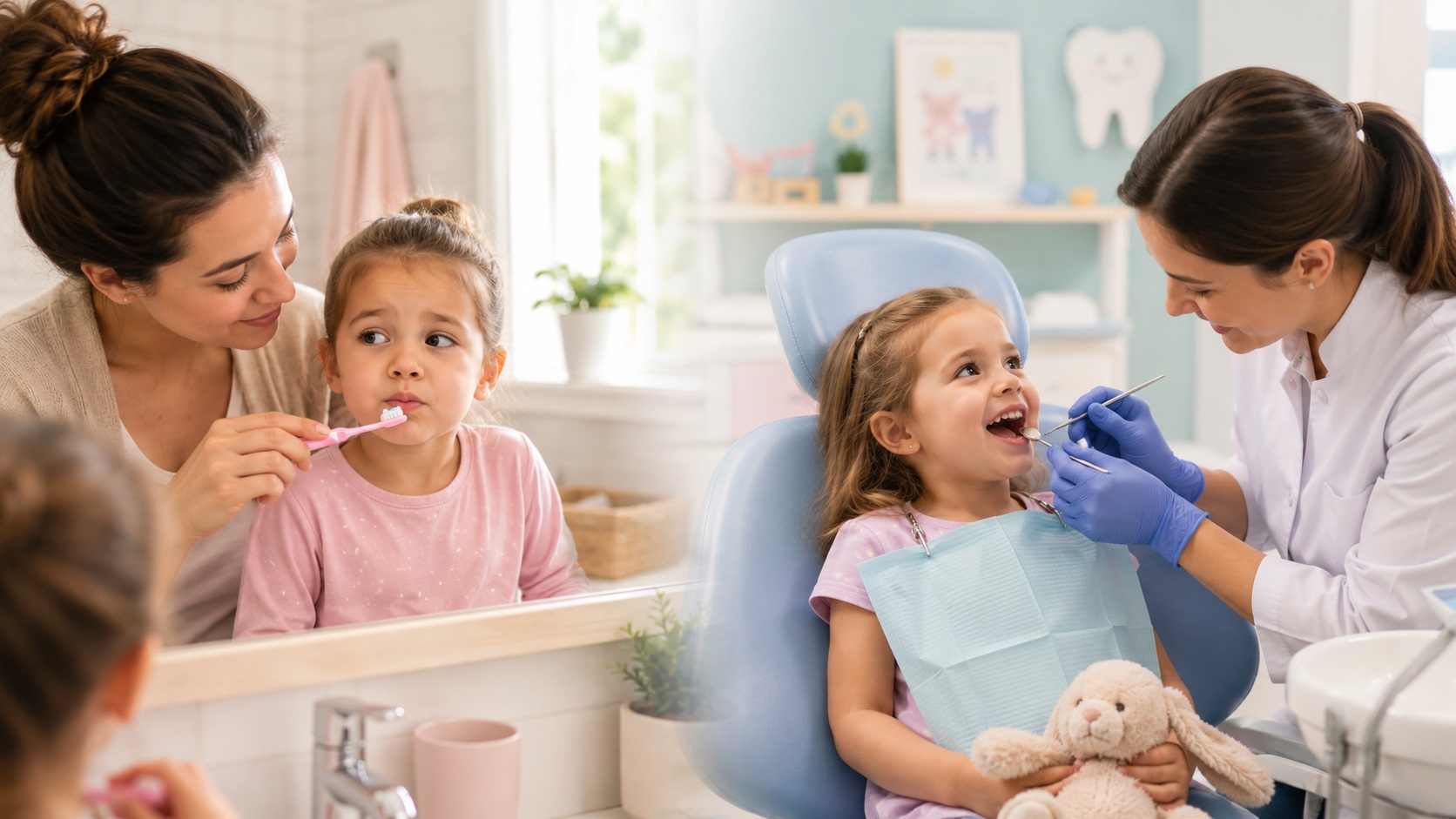
Brushing your child’s teeth sounds simple, but many parents know the reality: running away, clamping the mouth shut, crying, bargaining, or saying “I already brushed!” when they clearly did not.
Good dental care in childhood matters because baby teeth are not “just temporary”. They help children chew, speak clearly, smile confidently, and hold space for adult teeth. Tooth decay in young children can also cause pain, poor sleep, difficulty eating, missed school or childcare, and expensive dental treatment.
The good news is that parents do not need a perfect routine. A simple, consistent routine with fluoride toothpaste, parent supervision and early dental visits can make a big difference.
This guide explains how to handle brushing battles, how much fluoride toothpaste to use, when children should first see a dentist, and what parents can say when children resist brushing.
Quick Answer: What Should Parents Do?
For most children, parents should:
- start cleaning the gums even before teeth appear;
- brush twice daily once the first tooth appears;
- use a tiny smear of fluoride toothpaste before age 3;
- use a pea-sized amount of fluoride toothpaste from age 3 to 6;
- supervise brushing, especially for children under 6;
- help children brush until they have good brushing skills;
- bring the child for a first dental visit by age 1 or within 6 months after the first tooth appears;
- avoid letting children sleep with milk bottles or sweet drinks;
- make brushing calm, short and predictable.
The American Academy of Pediatric Dentistry recommends cleaning a baby’s gums from birth, using a tiny smear of fluoride toothpaste when baby teeth erupt, and increasing to a pea-sized amount from age 3 to 6. It also recommends a dental visit by the child’s first birthday. The CDC and ADA also recommend supervised brushing with fluoride toothpaste for children. AAPD | CDC | ADA
Why Baby Teeth Matter
Some parents think baby teeth are not important because they will fall out anyway. However, baby teeth play several important roles.
- They help children chew food properly.
- They support speech development.
- They help guide adult teeth into the correct position.
- They allow children to smile and speak confidently.
- They affect sleep, nutrition and daily comfort if decay causes pain.
Tooth decay can begin as soon as the first tooth appears. This is why dental care should start early, not only when a child is old enough to brush independently.
When Should Parents Start Brushing?
Parents can start oral care even before the first tooth appears by gently wiping the baby’s gums with a clean, damp cloth or soft infant toothbrush.
Once the first tooth appears, brush twice a day using a soft, age-appropriate toothbrush and a small amount of fluoride toothpaste.
Simple age guide:
| Child’s Age | What Parents Should Do | Toothpaste Amount |
|---|---|---|
| Before first tooth | Wipe gums gently with a clean, damp cloth or soft infant toothbrush. | No toothpaste needed. |
| First tooth to under 3 years | Brush twice daily with a soft toothbrush. Parent should do the brushing. | Tiny smear, about the size of a grain of rice. |
| 3 to 6 years | Brush twice daily. Parent should assist and supervise. | Pea-sized amount. |
| 6 years and above | Child may brush more independently, but parents should still check brushing quality. | Pea-sized amount unless dentist advises otherwise. |
Fluoride: Is It Safe for Children?
Fluoride helps strengthen tooth enamel and prevent tooth decay. Fluoride toothpaste is widely recommended by dental and public health organisations when used in the correct amount.
The key is not to avoid fluoride completely, but to use the right amount and supervise young children so they do not swallow too much toothpaste.
How much fluoride toothpaste should children use?
- Under 3 years: use a tiny smear, about the size of a grain of rice.
- 3 to 6 years: use a pea-sized amount.
- Under 6 years: parents should supervise brushing and encourage spitting out.
HealthHub Singapore also advises using a smear amount of 1000ppm fluoride toothpaste for children below 3 who are unable to spit, and a pea-sized amount for children aged 3 and above. HealthHub Singapore
Should Children Rinse After Brushing?
Many dentists advise children to spit out excess toothpaste rather than rinse thoroughly with lots of water. This allows a small amount of fluoride to remain on the teeth and continue protecting them.
For young children, the priority is safety. Use only the recommended small amount of toothpaste and supervise brushing. Teach the child to spit out, but do not panic if a small amount is swallowed occasionally.
Brushing Battles: Why Children Resist Toothbrushing
Children may resist brushing because:
- they dislike the taste of toothpaste;
- the toothbrush feels uncomfortable;
- they are tired at night;
- they want control;
- they are sensitive to touch around the mouth;
- they find brushing boring;
- they know delaying brushing delays bedtime;
- parents only become serious about brushing after repeated refusals.
Brushing refusal is common. The aim is to make brushing predictable, firm and calm, not to turn it into a daily fight.
What to Say During Brushing Battles
Parents can use calm scripts instead of threats, bribes or long lectures.
Situation 1: Child refuses to open the mouth
Try saying:
“Teeth brushing is not optional. You can open your mouth yourself, or I can help you.”
Why it helps: It gives a limited choice while keeping the boundary clear.
Situation 2: Child says, “I don’t want to brush!”
Try saying:
“I hear you. You don’t feel like brushing. We still brush teeth every morning and night.”
Why it helps: It acknowledges the feeling without changing the rule.
Situation 3: Child keeps running away
Try saying:
“You can walk to the bathroom, or I will carry you. Brushing still needs to happen.”
Why it helps: The child gets some control over how brushing begins, not whether brushing happens.
Situation 4: Child complains about toothpaste
Try saying:
“This toothpaste tastes too strong for you. Let’s choose a milder fluoride toothpaste next time. Tonight we will use a tiny amount.”
Why it helps: It respects sensory discomfort while still protecting the brushing routine.
Situation 5: Child wants to brush alone but does not do it properly
Try saying:
“You brush first, then I will do the checking brush.”
Why it helps: It supports independence while ensuring proper cleaning.
The “You First, Parent Checks” Method
Many children want independence before they have the hand skills to brush well. A helpful method is:
- Let the child brush first.
- Praise the effort.
- Parent does a quick “checking brush”.
- End with a positive phrase.
Example script:
“Great effort. Now it’s Mummy’s turn to check the back teeth. Open big like a lion.”
This approach reduces the feeling that brushing is being “done to” the child and gives the child a role in the routine.
Make Brushing Easier Without Bribing
Parents do not need to bribe children with sweets, toys or screens to get brushing done. Instead, use routine, choice and play.
Try these practical ideas:
- Use a timer: Let the child watch a 2-minute sand timer or brushing timer.
- Give two choices: “Blue toothbrush or yellow toothbrush?”
- Use pretend play: “Let’s chase the sugar bugs away.”
- Use a song: Sing the same brushing song every night.
- Brush together: Children often cooperate better when parents brush too.
- Let the child hold a mirror: This helps them see what is happening.
- Change the toothbrush: A smaller or softer brush may feel better.
- Try a different flavour: Some children dislike strong mint toothpaste.
For children who are very tired at night, start brushing earlier in the bedtime routine instead of leaving it until the child is already exhausted.
What Parents Should Avoid
During brushing battles, try to avoid:
- Skipping brushing often because the child protests;
- Using sweet rewards after brushing;
- Threatening the dentist as punishment, such as “The dentist will scold you”;
- Shaming the child, such as “Your teeth are disgusting”;
- Using too much toothpaste, especially for young children;
- Letting young children brush unsupervised before they are ready;
- Allowing milk bottles in bed, especially overnight.
It is better for the dentist to be seen as a helper, not a scary punishment.
First Dentist Visit: When Should It Happen?
Children should generally have their first dental visit by age 1, or within 6 months after the first tooth appears. This early visit is not only for checking teeth. It helps parents learn how to clean the child’s mouth, use fluoride toothpaste safely, prevent decay and manage habits such as bottle-feeding, thumb-sucking or frequent snacking.
Early dental visits also help children become familiar with the dental clinic before there is pain or an emergency.
What Happens at the First Dentist Visit?
The first visit is usually simple and child-friendly. Depending on the child’s age and cooperation, the dentist may:
- check the teeth, gums and jaw development;
- look for early signs of decay;
- discuss brushing technique and toothpaste amount;
- advise on feeding, bottles, snacks and drinks;
- talk about fluoride needs;
- answer parents’ questions;
- help the child get used to the dental environment.
The visit may be short, and that is okay. The aim is prevention and familiarity.
How to Prepare Your Child for the Dentist
Parents can help by using simple, positive language.
Helpful things to say:
- “The dentist will count your teeth.”
- “The dentist helps keep your teeth strong.”
- “You can sit on my lap if you feel unsure.”
- “We will open big like a crocodile.”
- “The dentist will use a small mirror to look at your teeth.”
Avoid saying:
- “It won’t hurt.”
- “Don’t be scared.”
- “If you don’t brush, the dentist will pull your teeth out.”
- “Be brave or the dentist will scold you.”
Even well-meant phrases like “Don’t be scared” may introduce the idea that there is something scary. Keep the explanation neutral and confident.
Food, Drinks and Tooth Decay Prevention
Brushing is important, but diet also matters. Tooth decay risk increases when teeth are exposed frequently to sugar, especially from sweet drinks, snacks and milk bottles over long periods.
Practical prevention tips:
- Offer water as the main drink between meals.
- Avoid letting children sip sweet drinks throughout the day.
- Avoid putting children to sleep with a bottle of milk, formula or sweet drink.
- Keep sweets and sugary snacks occasional rather than constant.
- Serve snacks at planned times instead of allowing all-day grazing.
- Brush before bedtime after the last milk or food.
If your child still needs milk before bed, try to separate milk from sleep gradually and brush teeth after milk whenever possible.
Common Dental Care Mistakes Parents Make
| Mistake | Why It Matters | Better Approach |
|---|---|---|
| Waiting until all baby teeth appear before brushing | Decay can start from the first tooth. | Brush twice daily once the first tooth appears. |
| Using too much toothpaste | Young children may swallow toothpaste. | Use rice-grain size before age 3 and pea-size from 3 to 6. |
| Letting the child brush alone too early | Young children often miss the back teeth and gumline. | Let the child try first, then parent checks. |
| Skipping brushing when the child protests | The child learns that refusal can cancel brushing. | Keep brushing short, calm and non-negotiable. |
| Using the dentist as a threat | This can create dental fear. | Describe the dentist as a helper. |
| Frequent sweet drinks or snacks | Repeated sugar exposure increases decay risk. | Offer water between meals and keep snacks structured. |
Simple Daily Dental Routine for Young Children
Here is a realistic routine parents can follow:
- Morning: Brush after breakfast using the correct amount of fluoride toothpaste.
- Daytime: Offer water between meals and limit frequent sweet snacks.
- Evening: Give the last milk or food before brushing.
- Before bed: Brush teeth with parent help. Spit out toothpaste. Avoid food or milk after brushing.
- Every 6 months or as advised: Bring the child for dental check-ups.
When to Seek Dental Advice Earlier
Parents should book a dental appointment if they notice:
- white, brown or black spots on the teeth;
- tooth pain or sensitivity;
- swollen or bleeding gums;
- bad breath that does not improve;
- difficulty chewing;
- a broken or injured tooth;
- delayed tooth eruption concerns;
- a child who refuses brushing because of pain;
- heavy plaque near the gumline;
- mouth ulcers or sores that do not heal.
Do not wait for severe pain before seeing a dentist. Early treatment is often simpler and less stressful.
Conclusion
Dental care does not have to become a daily battle. Parents can make brushing easier by keeping the routine calm, firm and predictable. Use the right amount of fluoride toothpaste, supervise brushing, avoid sugary habits, and schedule the first dental visit early.
The most important message for children is simple: brushing is part of taking care of the body. It is not a punishment, not a negotiation, and not something to fear.
With patient guidance and consistent routines, children can gradually learn to accept brushing and build healthy dental habits for life.
Frequently Asked Questions
1. When should I start brushing my baby’s teeth?
Start brushing as soon as the first tooth appears. Before teeth appear, you can gently wipe the baby’s gums with a clean, damp cloth or soft infant toothbrush.
2. How much fluoride toothpaste should my child use?
Children under 3 should use a tiny smear, about the size of a grain of rice. Children aged 3 to 6 should use a pea-sized amount. Parents should supervise brushing to reduce swallowing.
3. Is fluoride toothpaste safe for toddlers?
Fluoride toothpaste is generally recommended for preventing tooth decay when used in the correct small amount. Parents should supervise brushing and teach children to spit out toothpaste.
4. What should I do if my child refuses to brush?
Keep the boundary firm and offer limited choices. For example: “Teeth brushing is not optional. You can choose the blue toothbrush or the yellow toothbrush.” Make the routine short and predictable.
5. At what age can children brush their own teeth?
Young children usually need help for several years. A good method is to let the child brush first, then let the parent do a checking brush, especially for the back teeth and gumline.
6. When should my child first see a dentist?
A child should generally see a dentist by age 1 or within 6 months after the first tooth appears. Early visits help prevent decay and make dental care less scary.
7. Should my child rinse after brushing?
Many dentists recommend spitting out excess toothpaste rather than rinsing with lots of water, so fluoride can stay on the teeth longer. For young children, use only the recommended small amount and supervise closely.
8. What if my child swallows toothpaste?
Swallowing a tiny amount occasionally is common in young children. Use only a rice-grain smear for children under 3 and a pea-sized amount for children aged 3 to 6. If your child swallows a large amount, seek medical advice.
9. Are baby teeth really important?
Yes. Baby teeth help children chew, speak and hold space for adult teeth. Tooth decay in baby teeth can cause pain, infection and eating difficulties.
10. How often should children visit the dentist?
Many children benefit from regular dental check-ups every 6 months, but the dentist may recommend a different schedule depending on the child’s decay risk, brushing habits and oral health.
This article is for general parenting education and does not replace professional dental advice. If your child has tooth pain, visible decay, dental injury or feeding difficulties related to oral discomfort, consult a qualified dentist or healthcare professional.
It takes a village to raise a child !
Join our WhatsApp Groups or Facebook Group to interact with parents about infant care/child care in Singapore..
Subscribe to Our Newsletter to get important information about pregnancy and parenting.