
Emotion Coaching: Helping Children Navigate Big Feelings
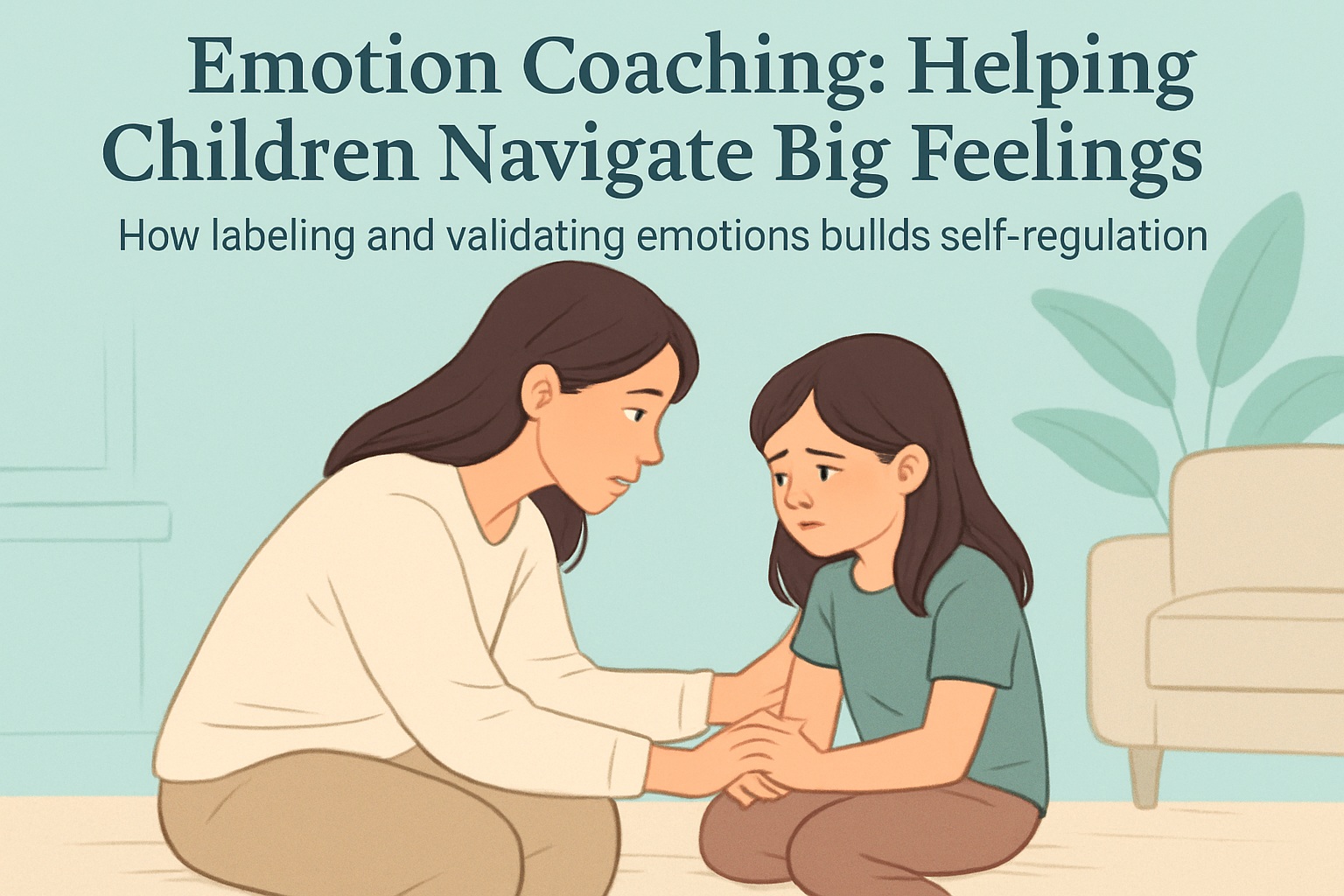
Children experience a wide range of intense emotions, from frustration and fear to joy and sadness. As parents or caregivers, how we respond to these emotions can significantly impact a child’s emotional development. Emotion coaching, a concept developed by psychologist Dr. John Gottman, is an evidence-based method for helping children understand and regulate their emotions effectively.
What Is Emotion Coaching?
Emotion coaching involves guiding children through emotional moments by recognizing, labeling, validating, and problem-solving their feelings. It doesn't mean fixing every problem, but helping the child understand what they're feeling and how to manage it.
The 5 Steps of Emotion Coaching
- Be aware of your child’s emotions: Look for subtle cues and changes in behavior.
- Connect with your child: Use emotional moments as opportunities for closeness and teaching.
- Listen with empathy: Give your full attention, and avoid rushing to judge or fix.
- Label the emotion: Help your child name what they’re feeling (e.g., “It sounds like you're feeling frustrated”).
- Set limits and help problem-solve: Acknowledge the emotion while guiding acceptable behavior and solutions.
Why It Matters
Children who are emotion-coached tend to:
- Develop stronger self-regulation skills
- Show greater empathy toward others
- Experience fewer behavioral outbursts
- Build a stronger emotional bond with caregivers
What the Research Says
Studies show that children whose parents use emotion coaching are more resilient, socially competent, and perform better academically. It also reduces the risk of internalizing (e.g., anxiety) and externalizing (e.g., aggression) behaviors over time.
Common Mistakes to Avoid
- Dismissive responses: Telling a child to “calm down” or “get over it” can invalidate their emotions.
- Over-rescuing: Solving every problem for the child prevents them from learning coping strategies.
- Ignoring small emotions: Consistently skipping over “minor” emotional episodes can build up distress.
Conclusion
Emotion coaching empowers children to recognize and regulate their feelings, which forms the foundation for emotional intelligence. With practice, patience, and empathy, caregivers can foster long-term mental well-being and stronger parent-child relationships.
Frequently Asked Questions (FAQ)
Q1: At what age can I start emotion coaching?
A1: You can begin as early as toddlerhood. Even before children can speak, they can benefit from emotional validation and labeling.
Q2: What if my child doesn’t want to talk about their feelings?
A2: That’s normal. Stay patient and offer a calm, safe space. Use gentle language and model emotional expression yourself.
Q3: How is emotion coaching different from discipline?
A3: Emotion coaching doesn’t replace discipline. It helps children understand their feelings before addressing their behavior in a respectful, constructive way.
Q4: Does emotion coaching work with teens?
A4: Yes! Teens also benefit from validation and support. While they may resist initially, consistent coaching builds trust and emotional skills.
Q5: What if I don’t have time for long emotional talks?
A5: Even a 1–2 minute validating response is powerful. Emotion coaching is about quality, not length — consistency matters most.
It takes a village to raise a child !
Join our WhatsApp Groups or Facebook Group to interact with parents about infant care/child care in Singapore..
Subscribe to Our Newsletter to get important information about pregnancy and parenting.