Helping Toddlers Navigate Big Emotions: Practical Parenting Strategies
Published: 22 April 2025
Tantrums, tears, and sudden mood swings — if you're parenting a toddler, these emotional outbursts can feel overwhelming. But rather than being signs of bad behavior, these "big feelings" are a natural and necessary part of your child's emotional development.
Understanding how to guide toddlers through these intense emotions helps them build critical life skills such as empathy, resilience, and self-regulation. In this article, we'll explore why toddlers have strong emotional reactions, and offer practical tools you can use to support them day by day.
Why Toddlers Have Big Emotions
Between the ages of 1 and 3, a toddler's brain is still developing the ability to process and manage emotions. At the same time, they're discovering independence — and frustration often follows when they can't express what they want or feel.
Common triggers include:
- Hunger or tiredness
- Changes in routine
- Feeling ignored or misunderstood
- Not getting what they want (immediate gratification)
They might scream, cry, throw things, or shut down — not to "misbehave" but because they're overwhelmed and don't yet have the tools to cope.
5 Effective Strategies to Support Your Toddler
1.Stay Calm and Be Present
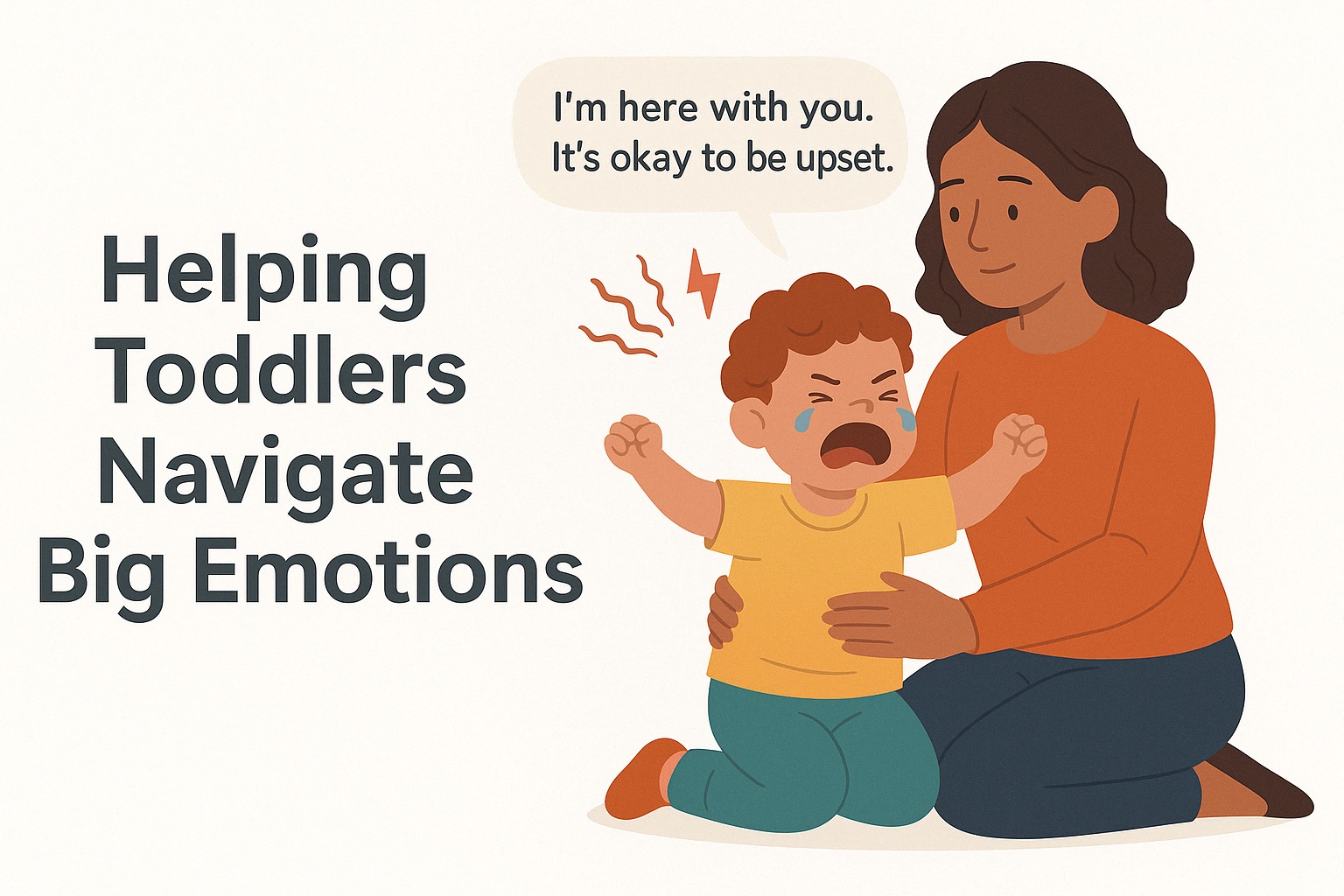
Your calm presence sets the emotional tone. Instead of reacting with anger or frustration, take a breath and stay near. Say something like, "I'm here with you. It's okay to be upset."
2. Name the Emotion
Help your child build emotional vocabulary. For example, say: "You're mad because your toy broke. That's really frustrating." This validates their feelings and teaches them words for what they're experiencing.
3. Offer Simple Choices
Giving toddlers control over small decisions (like choosing between two snacks or books) can reduce power struggles and build confidence.
4. Use Comfort Tools
Offer soothing activities like hugging a favorite stuffed animal, listening to calm music, or practicing deep breaths together. Create a "calm corner" at home with comforting items.
5. Wait Out the Tantrum, Then Reconnect
Sometimes, the best approach is to ride it out safely. When it's over, talk about what happened. For example: "You were really upset earlier. Next time, we can try using our words."
What to Avoid During Emotional Outbursts
- Don't dismiss their feelings: Avoid saying "you're fine" or "stop crying." This can make children feel misunderstood.
- Don't punish emotions: While boundaries are important, children need to feel safe expressing themselves.
- Don't try to reason in the middle of a meltdown: Wait until your child is calm before discussing what happened.
Creating an Emotionally Supportive Home
Building emotional intelligence starts at home. Try incorporating these routines:
- Emotion check-ins: Use daily opportunities to talk about how everyone is feeling — even yourself!
- Read books about emotions: Stories help toddlers relate to different feelings and learn that emotions are normal.
- Model healthy coping strategies: Let your child see you take deep breaths, talk through frustrations, or walk away when angry.
When to Seek Additional Support
Every child is different. But if your toddler is regularly harming themselves, others, or struggling to regulate emotions beyond the age of 3, consider speaking with a pediatrician or child psychologist for support. Early intervention can make a big difference.
Conclusion
Helping toddlers manage big emotions isn't easy — but it's one of the most powerful ways to nurture a lifelong sense of emotional resilience and self-awareness. By responding with empathy, structure, and consistency, parents can become a safe harbor for their child's stormy moments — and help guide them into calmer waters.
It takes a village to raise a child !
Join our WhatsApp Groups or Facebook Group to interact with parents about infant care/child care in Singapore..
Subscribe to Our Newsletter to get important information about pregnancy and parenting.