How to Get Your Toddler to Brush Teeth
How to Get Your Toddler to Brush Teeth
Evidence-based steps, micro-routines, and behavior tips that make twice-daily brushing doable (and even fun).
Why Toothbrushing Matters (Even for Baby Teeth)
- Prevents cavities (ECC): Early childhood caries can cause pain, poor sleep, and costly dental work.
- Protects adult teeth: Healthy baby teeth hold space for permanent teeth and support speech and nutrition.
- Builds lifelong habits: Short, predictable routines formed in toddler years stick.
When to Start & What You Need
- Start ASAP: Begin brushing as soon as the first tooth erupts; wipe gums before that with a clean cloth.
- Brush twice daily: Morning and last thing at night (after milk/food).
- Use fluoride toothpaste: Choose at least 1000–1100 ppm fluoride for caries prevention.
- Toothbrush: Small head, soft bristles; replace every 3 months or after illness.
- Floss: Start when any two teeth touch.
- First dental visit: By age 1 or within 6 months of first tooth.
| Age | Fluoride Amount | Notes |
|---|---|---|
| Under 3 years | Smear/rice-grain size | Supervise closely; encourage spitting. |
| 3–6 years | Pea-sized | Spit out after brushing; avoid rinsing with lots of water. |
Step-by-Step: A 3-Minute Brushing Micro-Routine
- Prime: “After we put on PJs, we brush.” Use a picture schedule or sand timer.
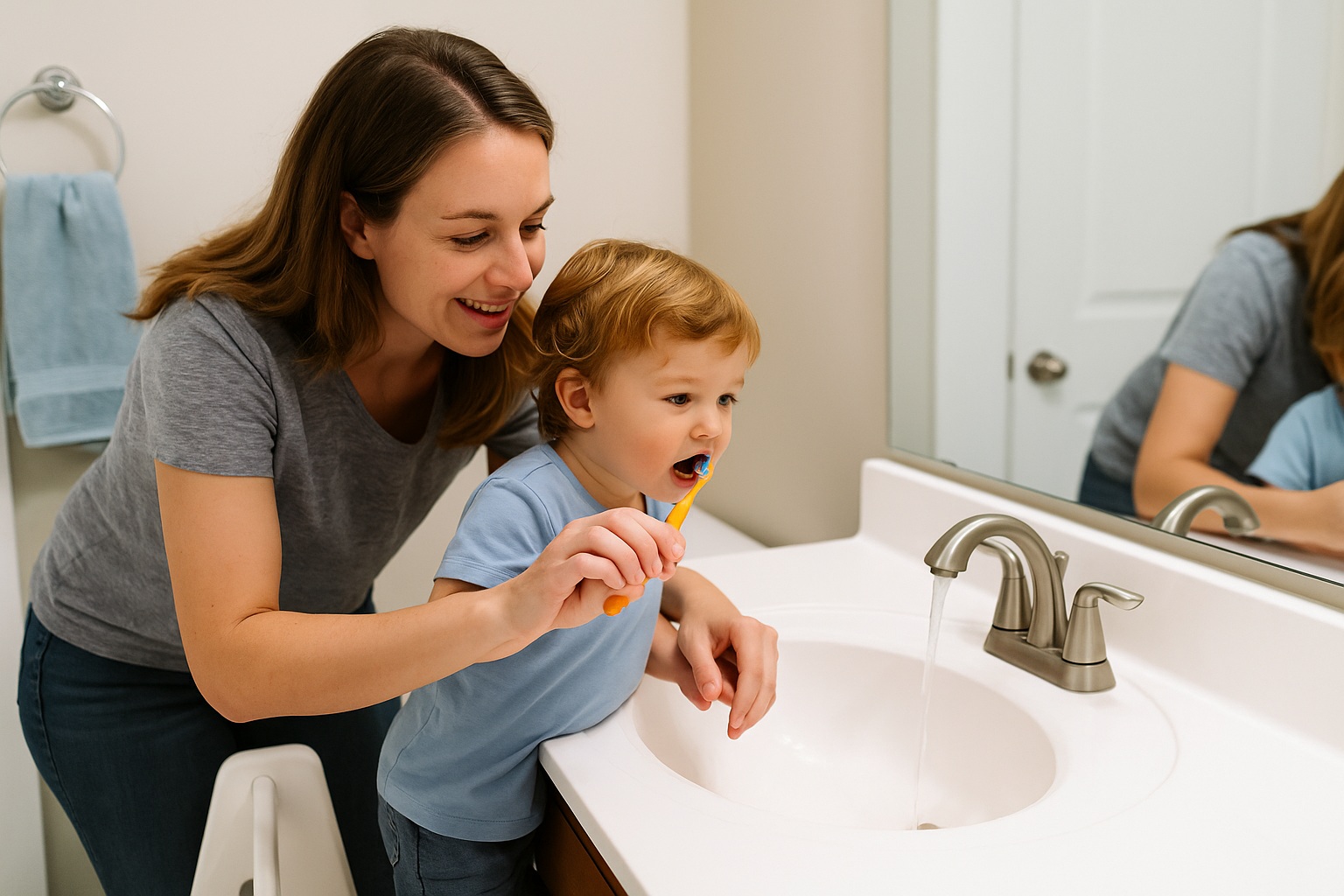
- Position: Stand behind your child facing the mirror; tilt chin slightly up. Use a step stool for stability.
- Apply toothpaste: Smear/pea size depending on age.
- Brush all surfaces: Outer -> inner -> chewing; small circles, gentle pressure (2 minutes total).
- Spit, don’t rinse hard: A tiny sip to swish is okay; heavy rinsing washes away fluoride.
- Floss touching teeth: Quick pass or floss picks.
- Praise and close: “You kept your mouth open—great teamwork!” Put brush back, high-five.
Make Brushing Toddler-Friendly (Behavior Tools)
- Choice within limits: “Blue or yellow brush?” “Brush or floss first?”
- Sing or time: A 2-minute song, countdown, or visual timer.
- Model & mirror: Brush together; toddlers imitate.
- Stuffed-toy demo: Let your child “brush” a doll first, then their own.
- Counting game: Count teeth as you go; “Find the sugar bugs”
- Gentle hold: For wiggly kids, knee-to-knee or lap position with a hug—not a pin.
- Taste and texture: Try a softer brush or milder mint/fruit flavor if they gag.
- Sticker calendar: Mark mornings and nights; praise effort, not perfection.
Nutrition & Routine Tips That Boost Success
- No milk/juice after night brushing: If needed, offer water only.
- Limit frequent sugary snacks & sticky foods: Offer them with meals, not as constant grazes.
- Water with fluoride (if available): Supports enamel strength.
Troubleshooting Common Problems
- Refusal/meltdowns: Keep the routine identical; empathize (“You don’t feel like brushing”) then follow through.
- Gagging: Use less paste; brush front teeth first; try a smaller brush and slower strokes.
- Bleeding gums: Often from plaque; brush gently but thoroughly for several days—if persistent, see a dentist.
- White/brown spots, pain, mouth odor: Book a dental check promptly.
- High cavity risk (bottle to bed, enamel defects): Ask your dentist about fluoride varnish.
Scientific & Professional Guidance
- American Academy of Pediatric Dentistry (AAPD): Use fluoride toothpaste from first tooth; smear (under 3), pea-sized (3–6); brush twice daily.
- American Academy of Pediatrics (AAP) & CDC: Begin dental visits by age 1; avoid bottles in bed; limit sugary exposures; supervise brushing.
- Cochrane & public health reviews: >1000 ppm fluoride toothpaste reduces caries in children compared with non-fluoride or very low-fluoride paste.
FAQ
My toddler hates brushing. Should I skip it?
No—keep it brief and consistent. Use choices, songs, and model brushing. Aim for two minutes, twice daily; something is better than nothing while you build the habit.
Is fluoride toothpaste safe for toddlers?
Yes, in the recommended amounts (smear for under 3; pea-size for 3–6). Supervise to minimize swallowing and keep toothpaste out of reach.
Should my child rinse after brushing?
Encourage spitting. Avoid heavy rinsing so fluoride can keep protecting teeth.
When do I start flossing?
As soon as any two teeth touch. Floss picks can make it easier.
Do electric toothbrushes help?
They can, especially for older toddlers who tolerate vibration. Choose a small, soft head and supervise.
Night milk after brushing—is it okay?
Best to avoid. Offer water only after the bedtime brush to prevent cavities.
It takes a village to raise a child !
Join our WhatsApp Groups or Facebook Group to interact with parents about infant care/child care in Singapore..
Subscribe to Our Newsletter to get important information about pregnancy and parenting.