How to Handle Food Refusal Without Bribing
"Just take one bite and I'll give you dessert." "Finish your vegetables and you can watch cartoons." Many parents use bribes at mealtimes because they are tired, worried or desperate for their child to eat something healthy.
However, bribing children to eat may work in the short term but can create bigger feeding struggles over time. It may teach children that healthy food is something unpleasant to "get through" before receiving a reward. It can also turn mealtimes into a power struggle.
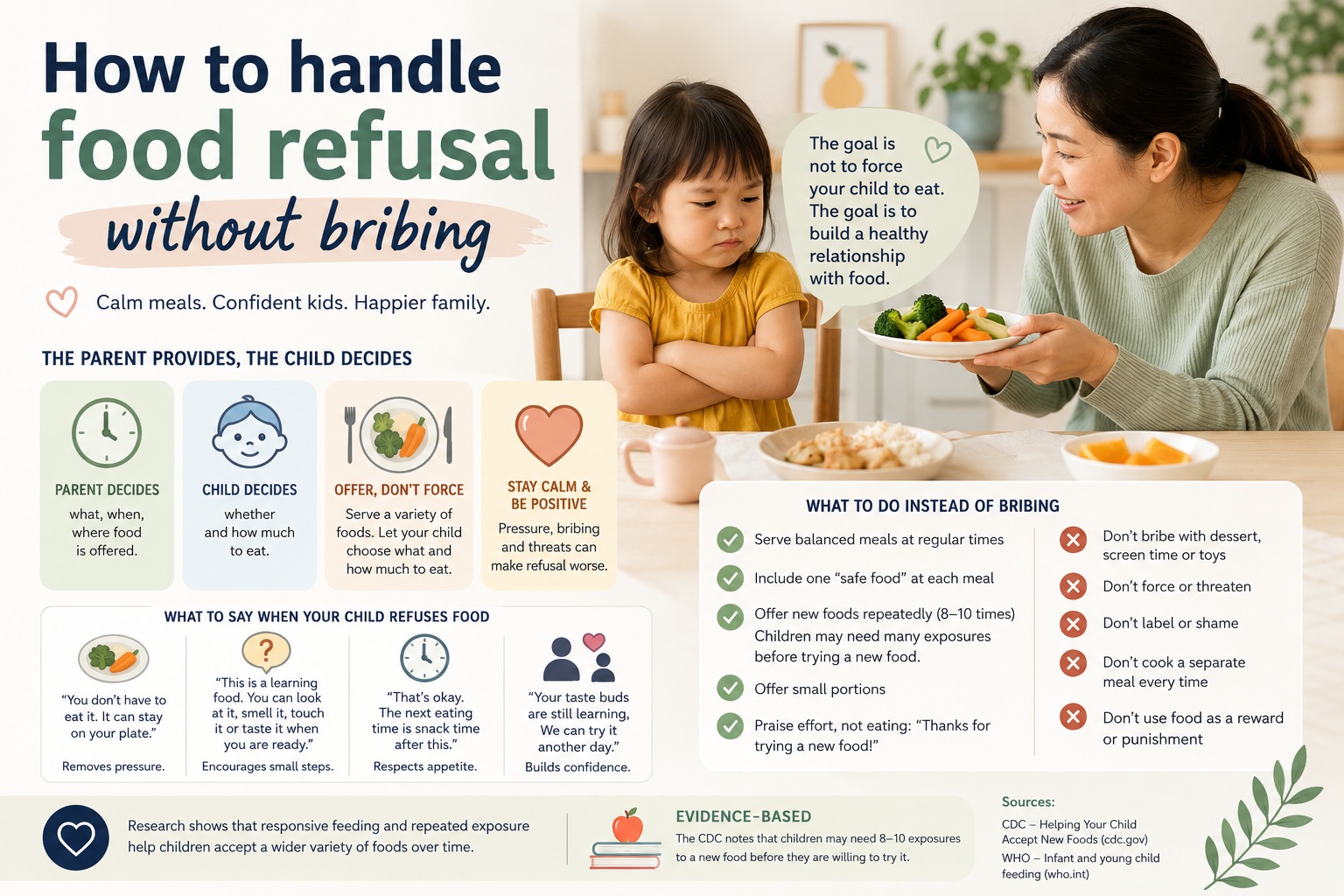
The better goal is not to force a child to eat. The goal is to build a calm mealtime routine where children are regularly exposed to a variety of foods, learn to listen to their hunger and fullness cues, and gradually become more comfortable with new foods.
This article explains how parents can handle food refusal without bribing, threatening or turning every meal into a battle.
Why Children Refuse Food
Food refusal is common, especially among toddlers and preschoolers. A child may refuse food because:
- they are not hungry yet;
- they are tired or overstimulated;
- they dislike the texture, smell or appearance of the food;
- they are going through a picky eating phase;
- they want control over their body and choices;
- they have filled up on milk, snacks or drinks before the meal;
- they are feeling unwell;
- they are pressured too much at the table.
Food refusal does not always mean the child is being naughty. Very often, it is a normal part of development. Young children are still learning to accept different tastes, textures and smells.
Why Bribing Is Not the Best Long-Term Solution
Bribing usually sounds like this:
- "Eat your broccoli and you can have ice cream."
- "Finish your rice and I'll give you my phone."
- "If you don't eat, no toys later."
- "One more bite and I'll buy you something."
These methods may get a few bites into the child, but they can send the wrong message. The child may learn that vegetables, meat or family food are unpleasant tasks, while dessert, screen time or toys are the real prize.
Over time, bribing can make children more focused on the reward than on their own hunger, fullness and willingness to try food. It can also encourage negotiation at every meal.
The Better Approach: Parent Provides, Child Decides
A useful evidence-based feeding principle is sometimes known as the "division of responsibility". In simple terms:
- Parents decide what food is served, when meals and snacks happen, and where eating takes place.
- Children decide whether to eat and how much to eat from what is offered.
This does not mean children can eat anything they want at any time. It means parents stay in charge of the food environment, while children are not forced, pressured or bribed to eat.
For example, a parent may serve rice, fish, vegetables and fruit at dinner. The child may choose to eat only rice and fruit that day. The parent does not need to cook a separate meal immediately. The parent can simply keep the routine calm and offer balanced food again at the next meal.
What to Say When Your Child Refuses Food
When a child says, "I don't want this," parents often feel anxious. Instead of bribing, try short and calm scripts.
Situation 1: Child says, "I don't like it!"
Try saying:
"You don't have to eat it. It can stay on your plate."
Why it helps: This removes pressure while still allowing exposure to the food.
Situation 2: Child refuses to try a new food
Try saying:
"This is a learning food. You can look at it, smell it, touch it or taste it when you are ready."
Why it helps: Trying new food is not only about swallowing. Looking, smelling and touching are also steps towards acceptance.
Situation 3: Child asks for snacks instead of dinner
Try saying:
"Snack time is over. This is dinner. You can choose what to eat from the food on the table."
Why it helps: It keeps the boundary clear without turning dinner into a fight.
Situation 4: Child says, "I'm not hungry"
Try saying:
"That's okay. You don't have to eat. The next eating time is snack time after this."
Why it helps: It respects the child's appetite while keeping the meal schedule predictable.
Situation 5: Child demands a different meal
Try saying:
"This is what we are having for dinner. You can choose from what is served."
Why it helps: It prevents the parent from becoming a short-order cook while still giving the child some choice.
Use Repeated Exposure, Not Pressure
Many children need to see a new food many times before they are willing to taste it. Some may need repeated exposure across different meals before accepting it.
Parents can offer a rejected food again after a few days without forcing the child to eat it. For example, if the child refuses carrots today, serve a small amount again another day. Try different forms: steamed carrot sticks, grated carrot in rice, carrot soup or carrot with a familiar dip.
The key is to keep the portion small and the mood calm.
Serve One "Safe Food" at Each Meal
A safe food is a food your child usually accepts. This does not mean serving only nuggets, fries or plain noodles every day. It means including one familiar item as part of a balanced meal.
For example:
- rice + chicken + vegetables + fruit;
- pasta + egg + cucumber + soup;
- porridge + fish + tofu + small vegetable portion;
- bread + cheese + fruit + yoghurt.
When there is at least one familiar food, the child feels safer at the table and may be more willing to explore other foods over time.
Do Not Turn Dessert Into a Reward
A common bribe is: "Eat your vegetables first, then you can have dessert." This may increase the value of dessert and make vegetables seem like a punishment.
Instead, parents can serve dessert occasionally as part of the meal or at a planned time, without making it a reward for eating other foods.
Instead of saying:
"If you finish your dinner, you can have cake."
Try saying:
"Cake is part of today's meal. You can eat your food in any order."
This reduces the power struggle and helps children see all foods more neutrally.
Keep Mealtimes Predictable
Children often eat better when meals and snacks happen at regular times. If a child grazes throughout the day, drinks too much milk or fills up on snacks, they may naturally refuse meals.
A simple structure may look like this:
- Breakfast
- Morning snack
- Lunch
- Afternoon snack
- Dinner
Water can be available between meals, but frequent snacks, sweet drinks or milk close to mealtime may reduce appetite.
Make the Plate Less Overwhelming
Large portions can make children feel pressured before they even start eating. For food-refusing children, serve very small portions first.
For example:
- one small broccoli floret;
- one spoon of rice;
- one thin slice of fish;
- two pieces of fruit;
- one teaspoon of a new food.
Children can always ask for more. A small portion makes the food feel less scary and reduces waste.
Let Children Participate Without Forcing Them to Eat
Children may become more interested in food when they are involved before the meal. Depending on age, they can:
- wash vegetables;
- mix ingredients;
- choose between two vegetables;
- arrange fruit on a plate;
- help set the table;
- smell herbs or sauces;
- choose a bowl or spoon.
Involvement gives the child a sense of control without letting them control the entire menu.
Model the Behaviour You Want
Children learn a lot by watching adults. If parents want children to try vegetables, fruits and balanced meals, it helps when the family eats similar foods together.
Useful parent scripts include:
- "This cucumber is crunchy."
- "I used to dislike this, but I'm learning to enjoy it."
- "You don't have to like every food today. Your taste buds are still learning."
- "We try different foods because they help our body grow strong."
Avoid dramatic comments such as "This is so healthy, you must eat it" or "You are so picky". Keep food talk neutral and positive.
What Parents Should Avoid
When dealing with food refusal, try to avoid:
- Bribing: "Eat this and you get a reward."
- Threatening: "If you don't eat, you are in trouble."
- Begging: "Please, just one bite for Mummy."
- Labelling: "You are such a picky eater."
- Forcing: pushing food into the child's mouth.
- Cooking unlimited alternatives: making a new meal every time the child refuses.
- Using screens to distract-feed: letting the child eat without noticing hunger or fullness.
These methods may increase stress around food and make the child more resistant over time.
Practical Food Refusal Scripts for Parents
| Child Says or Does | Parent Can Say | Purpose |
|---|---|---|
| "I don't like this!" | "You don't have to eat it. It can stay on your plate." | Reduces pressure |
| "Can I have biscuits instead?" | "Biscuits are not on the menu now. You can choose from what is on the table." | Sets a clear boundary |
| Pushes food away | "You may leave it there. Food stays on the plate." | Allows refusal without mess |
| Refuses vegetables | "Your taste buds are still learning. You can try another day." | Encourages repeated exposure |
| Asks for dessert | "Dessert is not a reward. Today we are having fruit after dinner." | Avoids bribing |
| Says "I'm full" after two bites | "Okay. Listen to your tummy. The next eating time is snack time." | Respects fullness while keeping structure |
What If the Child Eats Very Little?
It is normal for appetite to vary from day to day. Some children eat a lot at breakfast and very little at dinner. Others eat better on some days and less on others.
Instead of judging one meal, look at the child's intake over several days or a week. Also look at growth, energy, mood, sleep and overall development.
If the child is growing well, active and generally healthy, occasional food refusal is usually less worrying. If there are concerns about weight loss, poor growth, choking, vomiting, extreme restriction or anxiety around food, parents should seek medical advice.
When to Seek Professional Help
Parents should consider speaking to a doctor, dietitian, speech therapist or feeding specialist if the child:
- is losing weight or not growing as expected;
- eats fewer and fewer foods over time;
- gags, chokes or vomits frequently during meals;
- has difficulty chewing or swallowing;
- refuses entire food groups;
- has strong sensory reactions to food textures;
- shows fear, distress or panic around eating;
- has ongoing constipation, reflux or stomach pain;
- depends heavily on milk, formula or supplements beyond the expected age.
Early support can help reduce stress and prevent feeding issues from becoming more difficult.
Simple Mealtime Plan Without Bribing
Here is a practical plan parents can try for two weeks:
- Set regular meal and snack times.
- Offer water between meals instead of constant snacks or sweet drinks.
- Serve one familiar food with each meal.
- Serve tiny portions of new or disliked foods.
- Do not force, bribe or beg.
- Let the child decide whether and how much to eat.
- Keep rejected foods neutral and offer them again another day.
- Praise calm sitting, trying, smelling, touching or polite refusal.
- Model eating a variety of foods as a family.
- Look at progress over weeks, not one meal.
Conclusion
Food refusal can be frustrating, but bribing is not the only option. Parents can handle refusal calmly by keeping meals structured, offering repeated exposure, serving small portions, including familiar foods and allowing the child to decide how much to eat.
The most helpful message to the child is: "You are safe. Food is not a fight. You can learn at your own pace, and I will keep offering balanced meals."
When parents stop bribing and start using calm, consistent feeding routines, mealtimes often become less stressful for everyone.
Frequently Asked Questions
1. Should I force my child to take one bite?
It is usually better not to force a child to eat. Forced bites can increase resistance and make the child more anxious around food. Instead, allow the child to look, smell, touch or taste the food when ready.
2. Is it okay to reward my child with dessert for eating vegetables?
Using dessert as a reward may make dessert seem more valuable and vegetables seem unpleasant. A better approach is to serve balanced meals regularly and avoid making dessert a bargaining tool.
3. What should I do if my child refuses dinner?
Stay calm. You can say, "You don't have to eat, but this is dinner. The next eating time is snack time." Avoid cooking a completely different meal immediately unless there is a medical or developmental reason.
4. How many times should I offer a rejected food?
Some children need many exposures before accepting a new food. Offer a small amount again another day without pressure. Try different forms, such as steamed, roasted, sliced, grated or mixed with familiar foods.
5. What if my child only wants snacks?
Create a predictable meal and snack routine. Avoid allowing constant grazing throughout the day. If the child asks for snacks at dinner, calmly say, "Snack time is over. This is dinner."
6. Should I let my child choose what to eat?
Parents should decide what foods are offered, but children can be given limited choices. For example, "Would you like cucumber or tomato with lunch?" This gives some control without giving the child full control of the menu.
7. When is picky eating a concern?
Seek professional advice if your child is losing weight, not growing well, refuses many food groups, gags or vomits often, has trouble chewing or swallowing, or becomes very distressed around food.
This article is for general parenting education and does not replace medical advice. If you are concerned about your child's growth, nutrition or feeding behaviour, consult a qualified healthcare professional.
It takes a village to raise a child !
Join our WhatsApp Groups or Facebook Group to interact with parents about infant care/child care in Singapore..
Subscribe to Our Newsletter to get important information about pregnancy and parenting.