Sibling Spread: Limiting Germs When One Child Is Down
Simple, science-based steps to cut household transmission—especially in the bathroom, with towels/linens, and shared toys.
In one minute
- Wash hands well and often—soap, 20 seconds, all surfaces—especially after toilet/diapering and before food.
- Clean routinely; disinfect when someone is sick (or recently visited) and on high-touch surfaces.
- Keep personal items separate (towels, cups, toothbrushes, pacifiers, toys likely to be mouthed).
- Laundry is simple: use the warmest appropriate setting and dry items completely; sick person’s laundry can be washed with others’.
- Disinfect right: for general household surfaces a 0.1% (1,000 ppm) bleach solution or an EPA-registered product; use higher strength for vomit/diarrhoea (e.g., norovirus).
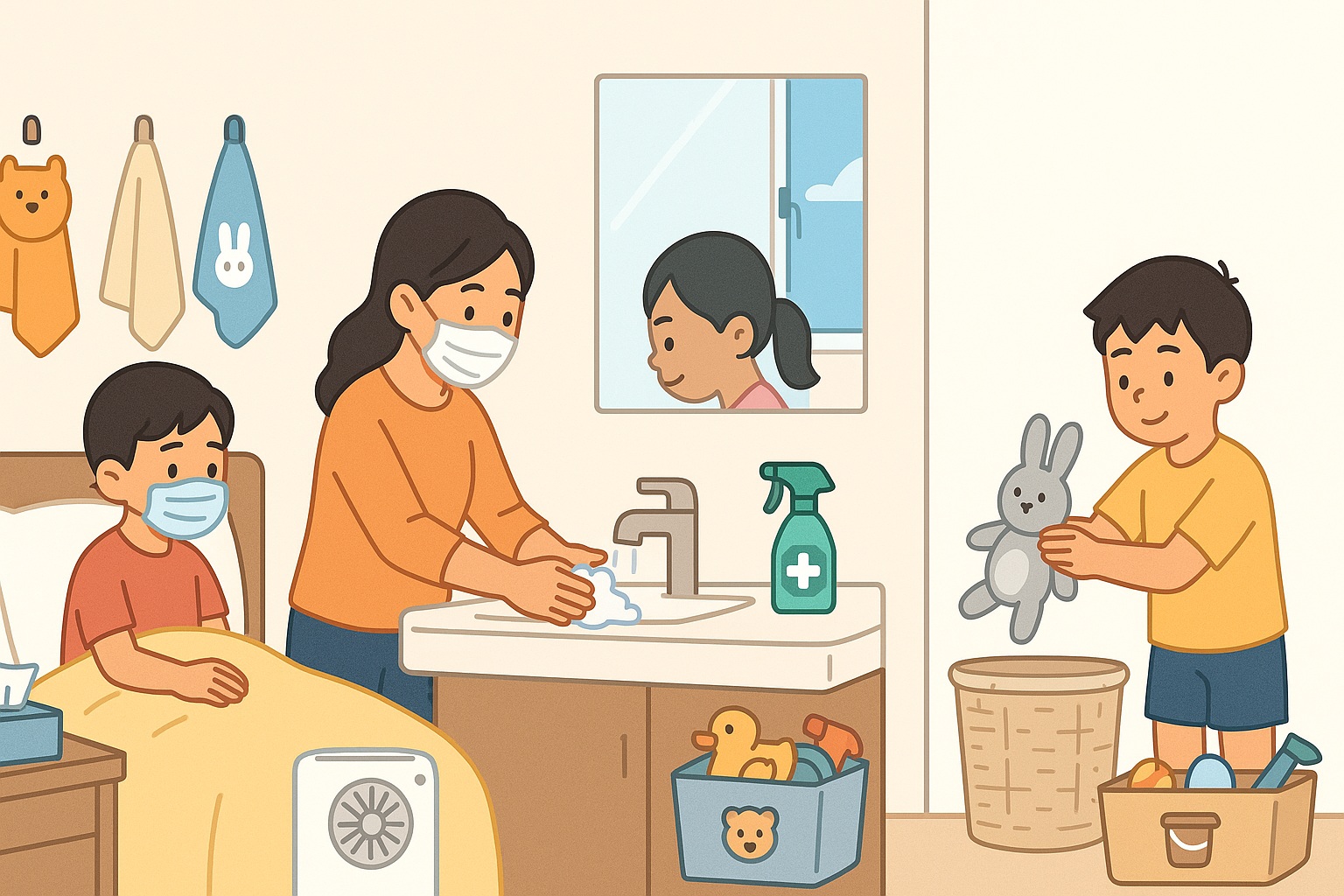
- If it’s a respiratory bug, the ill child should stay home/away from others until improving and fever-free for 24h; mask if they must be near others.
How germs jump between siblings
Kids share bathrooms, towels, toys, and lots of close contact. Hands and high-touch surfaces (taps, flush handles, doorknobs, railings, game controllers) are the main highways for everyday viruses and bacteria. Good handwashing plus targeted cleaning breaks these chains.
Bathroom hygiene: your highest-yield moves
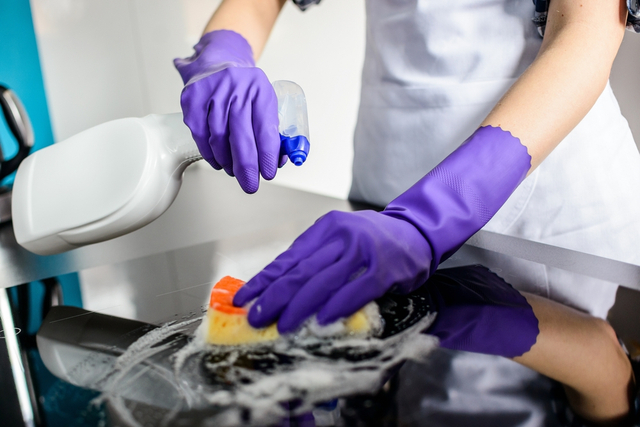
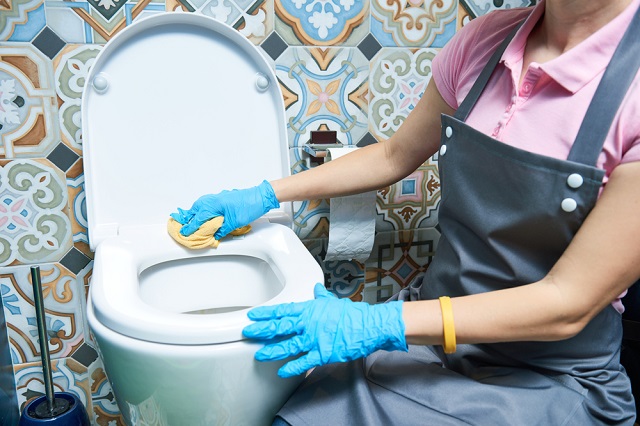
- Assign a bathroom if possible. If not, set “sick-time blocks” and clean high-touch points after the ill child uses the space (tap handles, toilet seat/flush, sink rim, light switches). Clean first, then disinfect.
- Toilet/diaper routines. Wash hands with soap and water for 20 seconds after every toilet visit or diaper change; caregivers should do the same.
- Disinfect right. For general surfaces, use 0.1% bleach (about 1 part 5% bleach to 49 parts water) or an appropriate disinfectant; for vomit/diarrhoea messes, use 1,000–5,000 ppm bleach and follow product contact-time. Ventilate and keep chemicals out of children’s reach.
- Toothbrushes. Never share; store brushes so they don’t touch. Replace every 3–4 months or when frayed. For bacterial strep throat, many clinicians advise replacing the toothbrush after 24–48h of antibiotics; evidence is mixed, so treat as optional.
- Paper towels or personal hand towels. Use disposable paper towels temporarily, or strictly one towel per person with daily changes while someone is sick.
Towels & linens: what to separate, what to wash
- Personal towels only. Colour-code or label towels, face cloths, and bath sponges for each child. Don’t share.
- Laundry handling. It’s safe to wash a sick child’s items with others’; avoid shaking laundry, use the warmest appropriate water, and dry completely. Clean the basket/hamper as a surface and wash hands after handling.
- Hot water helps. High-temperature cycles are effective; bleach adds an extra safety margin when fabric allows.
Toys & shared items
Prioritise toys that are washable and keep “mouthed” toys out of common circulation until cleaned. In households, thorough cleaning with soap and water is often sufficient; sanitise or disinfect during illness, especially for items used by many hands or that go in mouths.
- Set up two bins: “Clean” and “To be washed.” Move any toy that’s mouthed or sneezed on into the wash bin immediately.
- How to sanitise/disinfect toys: After cleaning, either boil/steam where appropriate or use a weakened bleach solution/EPA-registered product and allow proper contact time; air-dry completely before reuse.
- Soft toys: Launder and machine-dry on the warmest suitable setting.
- Safety first: store chemicals in original containers, locked and out of children’s reach; ensure ventilation.
Air, distance, and timing
- Respiratory illnesses: the sick child should stay home and away from others while symptomatic; resume normal activities when improving and fever-free for 24 hours. If they must be around others indoors, masking and some distance reduce risk.
- Ventilation: open windows or use mechanical ventilation where possible during cleaning and when the ill child is in shared spaces.
Quick household checklist
- Dedicated bathroom time or bathroom for the sick child; clean high-touch spots after use.
- Strict one-person towels; swap daily until recovery.
- Separate toothbrush storage; no sharing; routine replacement every 3–4 months.
- Two toy bins (clean / to-wash); wash, then sanitise/disinfect during illness.
- Laundry: warmest suitable water, full dry; hand hygiene after handling.
- Disinfect with correct bleach strength and contact time; ventilate and store chemicals safely.
When to call your doctor urgently
Dehydration (very few wet nappies/urine), breathing difficulty, persistent high fever, rash with severe illness, lethargy, or if you’re worried—especially for infants, elderly caregivers, or immunocompromised family members.
FAQ
1) Do I have to disinfect everything every day?
No. Routine cleaning is fine most of the time. Disinfect when someone is sick (or just visited) and for high-touch surfaces (taps, toilet flush, doorknobs, switches). :contentReference[oaicite:28]{index=28}
2) What bleach strength should I use?
For general surfaces, 0.1% (about 1,000 ppm) sodium hypochlorite is recommended. For vomit/diarrhoea cleanup (e.g., suspected norovirus), use 1,000–5,000 ppm and observe the label’s contact time. :contentReference[oaicite:29]{index=29}
3) Can siblings share towels if I wash them daily?
Best practice is no sharing while anyone is ill; give each child their own towel and wash frequently. :contentReference[oaicite:30]{index=30}
4) Should I throw away my child’s toothbrush after every illness?
Always keep toothbrushes separate and replace them every 3–4 months. For strep throat, many clinicians advise replacing the brush after 24–48 hours of antibiotics; the evidence isn’t strong, so consider it optional rather than mandatory. :contentReference[oaicite:31]{index=31}
5) Is it safe to wash the sick child’s clothes with the rest?
Yes. Use the warmest appropriate water for the fabric and dry completely; avoid shaking laundry and clean hampers as you would other surfaces. :contentReference[oaicite:32]{index=32}
6) What about masks at home?
If a child with a respiratory virus must be around others indoors, masking is an added layer of protection while they recover and for the first day back to activities. :contentReference[oaicite:33]{index=33}
Educational information; not a substitute for medical advice. For Singapore families, follow your clinic’s recommendations and MOH advisories.
It takes a village to raise a child !
Join our WhatsApp Groups or Facebook Group to interact with parents about infant care/child care in Singapore..
Subscribe to Our Newsletter to get important information about pregnancy and parenting.