Sleep, Nutrition and Hydration to Reduce Sick Days: Evidence vs Hype
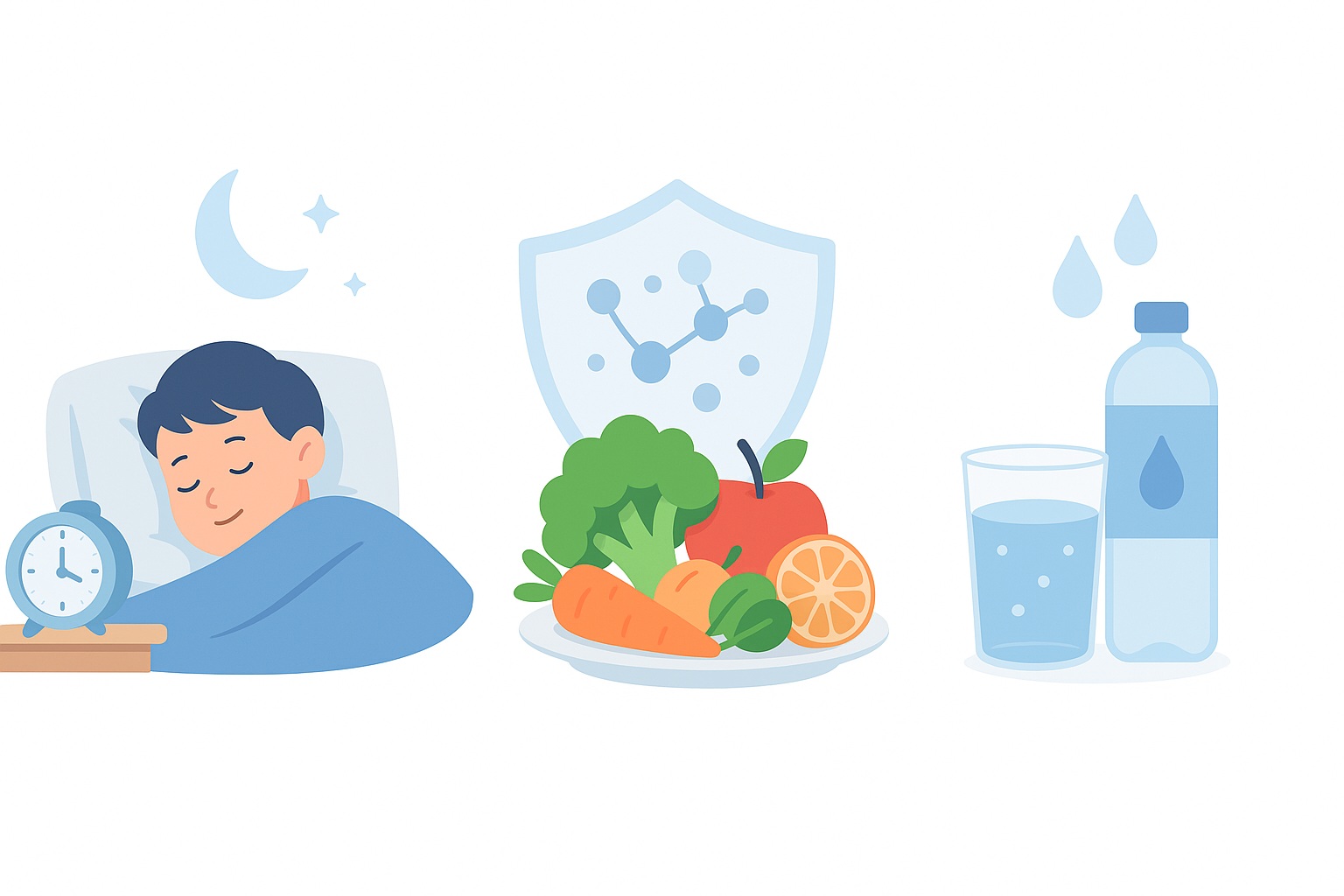
TL;DR: The strongest day-to-day levers for fewer sick days are adequate sleep and meeting basic nutrient needs. Hydration supports comfort and overall function but has little proof it prevents colds. Supplements help mainly when there’s a deficiency; megadoses and “immunity shots” are mostly hype.
1) Sleep: your strongest everyday “immune booster”
Short sleep meaningfully raises the chance of getting sick after viral exposure. Consistently meeting age-based sleep needs supports immune responses (including to vaccines). Practical takeaway: protect sleep, especially during school terms and the week before vaccinations.
How much sleep do kids need?
- 3–5 years: 10–13 hours per 24h (including naps)
- 6–12 years: 9–12 hours per 24h
- 13–18 years: 8–10 hours per 24h
- Adults: about 7+ hours nightly
Quick wins for better sleep
- Keep a consistent bedtime/wake time (weekends within ~1 hour).
- Wind-down routine: lights low, screens off 60 minutes before bed.
- Cool, dark, quiet bedroom; avoid caffeine after early afternoon.
2) Nutrition: meet needs first, then think “pattern”, not pills
Immune cells require protein, iron, zinc, vitamins A/D/C, and other micronutrients. The biggest risk for frequent illness is insufficient intake (e.g., iron or vitamin D deficiency) rather than not taking special supplements. A consistent, whole-foods diet supports the gut microbiome and reduces inflammation over time.
Build your plate (Singapore-friendly)
- Half plate: fruits & vegetables of many colours (vitamins, polyphenols, fibre)
- Quarter: whole grains (brown rice, whole-meal bread/noodles)
- Quarter: protein (fish, poultry, egg, tofu/tempeh, beans; include dairy or calcium-fortified alternatives)
- Use healthy oils; limit ultra-processed snacks and sugary drinks.
Where supplements can help
- Vitamin D: If deficient (common in indoor lifestyles), daily/weekly dosing can reduce acute respiratory infections. Ask your doctor about testing and the right dose.
- Iron: Correcting iron deficiency in kids improves health; do not supplement without confirming deficiency (risk of side effects).
- Probiotics: Certain strains modestly reduce URTIs in children (strain- and product-specific; effects are small). Yogurt with live cultures is a food-first option.
Common “immunity” add-ons—what the evidence says
| Strategy | What the evidence says | How to use (if you choose) |
|---|---|---|
| Vitamin C (regular daily use) | Does not prevent colds in the general population; may shorten duration slightly. | Food-first (fruits/veg). If supplementing, standard doses (e.g., 200–500 mg/day) during illness may help a little. |
| Zinc lozenges (at first symptoms) | Some adult trials show shorter cold duration if started within 24 hours. Avoid intranasal zinc—linked to loss of smell. | Use oral lozenges only; keep total daily zinc within safe limits; not for very young children without medical advice. |
| Probiotics | Modest reduction in URTI episodes/days absent from school in some studies; effects vary by strain. | Consider daily use during school term; choose products listing specific strains and CFU. |
| Multivitamin “immunity” gummies | Helpful mainly to cover gaps; mixed evidence they reduce infections if diet is already adequate. | At most 100% Daily Value for age; avoid mega-doses. Food quality still matters more. |
| Elderberry, echinacea, “immunity shots” | Evidence is inconsistent or low-certainty; may shorten symptoms a bit, but not proven to prevent illness. | If you try them, use reputable products; avoid raw elderberry; do not replace vaccines or sleep/nutrition. |
3) Hydration: important for comfort—just don’t expect miracles
Staying hydrated helps mucus stay less thick and supports overall function. However, research has not shown that drinking extra fluids prevents or cures colds. Practical target in Singapore’s climate: roughly 6–8 cups a day (more with heat/exercise), and use urine colour as your guide (pale = well hydrated).
Hydration tips
- Water first; milk or soup can count. Keep sweetened drinks occasional.
- During fever or heavy sweating, offer small, frequent sips; add oral rehydration solution if vomiting/diarrhoea.
- Watch for dehydration: very dark urine, infrequent peeing, dry mouth, lethargy—seek medical advice.
What actually moves the needle?
- Protect sleep time (biggest everyday win).
- Meet nutrient needs: balanced plate; check vitamin D/iron if risk factors.
- Reasonable hydration (comfort & function), not chugging.
- Don’t forget basics: vaccination, hand-washing, outdoor time, exercise.
FAQ
Q1. Will drinking lots of water stop my child catching colds?
No evidence it prevents infections; aim for steady hydration for comfort and normal body functions.
Q2. Should my child take daily vitamin C to avoid sick days?
Daily vitamin C doesn’t lower infection risk for most people; it may shorten symptoms a little once sick.
Q3. Which probiotic is “best”?
Effects are strain-specific (e.g., certain Lactobacillus or Bifidobacterium strains). Choose products that list strains and CFU; expect modest benefits.
Q4. Is zinc safe for kids?
Oral zinc in appropriate doses can be used short-term in older children/adults; avoid intranasal zinc entirely due to risk of smell loss. Ask your GP for paediatric dosing.
Q5. When should we see a doctor?
Breathing difficulty, dehydration signs, persistent high fever (>38.5°C for >3 days), chest pain, wheeze, ear pain, or if your child has chronic conditions or is under 3 months old.
Bottom line
For fewer sick days, prioritise sleep, keep meals nutrient-dense, maintain sensible hydration, and use supplements strategically (to correct deficiencies)—not as substitutes for healthy routines.
It takes a village to raise a child !
Join our WhatsApp Groups or Facebook Group to interact with parents about infant care/child care in Singapore..
Subscribe to Our Newsletter to get important information about pregnancy and parenting.