BLW vs Purées: Pros, Cons and Safety Rules for Starting Solids
When babies are ready to start solids, many parents wonder: should I start with baby-led weaning, purées, or a mix of both? Some parents like the idea of baby-led weaning because babies feed themselves and join family meals. Others prefer purées because they feel easier, cleaner and more controlled.
The good news is that there is no single “perfect” method for every baby. The NHS states that some parents prefer baby-led weaning, some prefer spoon-feeding, and others combine both; the most important thing is that the baby eats a wide variety of foods and gets the nutrients they need. Source: NHS
This guide compares baby-led weaning and purées, explains the pros and cons, and gives important safety rules to reduce choking risk and support healthy eating.
Quick Answer: Is BLW or Purées Better?
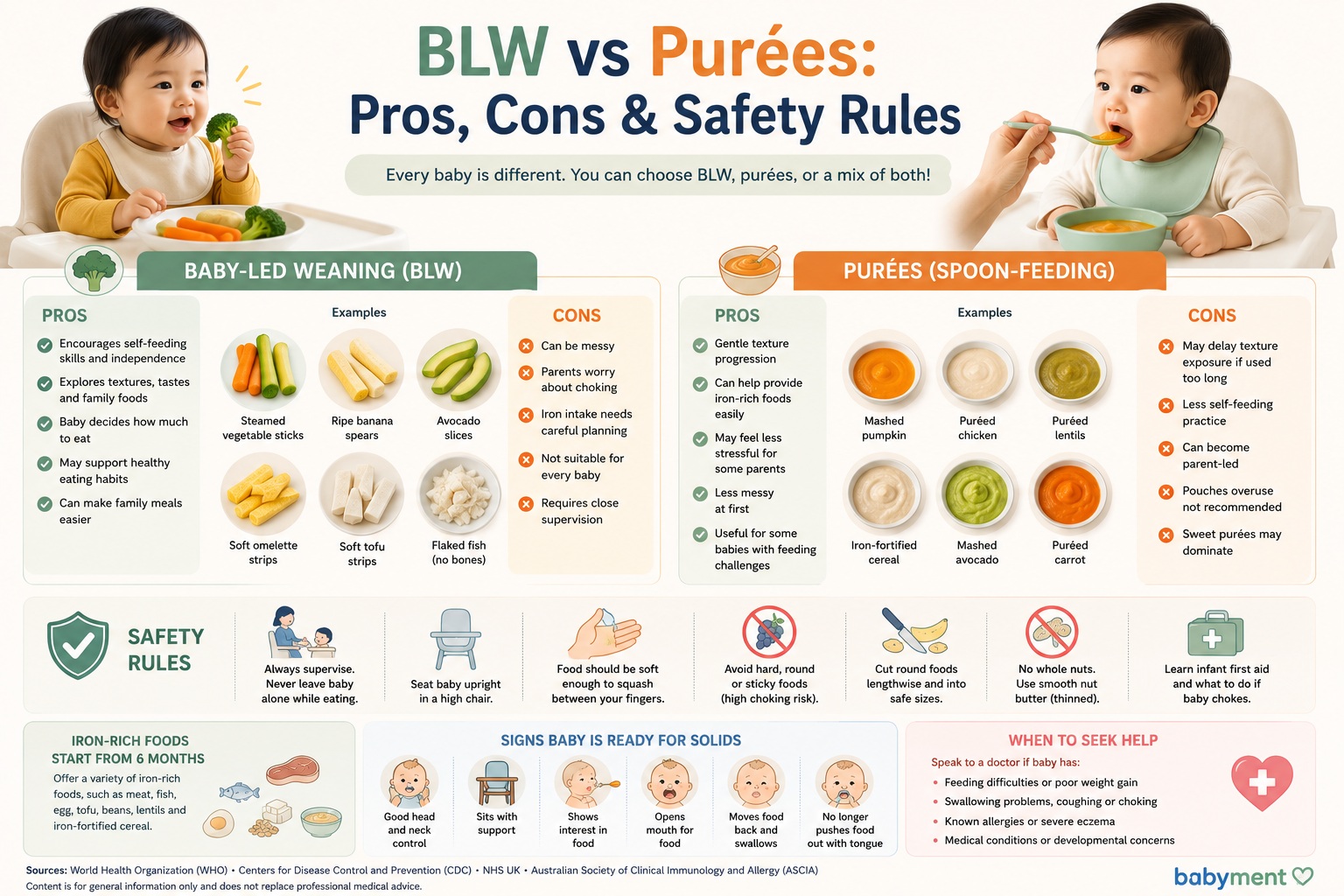
Neither baby-led weaning nor purées are automatically better for every baby. Baby-led weaning may help babies practise self-feeding, explore textures and join family meals. Purées may help parents introduce iron-rich foods in a controlled way and may suit babies who need a gentler texture progression.
Many families use a mixed approach: soft finger foods plus mashed or puréed foods. This can give babies texture practice while helping parents offer nutrient-rich foods such as meat, fish, egg, beans, lentils, tofu and vegetables.
When Is Baby Ready to Start Solids?
Most babies are ready for solid foods at around 6 months. The CDC says children can begin eating solid foods at about 6 months, and introducing foods before 4 months is not recommended. Parents should look for developmental readiness signs. Source: CDC
Signs your baby may be ready include:
- Baby can sit with support and has good head and neck control.
- Baby shows interest in food when others are eating.
- Baby opens the mouth when food is offered.
- Baby can move food from the spoon or hand towards the throat and swallow.
- Baby no longer pushes most food out with the tongue automatically.
If your baby was born premature, has feeding difficulties, poor weight gain, developmental delays, reflux, swallowing concerns or medical conditions, speak to your doctor or dietitian before starting solids.
What Is Baby-Led Weaning?
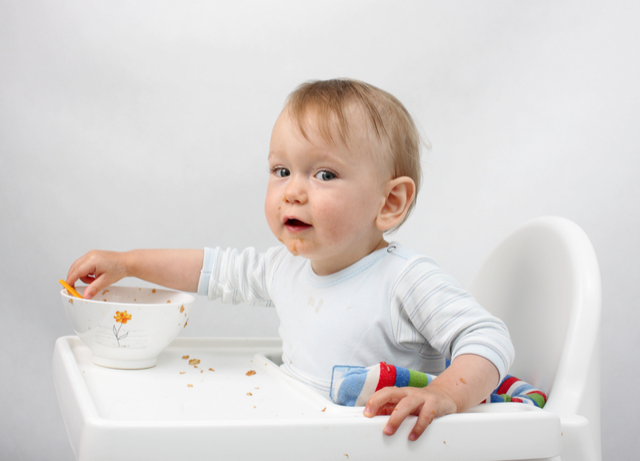
Baby-led weaning, often called BLW, means offering babies soft, safe finger foods and allowing them to feed themselves from the start, instead of relying mainly on spoon-fed purées.
Examples of BLW-style first foods may include:
- soft steamed carrot sticks;
- ripe banana spears;
- soft avocado slices;
- well-cooked sweet potato wedges;
- soft omelette strips;
- soft tofu strips;
- flaked fish with bones removed;
- soft pasta pieces;
- well-cooked broccoli florets with soft stems.
Food must be soft enough to squash easily between your fingers and prepared in a shape that reduces choking risk.
Pros of Baby-Led Weaning
- Encourages self-feeding: Baby practises picking up food and bringing it to the mouth.
- Supports texture exploration: Baby learns different shapes, textures and tastes early.
- May make family meals easier: Baby can eat suitable parts of family food, with no added salt or sugar.
- Supports responsive feeding: Baby decides how much to eat from the foods offered.
- Can reduce pressure: Parents do not need to push spoonfuls into baby’s mouth.
Cons of Baby-Led Weaning
- Can be messy: Babies drop, squash and throw food as part of learning.
- Parents may worry about choking: Safe preparation and close supervision are essential.
- Iron intake needs attention: Babies need iron-rich foods from around 6 months, and some finger foods may not provide enough iron unless planned carefully.
- It may not suit every baby: Babies with feeding, swallowing, developmental or medical concerns may need professional guidance.
- Family food may need changes: Baby’s food should be low in salt and sugar and prepared safely.
What Are Purées?
Purées are smooth foods blended or mashed to a soft texture and usually offered by spoon. Some parents start with thin, smooth purées and gradually move to thicker mashed foods, soft lumps and finger foods.
Examples include:
- smooth mashed pumpkin;
- puréed carrot;
- mashed avocado;
- iron-fortified infant cereal mixed with breast milk or formula;
- puréed chicken or fish;
- mashed beans or lentils;
- smooth tofu with vegetables;
- fruit purée such as apple or pear.
Pros of Purées
- Gentle texture progression: Smooth purées may suit babies who are just learning to move food in the mouth.
- Can help introduce iron-rich foods: Meat, fish, beans, lentils and fortified cereals can be offered in a suitable texture.
- May feel less stressful for some parents: Parents can control the texture and portion more easily.
- Useful for some babies: Babies with feeding challenges may need softer textures under guidance.
- Less messy at first: Spoon-feeding may create less mess than finger foods.
Cons of Purées
- Can delay texture exposure if used too long: Babies need to progress to mashed, lumpy and finger foods as skills develop.
- Can become parent-led rather than baby-led: Parents may unintentionally pressure baby to finish the bowl.
- May reduce self-feeding practice: Baby may get fewer chances to practise picking up food.
- Commercial pouches can be overused: Babies who suck directly from pouches may miss texture practice and family food exposure.
- Sweet purées may dominate: If babies are mostly given fruit purées, they may get less exposure to vegetables, proteins and savoury foods.
BLW vs Purées: Comparison Table
| Area | Baby-Led Weaning | Purées |
|---|---|---|
| Main method | Baby self-feeds soft finger foods. | Parent offers smooth or mashed food by spoon. |
| Best for | Texture exploration, self-feeding practice and family meals. | Controlled texture progression and easy offering of some iron-rich foods. |
| Parent role | Prepare safe foods, supervise closely and let baby explore. | Offer food responsively and stop when baby shows fullness. |
| Main concern | Choking risk if food is not prepared safely; iron intake needs planning. | May delay texture progression if baby stays on smooth purées too long. |
| Mess level | Usually messier. | Usually less messy at first. |
| Can it be combined? | Yes. Baby can have soft finger foods and spoon-fed mashed foods. | Yes. Purées can be used alongside finger foods. |
The Mixed Approach: Often the Most Practical Choice
Many families do not need to choose strictly between BLW and purées. A mixed approach can be practical and balanced.
For example, a baby’s meal may include:
- soft steamed vegetable sticks for self-feeding;
- mashed lentils or fish offered on a spoon;
- ripe fruit slices for exploration;
- soft tofu pieces for finger food;
- thick porridge with minced meat or egg.
The key is to follow the baby’s readiness, use safe textures, include iron-rich foods and avoid pressure.
Important Nutrients When Starting Solids
From around 6 months, babies need nutrients from complementary foods in addition to breast milk or formula. Iron is especially important because babies’ iron stores begin to reduce around this age.
Iron-rich foods include:
- meat, chicken and fish prepared in a soft, safe texture;
- egg;
- tofu;
- beans and lentils;
- iron-fortified infant cereal;
- dark green vegetables, offered with other iron-rich foods;
- nut butters thinned smoothly and safely, if appropriate and tolerated.
For babies using BLW, parents should still plan iron-rich foods carefully, not only fruits and vegetables.
Food Allergy Introduction: What Parents Should Know
Common allergenic foods should not be delayed unnecessarily for most babies. ASCIA recommends introducing common food allergens in the first year of life, starting with foods usually eaten by the family. Once introduced and tolerated, these foods should be kept in the baby’s diet regularly in age-appropriate forms. Source: ASCIA
Common allergenic foods include:
- egg;
- peanut;
- cow’s milk products such as yoghurt or cheese;
- wheat;
- soy;
- fish;
- shellfish;
- sesame;
- tree nuts such as cashew or walnut, offered only as smooth thinned nut butter or powder mixed into food, never as whole nuts.
If your baby already has severe eczema, known food allergy, or a previous allergic reaction, speak to your doctor before introducing allergenic foods.
Safety Rules for BLW and Purées
Choking prevention matters for all babies, whether they are eating finger foods, purées, mashed foods or family meals. The CDC notes that food shape, size and texture can increase choking risk, and that cutting food into smaller pieces and mashing foods can help prevent choking. Source: CDC
Follow these safety rules:
- Always supervise: Never leave baby alone while eating.
- Seat baby upright: Baby should sit upright in a high chair, not reclined, walking, crawling or lying down.
- Check texture: Food should be soft enough to squash between your fingers.
- Avoid hard, round foods: These are high-risk choking hazards.
- Cut foods safely: Round foods should be cut lengthwise into safer shapes.
- No whole nuts: Use smooth thinned nut butter or nut powder mixed into food if introducing nuts.
- No rushing: Let baby control the pace.
- No feeding in the car seat or stroller: Baby should be seated upright and watched.
- Learn infant first aid: Parents and caregivers should know what to do if a baby chokes.
Foods to Avoid or Prepare Very Carefully
| Food | Risk | Safer Preparation |
|---|---|---|
| Whole grapes or cherry tomatoes | Round shape can block the airway. | Cut lengthwise into quarters. |
| Whole nuts | Hard and high choking risk. | Use smooth nut butter thinned with water, breast milk, formula or yoghurt; or nut powder mixed into food. |
| Raw apple or raw carrot chunks | Hard texture. | Cook until soft, grate finely, or offer very thin safe pieces when developmentally ready. |
| Sausages and hot dogs | Firm, round pieces can be choking hazards and may be high in salt. | Avoid for babies or cut safely if age-appropriate; choose lower-salt family foods where possible. |
| Popcorn | Hard and irregular pieces can be inhaled. | Avoid for babies and young toddlers. |
| Hard sweets or jelly sweets | High choking risk and high sugar. | Avoid. |
| Chunks of meat | Can be tough and difficult to chew. | Offer very soft shredded meat, minced meat, meatballs cut safely, or puréed meat. |
| Fish with bones | Bone injury and choking risk. | Remove bones carefully and flake fish into soft pieces. |
Gagging vs Choking: Know the Difference
Gagging is common when babies learn to manage food. It may look scary, but gagging is usually noisy. Baby may cough, make retching sounds, push food forward with the tongue or look uncomfortable.
Choking is different and can be silent. Baby may be unable to cry, cough or breathe properly. The face or lips may change colour, and baby may look panicked or limp.
If baby is gagging:
- Stay calm and watch closely.
- Do not put your finger blindly into baby’s mouth.
- Let baby try to move the food forward.
If baby is choking:
- Act immediately.
- Call for help.
- Use infant choking first aid if trained.
- Seek emergency medical help.
Parents and caregivers should consider taking an infant first aid course before starting solids.
Responsive Feeding: Important for Both BLW and Purées
Whether you choose BLW, purées or both, babies should not be forced to eat. Responsive feeding means parents offer safe, nutritious food, and babies decide how much to eat.
Signs baby may want more:
- leans towards food;
- opens mouth;
- reaches for food;
- shows interest and excitement.
Signs baby may be full or needs a break:
- turns head away;
- keeps mouth closed;
- pushes food away;
- cries or fusses;
- throws food repeatedly;
- loses interest.
Avoid forcing “one more bite”. Pressure can make feeding more stressful and may reduce the baby’s ability to listen to hunger and fullness cues.
Sample First Foods for a Mixed Approach
| Food Group | Purée or Mashed Option | BLW Finger Food Option |
|---|---|---|
| Vegetables | Mashed pumpkin, carrot or spinach mixed into porridge | Soft steamed carrot stick, broccoli floret, sweet potato wedge |
| Fruit | Mashed banana, avocado, pear or apple purée | Ripe banana spear, soft pear slice, avocado wedge |
| Protein | Puréed chicken, fish, tofu, egg or lentils | Soft tofu strip, omelette strip, flaked fish, soft meatball pieces |
| Grains | Iron-fortified cereal, thick rice porridge, oatmeal | Soft pasta, toast strip, rice ball that is soft and easy to mash |
| Allergens | Smooth peanut butter thinned into porridge, egg purée, yoghurt | Soft omelette strip, yoghurt on a pre-loaded spoon, toast with thinly spread smooth nut butter |
Which Babies May Need Extra Guidance?
Speak to a doctor, paediatrician, dietitian or feeding therapist before starting or changing feeding methods if your baby:
- was born premature and has ongoing feeding concerns;
- has poor weight gain;
- has difficulty swallowing;
- coughs, chokes or turns blue during feeds;
- has developmental delays or low muscle tone;
- has significant reflux or vomiting;
- has known food allergies or severe eczema;
- has a medical condition affecting feeding;
- cannot sit with support or has poor head control.
Common Mistakes to Avoid
- Starting too early before baby is developmentally ready.
- Offering unsafe shapes such as whole grapes, round sausage slices or hard chunks.
- Leaving baby alone while eating.
- Keeping baby on smooth purées for too long without progressing textures.
- Offering only fruit and vegetables while forgetting iron-rich foods.
- Adding salt, sugar, honey or sweet sauces to baby’s food.
- Forcing spoonfuls when baby turns away.
- Using screens to distract-feed.
- Delaying common allergens unnecessarily without medical reason.
Conclusion
Baby-led weaning and purées can both be healthy ways to start solids when done safely. BLW offers self-feeding and texture exploration, while purées can provide controlled textures and make it easier to offer some nutrient-rich foods. Many families find that a mixed approach works best.
The most important points are to start when baby is developmentally ready, offer iron-rich and varied foods, prepare foods safely, supervise every meal, avoid pressure, and seek professional advice if your baby has feeding or medical concerns.
Starting solids is not a race. It is a learning journey for both baby and parents.
Frequently Asked Questions
1. Is baby-led weaning safer or better than purées?
Not necessarily. Baby-led weaning and purées can both be suitable when done safely. BLW may support self-feeding and texture exploration, while purées may help with controlled texture progression and offering iron-rich foods. Many families combine both.
2. Can I mix baby-led weaning and purées?
Yes. A mixed approach is common. You can offer soft finger foods for self-feeding and also offer mashed or puréed foods by spoon. The key is to follow baby’s cues and avoid forcing food.
3. When can my baby start solids?
Most babies are ready at around 6 months, when they can sit with support, control their head and neck, show interest in food, and move food towards the throat to swallow. Do not start solids before 4 months.
4. Does baby-led weaning increase choking risk?
Choking risk depends greatly on readiness, supervision and food preparation. Unsafe shapes and textures are risky in any feeding method. Always supervise baby, seat baby upright and avoid hard, round or sticky choking hazards.
5. What foods should I avoid because of choking risk?
Avoid whole grapes, whole nuts, popcorn, hard sweets, raw hard vegetable chunks, large meat chunks and round sausage slices. Prepare food so it is soft and cut into safer shapes.
6. What is the difference between gagging and choking?
Gagging is usually noisy and may involve coughing or retching as baby moves food forward. Choking can be silent and means baby may not be able to breathe, cough or cry properly. Choking needs immediate first aid and emergency help.
7. What are good first foods for BLW?
Good first BLW foods are soft and easy to hold, such as ripe banana spears, avocado wedges, steamed carrot sticks, soft sweet potato wedges, tofu strips, omelette strips and well-cooked broccoli florets.
8. What are good first purées?
Good first purées include mashed pumpkin, carrot, avocado, banana, iron-fortified cereal, puréed meat, fish, tofu, egg, beans or lentils. Include iron-rich foods from the beginning.
9. Should I introduce allergenic foods early?
For most babies, common allergenic foods such as egg, peanut, dairy, wheat, soy, fish and sesame should be introduced in the first year in safe, age-appropriate forms. If your baby has severe eczema, known allergy or previous reactions, speak to a doctor first.
10. Should babies still drink breast milk or formula after starting solids?
Yes. In the early months of starting solids, breast milk or formula remains an important source of nutrition. Solids gradually become more important as the baby grows.
This article is for general parenting education and does not replace medical advice. If your baby has feeding difficulties, choking episodes, poor growth, allergies or medical conditions, consult a qualified healthcare professional.
It takes a village to raise a child !
Join our WhatsApp Parenting Chat Groups By Area in Singapore.
Subscribe to Our Newsletter to get important information about pregnancy and parenting.