Pacifier Use: Pros, Cons, and Guidelines
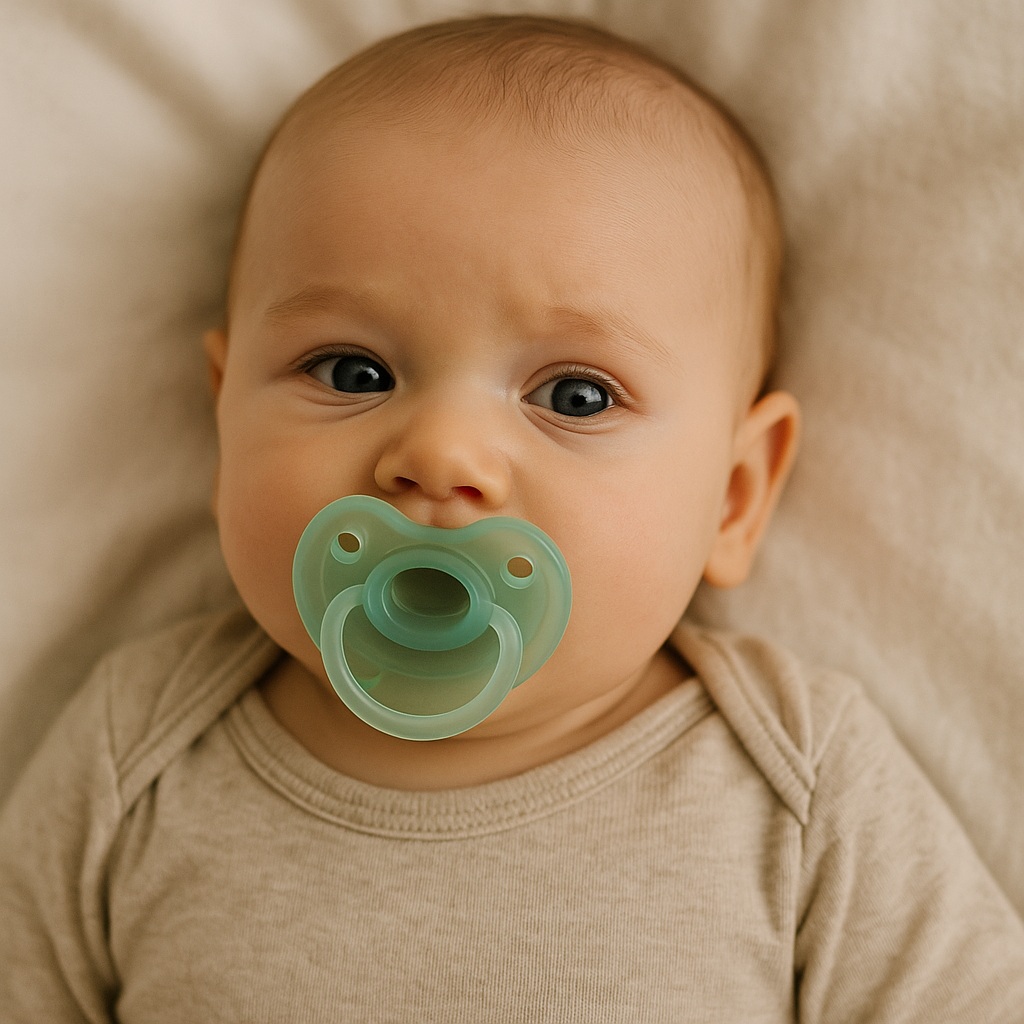
Pacifiers are widely used to soothe infants and support self-soothing, but they come with both benefits and potential drawbacks. Understanding how and when to use a pacifier — and when to wean — can help parents make informed decisions that support their baby’s health and development.
Benefits of Pacifier Use
When used appropriately, pacifiers can offer several advantages:
- Soothing and Comfort: Sucking is a natural reflex that calms babies and may help them fall asleep faster.
- Sleep and SIDS Prevention: The American Academy of Pediatrics (AAP) recommends offering a pacifier at nap time and bedtime to reduce the risk of Sudden Infant Death Syndrome (SIDS).
- Distraction Tool: Pacifiers can help during stressful situations, such as vaccinations or medical procedures.
- Reduced Thumb Sucking: Pacifiers are easier to wean than finger-sucking habits, which may persist longer.
Potential Drawbacks
Despite the benefits, prolonged or early pacifier use may pose some risks:
- Breastfeeding Interference: Early introduction of a pacifier may lead to “nipple confusion” and reduced breastfeeding frequency, especially in the first few weeks.
- Increased Risk of Ear Infections: Studies suggest pacifier use may be associated with a higher rate of otitis media (middle ear infections), particularly after 6 months.
- Dental Issues: Extended use beyond 2–3 years of age may affect the alignment of developing teeth and jaw structure.
- Dependency: Some babies may become dependent on the pacifier to fall asleep, leading to night wakings when it falls out.
When to Introduce a Pacifier
If you choose to use a pacifier, timing matters. The AAP and WHO recommend the following:
- Wait until breastfeeding is well established—typically around 3–4 weeks—before offering a pacifier to a breastfed baby.
- Use it for sleep times only to maximize SIDS protection while minimizing dependency.
- Offer the pacifier without forcing it; not all babies will want one.
When and How to Wean
To avoid dental and behavioral issues, experts recommend weaning off the pacifier by:
- 6 months: If your baby is prone to ear infections
- 12–18 months: Start gradually limiting use to sleep times only
- By age 2–3: Fully wean to prevent dental misalignment
Weaning Tips
- Offer comfort through alternative methods like cuddling or soft toys
- Use a gradual approach—daytime first, then nighttime
- Try “pacifier fairies” or reward systems for toddlers
Safe Use Guidelines
- Use one-piece pacifiers with ventilation holes
- Regularly clean and replace worn-out pacifiers
- Never tie a pacifier around a baby’s neck due to strangulation risk
- Choose orthodontic pacifiers for better oral health support
FAQ
- Is pacifier use safe for newborns?
- Yes, but it’s best to wait until breastfeeding is well established. For formula-fed babies, pacifiers can be used earlier if needed.
- Does a pacifier affect speech development?
- Prolonged use, especially during the day when the child is learning to speak, may delay speech clarity. Limiting pacifier use can reduce this risk.
- Can pacifiers help reduce crying?
- Yes, sucking helps calm many babies, but it should not be the only soothing method used.
Scientific and Professional Sources
- American Academy of Pediatrics. (2016). SIDS and Other Sleep-Related Infant Deaths: Updated 2016 Recommendations for a Safe Infant Sleeping Environment.
- O’Connor, N. R., et al. (2009). Pacifiers: An Update on Use and Misuse. American Family Physician, 79(8), 681–685.
- Victora, C. G., et al. (1997). Use of pacifiers and breastfeeding duration. Lancet, 350(9088), 27–29.
- American Dental Association – Pediatric Oral Health Topics.
When used wisely, pacifiers can be a helpful tool for comfort and safety — just be sure to follow age-appropriate guidelines and keep an eye on dependency or dental issues.
It takes a village to raise a child !
Join our WhatsApp Parenting Chat Groups By Area in Singapore.
Subscribe to Our Newsletter to get important information about pregnancy and parenting.