Responsive Feeding: What the Research Says
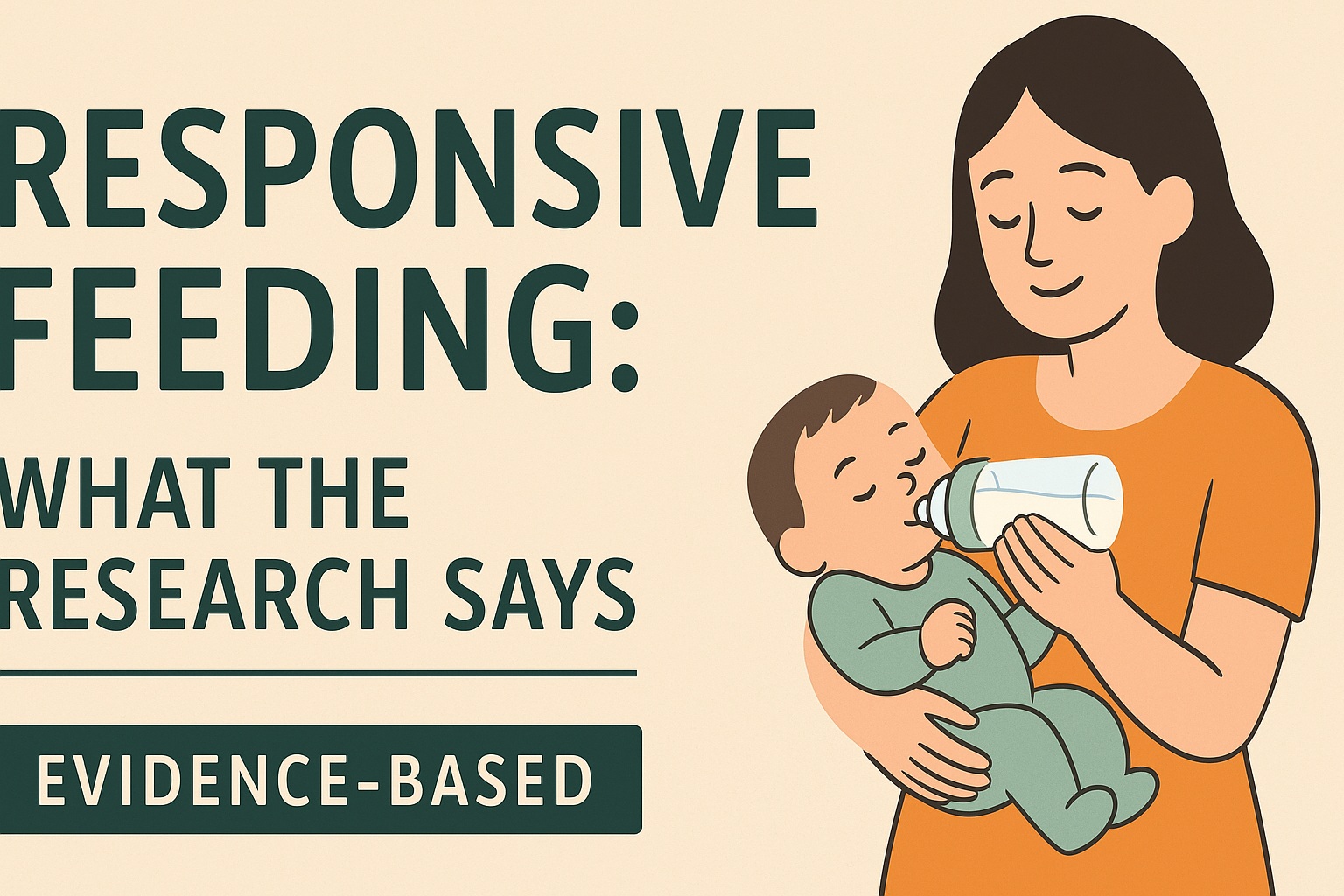
Responsive Feeding: What the Research Says
Key idea: Follow your baby’s hunger and fullness cues to support self-regulation, healthy growth, and a lower risk of overfeeding and later obesity.
What is “responsive feeding”?
Responsive feeding (RF) is a warm, back-and-forth approach where caregivers notice and accurately interpret an infant’s cues (hunger, interest, fullness, refusal) and respond promptly and supportively. It respects the child’s appetite, offers age-appropriate foods, and avoids pressuring, bribing, or distracting a baby to eat. Global guidance from the World Health Organization (WHO) and nutrition researchers frames RF as a core pillar of complementary feeding and healthy development. :contentReference[oaicite:0]{index=0}
Why it matters
- Builds self-regulation: When caregivers consistently respond to cues, babies learn to connect internal feelings (hunger/fullness) with eating, a foundation for lifelong self-regulation. :contentReference[oaicite:1]{index=1}
- Healthier growth patterns: Randomized trials of responsive-parenting interventions (e.g., INSIGHT) show reduced rapid weight gain in the first year and lower BMI z-scores by preschool age compared with usual care. :contentReference[oaicite:2]{index=2}
- Lower obesity risk factors: Reviews link non-responsive practices (pressure to finish, using food to soothe, feeding on a clock regardless of cues) with greater risk of early overweight. :contentReference[oaicite:3]{index=3}
- Aligned with pediatric guidance: AAP and WHO materials emphasize cue-based feeding and, once developmentally ready, complementary foods introduced around 6 months with attention to appetite and satiety signals. :contentReference[oaicite:4]{index=4}
How to read hunger & fullness cues
Common hunger cues
- Stirring, rooting, sucking motions; bringing hands to mouth
- Focused interest in food, leaning forward, opening mouth
- Escalating fussiness or short cries if early cues are missed
Common fullness cues
- Turning head away, sealing lips, pushing spoon/bottle away
- Slower sucking, longer pauses, relaxed hands/posture
- Losing interest in food or starting to play with it
Tip: Aim to start feeding at early hunger cues and stop when fullness cues appear—even if there is milk/food left.
Responsive feeding during complementary feeding (6–24 months)
From about 6 months, offer iron-rich, varied textures and progress with your child’s skills. WHO recommends meal frequencies that rise with age (2–3 times/day at 6–8 months; 3–4 times/day at 9–23 months, with 1–2 nutritious snacks after 12 months) while continuing to follow appetite. RF means you decide what, when and where to offer food; your child decides whether and how much to eat. Avoid TV/phones at meals so you can see subtle cues. :contentReference[oaicite:5]{index=5}
How responsive feeding may reduce overfeeding & later obesity risk
- Protects satiety sensitivity: Pressuring babies to finish teaches them to override fullness; RF preserves internal regulation. :contentReference[oaicite:6]{index=6}
- Reduces “feeding to soothe”: Using milk/food as the default comfort for non-hunger distress can increase intake; RF helps differentiate sleepy/bored/uncomfortable cues from true hunger. :contentReference[oaicite:7]{index=7}
- Shapes early habits: Trials like INSIGHT show that coaching parents in RF, sleep and soothing lowers rapid early weight gain—an obesity risk marker—and improves feeding practices through infancy. :contentReference[oaicite:8]{index=8}
Practical how-to (birth through toddlerhood)
- Watch before you offer: Pause to look for hunger cues; if absent, try another comfort (burp, cuddle, change, nap) before feeding.
- Use paced bottle-feeding if using bottles: Hold baby more upright, offer breaks, and let baby draw the nipple in—this mimics breastfeeding flow and supports self-regulation.
- Offer, don’t force: Present small portions; allow seconds if still hungry. It’s okay if some meals are small.
- Model variety without pressure: Sit together, eat the same foods where possible, and describe tastes/textures. Re-offer disliked foods on later days.
- Avoid distractions: Keep screens and toys away during meals so you can read cues and your child can attend to eating.
- Use non-food soothing: For fussiness not due to hunger, try holding, rocking, or a change of scene first.
- Set gentle structure: Predictable meal/snack opportunities help children arrive with appetite while keeping flexibility to respond to cues.
Common pitfalls to avoid
- Pressuring to finish (“one more spoon for…”)
- Using food to stop all crying (instead, check other needs)
- Rushing solids before readiness (most babies are ready around 6 months; look for good head control, interest in food, and ability to sit with support). :contentReference[oaicite:9]{index=9}
- Distracted feeding (harder to see cues; more likely to overfeed)
FAQ
1) Does responsive feeding mean “on demand” forever?
In the first months, yes—young infants eat according to variable appetite. As babies grow, combine RF with gentle structure: predictable meal/snack opportunities while still respecting signals of hunger and fullness.
2) My baby stops after only a few minutes. Should I keep trying?
If clear fullness cues appear (turning away, relaxed body, sealed lips), stop and try again when early hunger cues return. Shorter feeds can be normal during growth or distraction phases.
3) Can RF help formula-fed babies too?
Yes. RF applies to all feeding methods. Paced bottle-feeding, frequent pauses, and attention to cues help prevent overfeeding with bottles. (The principles are endorsed across WHO/AAP guidance on building self-regulation.) :contentReference[oaicite:10]{index=10}
4) What about starting solids—how does RF apply?
Offer iron-rich foods first, gradually increase textures, and let your child decide how much to eat. Avoid pressure; repeated, low-stress exposure increases acceptance. WHO recommends complementary foods from about 6 months while continuing to follow your child’s appetite. :contentReference[oaicite:11]{index=11}
5) Is there proof RF reduces obesity risk later on?
High-quality trials and longitudinal analyses suggest that RF-based parenting programs reduce rapid early weight gain and lower BMI z-scores through the preschool years, which are meaningful markers for later obesity risk. :contentReference[oaicite:12]{index=12}
Key Sources
- World Health Organization. Guideline for Complementary Feeding of Infants and Young Children (2023). :contentReference[oaicite:13]{index=13}
- Pérez-Escamilla R, et al. Responsive Feeding: Harmonizing Recommendations (2021). :contentReference[oaicite:14]{index=14}
- Savage JS, et al. INSIGHT Responsive Parenting trials—infant growth & BMI outcomes (2016–2018). :contentReference[oaicite:15]{index=15}
- DiSantis KI, et al. Review on responsive feeding and overweight in infancy (2011). :contentReference[oaicite:16]{index=16}
- WHO Complementary Feeding topic page (meal frequency & timing). :contentReference[oaicite:17]{index=17}
- AAP Policy: Breastfeeding and the Use of Human Milk (2022) and Healthy Active Living resources. :contentReference[oaicite:18]{index=18}
It takes a village to raise a child !
Join our WhatsApp Parenting Chat Groups By Area in Singapore.
Subscribe to Our Newsletter to get important information about pregnancy and parenting.