Sleep Training Methods: What is Supported by Science and What Is not
Sleep is essential for both babies and parents. Yet many families struggle with getting their baby to sleep through the night. Sleep training has become a popular solution, but there’s significant debate around which methods are effective—and which may cause harm. This article breaks down three common sleep training methods—extinction, fading, and responsive approaches—and compares what science says about each.
What Is Sleep Training?
Sleep training is the process of helping a baby learn to fall asleep independently and stay asleep throughout the night. It typically begins around 4 to 6 months of age, when babies are developmentally capable of longer sleep stretches. The goal is to reduce sleep associations (such as rocking or nursing to sleep) and encourage self-soothing.
Method 1: Extinction (“Cry It Out”)
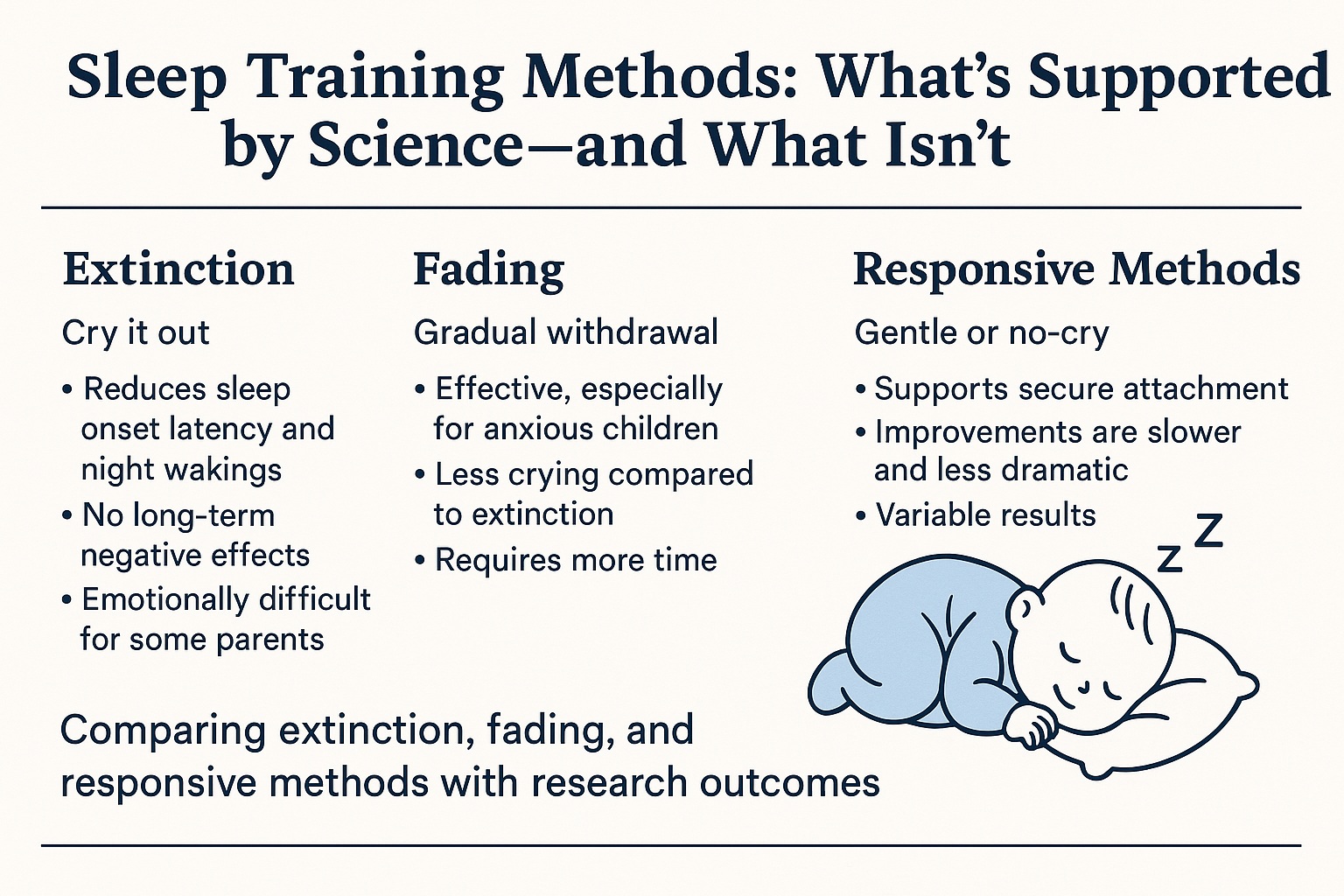
The extinction method, often known as "cry it out" (CIO), involves putting the baby to bed awake and allowing them to cry until they fall asleep, without parental intervention. Variations, like “graduated extinction,” allow for brief check-ins at timed intervals.
Scientific Evidence
- Studies, including a randomized controlled trial published in *Pediatrics* (2016), show that extinction methods can reduce sleep onset latency and night wakings.
- Research indicates no long-term negative effects on a child’s emotional development, attachment, or stress levels.
- However, critics argue that CIO can be emotionally taxing for both child and parent, especially without proper guidance or support.
Considerations
While effective for many families, this method may not suit those who are uncomfortable with allowing their child to cry without comfort. It requires consistency and emotional resilience from caregivers.
Method 2: Fading
Fading, also known as “camping out,” involves gradually reducing parental involvement at bedtime. Parents might start by sitting next to the crib, then slowly move further away each night until the baby can fall asleep on their own.
Scientific Evidence
- A study in Sleep Medicine Reviews (2019) found that fading can be effective, particularly for children with anxiety or high sensitivity.
- It generally results in less crying compared to extinction methods, leading to higher parental satisfaction and better adherence.
- Improvement in sleep may take longer but can be just as significant over time.
Considerations
Fading requires patience and consistency but is often preferred by parents who want a gentler approach. It may work well for infants who are more easily soothed by parental presence.
Method 3: Responsive or No-Cry Methods
Responsive sleep training, also known as the “no-cry” or “gentle” method, involves comforting the baby whenever they cry while still encouraging independent sleep habits. Parents may soothe, pat, or pick up the child as needed and put them back down once calm.
Scientific Evidence
- There is less robust research on gentle methods compared to extinction or fading, but some studies suggest it supports secure attachment and emotional regulation.
- Sleep improvements tend to be slower and less dramatic, but they may feel more natural for some families.
- This method aligns with parenting styles that prioritize emotional responsiveness and co-regulation.
Considerations
This approach is ideal for parents who want to build sleep skills without distress. However, results may vary widely and require more time and effort. It may not work well for babies with persistent night waking or for families with limited capacity to handle fragmented sleep.
Key Takeaways from Research
- All three methods—extinction, fading, and responsive—can work depending on the family’s values, the baby’s temperament, and the consistency of implementation.
- No method has been shown to cause long-term harm to children’s psychological or emotional well-being when used appropriately.
- Parental stress and mental health should be considered when choosing a sleep training approach. Sleep deprivation can affect bonding and overall family wellness.
What Pediatricians Recommend
Many pediatricians support evidence-based sleep training and advise parents to choose the method that best fits their parenting style and child’s needs. They recommend starting with a consistent bedtime routine, a safe sleep environment, and avoiding overstimulation before bed.
Conclusion
Sleep training is a personal decision and there is no one-size-fits-all solution. Scientific evidence supports various methods, from extinction to gentle approaches, as long as they are done with consistency and care. Parents should feel empowered to choose what works for their family, with support from healthcare providers if needed.
FAQs
- When should I start sleep training?
- Most experts recommend starting between 4–6 months, when babies can begin to self-soothe.
- Is it harmful to let a baby cry during sleep training?
- Studies show that controlled crying does not cause long-term harm when done appropriately.
- What if sleep training doesn’t work?
- It may take several attempts or a different method. Consult a pediatrician or sleep consultant if problems persist.
- Can I combine methods?
- Yes, many families adapt strategies to find a hybrid approach that works for their unique situation.
- What if I don’t want to sleep train?
- That’s okay too. Many families find alternative ways to support baby sleep through co-sleeping or responsive parenting. The key is finding what supports your child’s development and your family’s health.
It takes a village to raise a child !
Join our WhatsApp Parenting Chat Groups By Area in Singapore.
Subscribe to Our Newsletter to get important information about pregnancy and parenting.