The Golden Hour: Why the First Breastfeed Matters
What Is the “Golden Hour”?
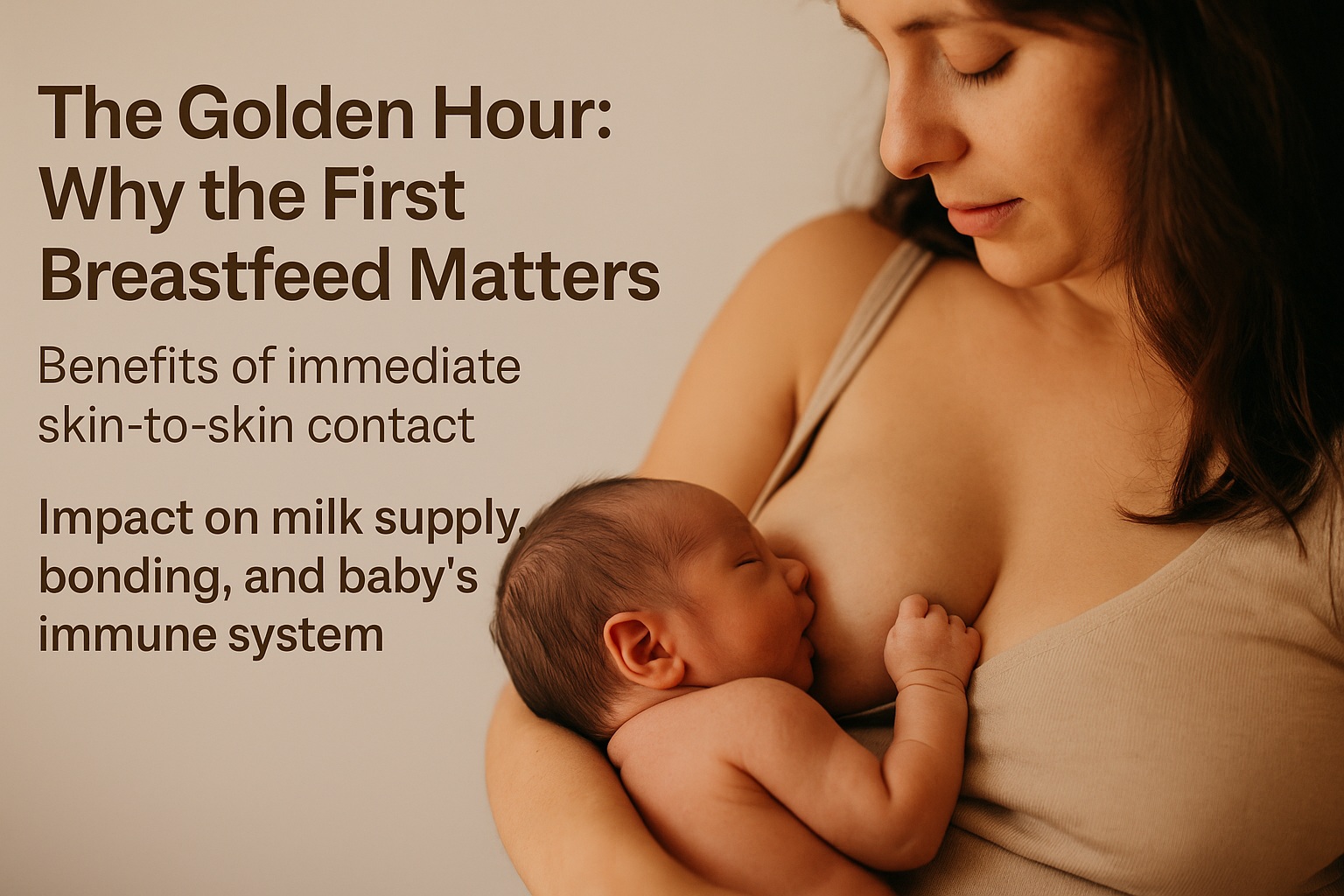
The “Golden Hour” refers to the first hour after birth when a newborn is placed on the mother’s bare chest for skin-to-skin contact and begins to breastfeed. This moment is critical for both infant health and maternal recovery, setting a strong foundation for bonding and successful breastfeeding.
Benefits of Immediate Skin-to-Skin Contact
- Stabilizes baby’s temperature, heart rate, and breathing
- Reduces stress and crying in both mother and infant
- Stimulates rooting and sucking reflexes
- Improves blood sugar levels and thermoregulation
- Supports brain development and emotional security
How It Impacts Breast Milk Supply
Early breastfeeding helps trigger essential hormonal responses (oxytocin and prolactin), laying the foundation for an adequate milk supply. Mothers who initiate breastfeeding in the first hour:
- Have a lower risk of delayed milk production
- Are more likely to exclusively breastfeed
- Have longer breastfeeding duration overall
Immune System Boost for Baby
The first milk, known as colostrum, is rich in antibodies, especially IgA, which coat the newborn’s digestive tract and prevent infection. It also contains:
- White blood cells and immune-boosting peptides
- Growth factors for gut and tissue development
- Antimicrobial properties that fight bacteria and viruses
Strengthening the Mother-Baby Bond
Skin-to-skin contact promotes the release of oxytocin, the hormone associated with love and attachment. This builds emotional connection and supports the mother’s mental well-being.
What If the Golden Hour Is Missed?
If early breastfeeding isn’t possible due to a C-section or complications:
- Begin skin-to-skin as soon as medically possible
- Use hand expression or pumping to stimulate milk supply
- Continue frequent skin-to-skin in the hours and days after birth
Tips for Making the Most of the Golden Hour
- Inform your healthcare provider in advance of your birth plan
- Delay routine procedures like weighing or bathing until after the first feed
- Allow your baby to self-latch with minimal intervention
Conclusion
The Golden Hour isn’t just a beautiful moment—it’s a biological opportunity that can shape your baby’s health, immunity, and emotional foundation. Embracing early breastfeeding during this time can have lifelong benefits for both mother and child.
Frequently Asked Questions (FAQ)
What if I had a C-section—can I still do skin-to-skin?
Yes. Many hospitals support skin-to-skin in the operating room or immediately afterward. If that’s not possible, start as soon as you’re stable and baby is safe.
What is colostrum, and why is it important?
Colostrum is the first milk produced. It's thick, yellowish, and full of antibodies, white blood cells, and nutrients that protect your newborn from illness and help their digestive system mature.
How can I prepare to make the most of the Golden Hour?
Include your wishes for skin-to-skin and early breastfeeding in your birth plan. Let your care team know ahead of time. Ask for help with latching if needed.
Is it okay if my baby doesn’t latch during the first hour?
Yes. Some babies take time. What’s most important is that baby is placed skin-to-skin and allowed to explore. You can try again a little later or express colostrum by hand if needed.
Does skin-to-skin benefit formula-fed babies too?
Absolutely. Even if you plan to use formula, skin-to-skin contact helps regulate baby’s body functions and promotes bonding, just like with breastfeeding.
It takes a village to raise a child !
Join our WhatsApp Parenting Chat Groups By Area in Singapore.
Subscribe to Our Newsletter to get important information about pregnancy and parenting.