Early Education

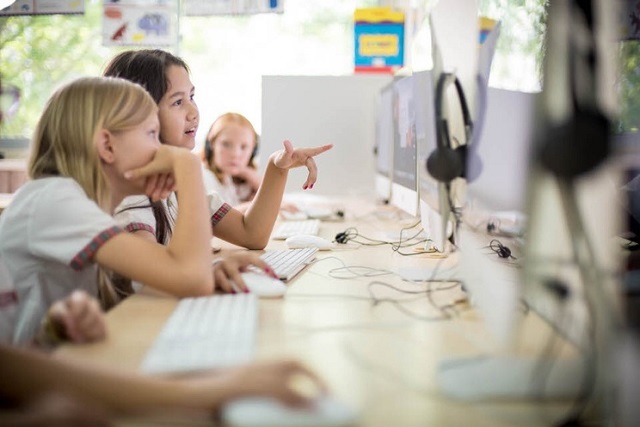
With the advent of Web 2.0, technology is the new pen and paper. Gone are the days when Information and Communications Technology (ICT) was a stand-alone subject. Today, ICT is integrated across all disciplines and subjects. Using technology, students can now connect with peers and experts in the field, research and uncover different layers of information. The possibilities and opportunities are endless.

What Does Digital Literacy Mean?

With the advent of Web 2.0, technology is the new pen and paper. Gone are the days when Information and Communications Technology (ICT) was a stand-alone subject. Today, ICT is integrated across all disciplines and subjects. Using technology, students can now connect with peers and experts in the field, research and uncover different layers of information. The possibilities and opportunities are endless.

Read More
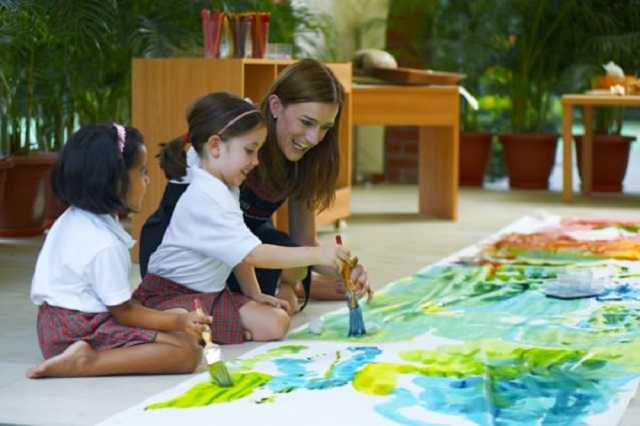
Children enjoy the physical sensation of paint dragging across the canvas or squishing clay with their fingers. Are these activities valuable, even if they do not turn into a polished ‘finished’ product? Parents and teachers might find only a ‘finished’ product the proof of ‘successful’ learning. Considering a young child from a developmental perspective, might we expect too much ‘product’ too soon and simultaneously expect too little ‘process’ at all ages? Exactly how does a caring parent or teacher foster creativity and experimentation within a child?

Fostering Creativity: Valuing Process Over Product

Children enjoy the physical sensation of paint dragging across the canvas or squishing clay with their fingers. Are these activities valuable, even if they do not turn into a polished ‘finished’ product? Parents and teachers might find only a ‘finished’ product the proof of ‘successful’ learning. Considering a young child from a developmental perspective, might we expect too much ‘product’ too soon and simultaneously expect too little ‘process’ at all ages? Exactly how does a caring parent or teacher foster creativity and experimentation within a child?

Read More
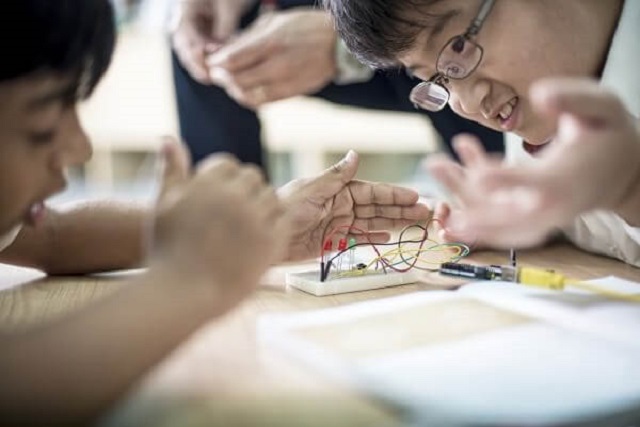
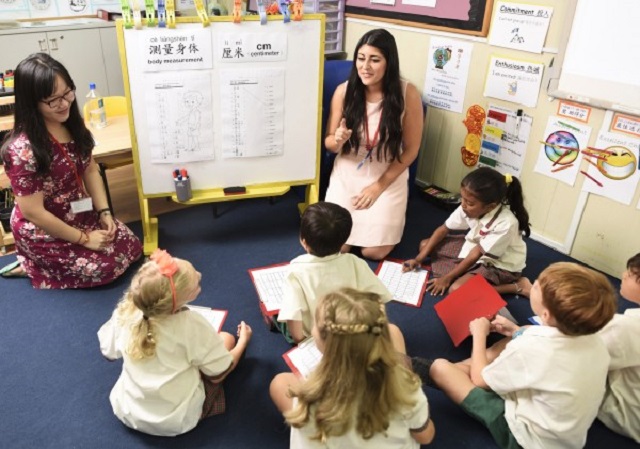
Conversations between a child and a teacher are common in preschools that use the inquiry-based learning approach. Children are encouraged to question facts, explore possibilities, voice their opinions and initiate investigations. Teachers trained professionally in this approach are skilled in helping your child develop competencies such as oracy and literacy skills, general knowledge, critical thinking skills and the ability to apply concepts. These will be useful when he transits to primary school.

Is Your Child Ready For Primary School?

Conversations between a child and a teacher are common in preschools that use the inquiry-based learning approach. Children are encouraged to question facts, explore possibilities, voice their opinions and initiate investigations. Teachers trained professionally in this approach are skilled in helping your child develop competencies such as oracy and literacy skills, general knowledge, critical thinking skills and the ability to apply concepts. These will be useful when he transits to primary school.

Read More

Research has shown that early and prolonged exposure to screen time for children is detrimental to their development. Here are some tips to cut down screen time at home.

Raising Healthy Children: 3 Ways To Cut Screen Time

Research has shown that early and prolonged exposure to screen time for children is detrimental to their development. Here are some tips to cut down screen time at home.

Read More


Children are born with an innate desire to explore, form hypotheses, experiment, observe and develop conclusions. Research proves that children’s learning through their senses has a strong connection to thinking and learning in science. We see it in the way an infant drops his or her toy from a high chair only to find out how it falls to the floor. With older children, we see a disposition to causal thinking where they experiment to either support or negate their hypotheses. The 21st-century skills are a set of abilities that students need to develop in the information age. This can be achieved through the inquiry-based learning model instead of the traditional approach.

The Changing Dynamics In Education

Children are born with an innate desire to explore, form hypotheses, experiment, observe and develop conclusions. Research proves that children’s learning through their senses has a strong connection to thinking and learning in science. We see it in the way an infant drops his or her toy from a high chair only to find out how it falls to the floor. With older children, we see a disposition to causal thinking where they experiment to either support or negate their hypotheses. The 21st-century skills are a set of abilities that students need to develop in the information age. This can be achieved through the inquiry-based learning model instead of the traditional approach.

Read More
Just as literacy is a form of communication, numeracy too is a way to represent and share information of the world around us. These are life skills and children need opportunities to use them and see them being used in real life situations which help them to make meaning of it. Worksheets and other formal teaching strategies make learning abstract and dry. This approach decontextualises learning and some children find it difficult to make connections with mathematical concepts in this way. Children can better internalise them when they are exposed to number concepts used around them as part of everyday experiences.

Our Approach To Numeracy

Just as literacy is a form of communication, numeracy too is a way to represent and share information of the world around us. These are life skills and children need opportunities to use them and see them being used in real life situations which help them to make meaning of it. Worksheets and other formal teaching strategies make learning abstract and dry. This approach decontextualises learning and some children find it difficult to make connections with mathematical concepts in this way. Children can better internalise them when they are exposed to number concepts used around them as part of everyday experiences.

Read More