Exercise in Pregnancy: How Much Is Safe and What the Research Says
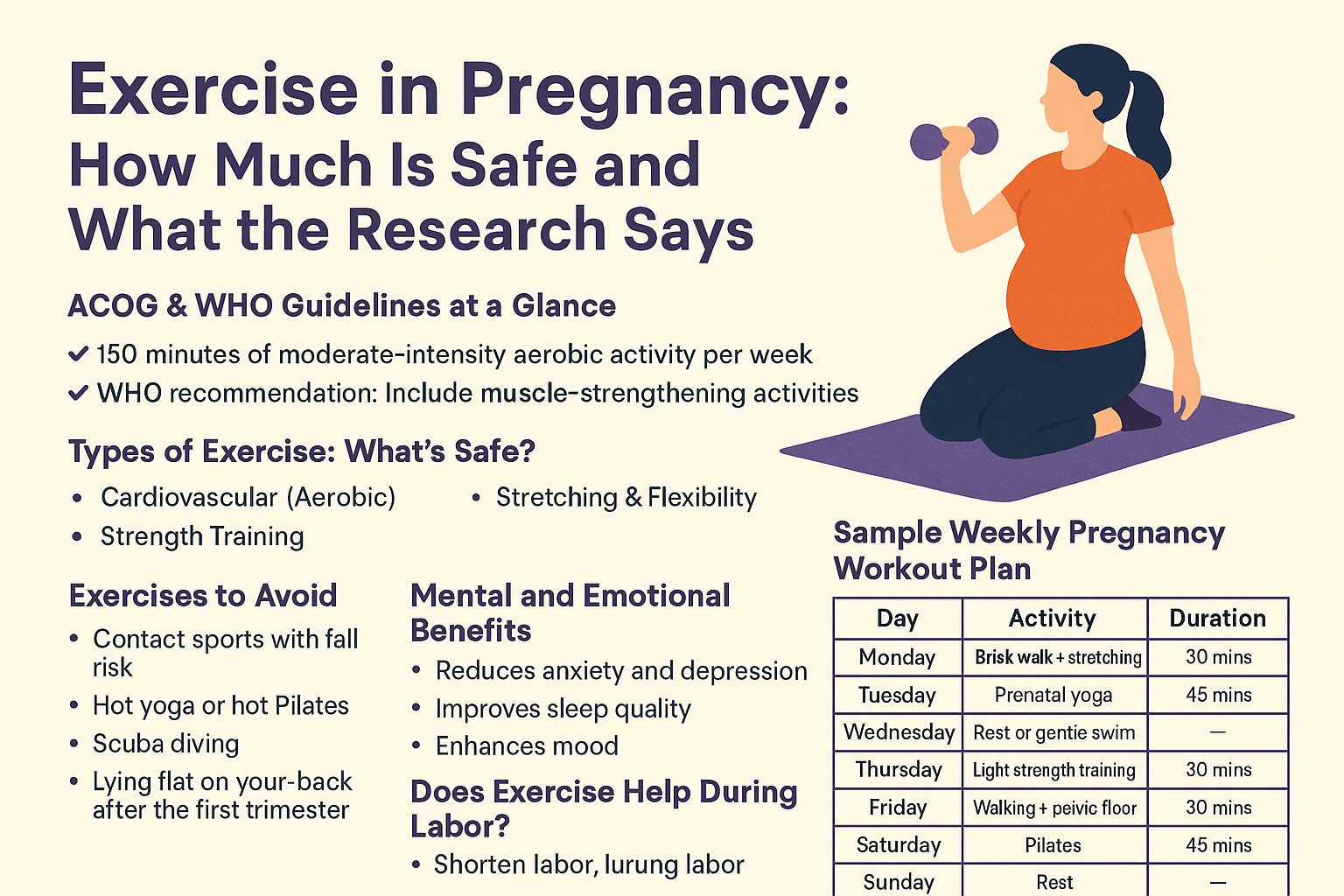
Includes ACOG and WHO guidelines on strength, cardio, and stretching
Introduction
Gone are the days when pregnancy meant total rest. Today, research strongly supports the idea that staying active during pregnancy is not only safe—it’s beneficial. Regular exercise can reduce back pain, improve mood, lower the risk of gestational diabetes, and even shorten labor. But how much exercise is safe? And what types should you focus on?
ACOG and WHO Guidelines at a Glance
ACOG Recommendations (2020)
- At least 150 minutes of moderate-intensity aerobic activity per week
- Spread activity throughout the week
- Most women can continue or modify their pre-pregnancy exercise routines
WHO Recommendations (2020)
- 150 minutes of moderate aerobic activity weekly
- Include muscle-strengthening activities at least twice per week
- Break up prolonged sitting with gentle movement
Types of Exercise: What's Safe?
1. Cardiovascular (Aerobic) Exercise
Examples: Walking, swimming, stationary cycling
Benefits: Supports heart health, stamina, and healthy weight gain
2. Strength Training
Use lighter weights and proper form. Avoid lying flat on your back after the first trimester.
Benefits: Builds muscle, reduces back pain, and supports posture
3. Stretching & Flexibility
Prenatal yoga and Pilates are highly recommended. Avoid deep stretches as ligaments become more relaxed.
Exercises to Avoid
- Contact sports or activities with fall risk (e.g., skiing, soccer, horseback riding)
- Hot yoga or Pilates (risk of overheating)
- Scuba diving
- Lying flat on your back after the first trimester
Listening to Your Body: The Talk Test
You should be able to talk during exercise without becoming breathless. Stop and consult your doctor if you experience:
- Vaginal bleeding
- Dizziness or faintness
- Chest pain
- Contractions
- Fluid leakage
Mental and Emotional Benefits
- Reduces anxiety and depression symptoms
- Improves sleep quality
- Enhances mood through endorphin release
Does Exercise Help During Labor?
Research suggests that physically active women may experience:
- Shorter labor durations
- Lower rates of unplanned cesarean deliveries
- Improved endurance and pain tolerance
Sample Weekly Pregnancy Workout Plan
| Day | Activity | Duration |
|---|---|---|
| Monday | Brisk walk + stretching | 30 mins |
| Tuesday | Prenatal yoga | 45 mins |
| Wednesday | Rest or gentle swim | — |
| Thursday | Light strength training | 30 mins |
| Friday | Walking + pelvic floor | 30 mins |
| Saturday | Pilates | 45 mins |
| Sunday | Rest | — |
Final Thoughts
Regular exercise during pregnancy is safe for most women and comes with numerous benefits. Follow trusted guidelines, adapt your routine to how you feel, and seek support from healthcare providers or prenatal fitness specialists.
FAQ: Exercise During Pregnancy
1. Can I start exercising if I wasn’t active before pregnancy?
Yes, as long as you get approval from your doctor. Start with light activities like walking or prenatal yoga and gradually build up.
2. Is it safe to do abdominal exercises while pregnant?
Yes, with modifications. Avoid crunches or planks that cause doming or strain. Focus on core-stabilizing moves and pelvic floor exercises.
3. How do I know if I’m overdoing it?
If you feel dizzy, breathless, nauseated, or experience pain, stop immediately. The “talk test” is a good way to gauge safe intensity.
4. Are there benefits to exercising postpartum?
Absolutely. Exercise can improve mood, support recovery, and boost energy levels. Start slowly and consult your doctor before resuming activity.
It takes a village to raise a child !
Join our Facebook Group For 2026 SG Mummies or Facebook Group 2027 SG Mummies
Link to our WhatsApp groups can also be found in the Facebook group
Subscribe to Our Newsletter to get important information about pregnancy and parenting.