Preparing for Postpartum Mental Health Before Baby Arrives
Many parents prepare carefully for labour, baby clothes, feeding supplies and confinement arrangements. But one area is often left until too late: postpartum mental health.
After birth, many mothers experience emotional changes because of hormonal shifts, sleep deprivation, physical recovery, feeding challenges, identity changes and the pressure of caring for a newborn. Some mood changes are mild and temporary, but others may need professional support.
Preparing for postpartum mental health before baby arrives does not mean expecting the worst. It means building a support system early, knowing the warning signs, and making it easier to ask for help if things feel overwhelming.
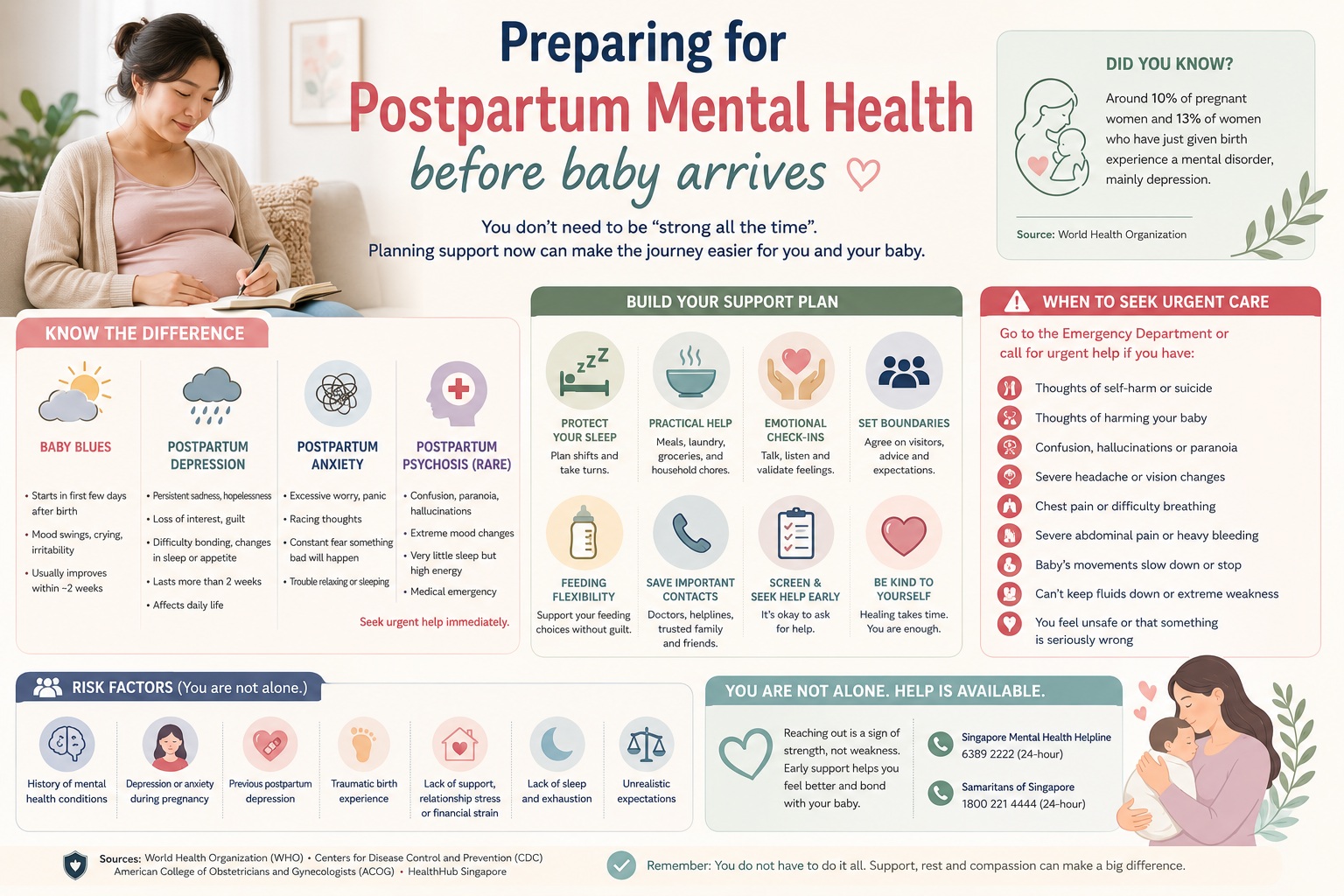
Worldwide, the World Health Organization estimates that about 10% of pregnant women and 13% of women who have just given birth experience a mental disorder, mainly depression. Source: WHO
Quick Answer: How Can You Prepare for Postpartum Mental Health?
Before baby arrives, parents can prepare by:
- learning the difference between baby blues and postpartum depression or anxiety;
- discussing sleep, feeding and household support with your partner or family;
- identifying your emotional warning signs;
- saving important contacts such as your obstetrician, GP, polyclinic, mental health helpline or emergency number;
- planning who can help with meals, chores and baby care;
- reducing unrealistic expectations about “bouncing back” quickly;
- screening for mood symptoms during pregnancy and after birth;
- seeking help early if you feel persistently sad, anxious, hopeless, detached or unsafe.
Why Mental Health Preparation Matters
Pregnancy and the postpartum period are major physical and emotional transitions. Even parents who are excited about the baby may feel overwhelmed after birth.
Postpartum mental health is not only about postpartum depression. It can also include anxiety, panic symptoms, obsessive thoughts, birth trauma, mood swings, rage, sleep-related distress, and in rare cases, postpartum psychosis.
ACOG recommends screening for depression and anxiety at the first prenatal visit, later in pregnancy, and during postpartum visits. This means mental health should be discussed before birth, not only after symptoms become severe. Source: ACOG
Baby Blues vs Postpartum Depression: What Is the Difference?
Many mothers experience “baby blues” in the first days after birth. This can include crying easily, mood swings, irritability, feeling overwhelmed or being more emotional than usual. Baby blues usually improve as hormones settle, support increases and parents adjust to newborn care.
Postpartum depression is different. It is more intense, lasts longer, and can affect a mother’s ability to function, bond with the baby, rest, eat or feel hopeful.
| Condition | Common Features | What to Do |
|---|---|---|
| Baby blues | Crying easily, mood swings, feeling emotional, mild anxiety, usually starts soon after birth and improves within about 2 weeks | Rest, reassurance, practical support, gentle monitoring |
| Postpartum depression | Persistent sadness, hopelessness, guilt, loss of interest, poor sleep even when baby sleeps, appetite changes, difficulty bonding, thoughts of self-harm | Speak to a doctor, midwife, obstetrician or mental health professional promptly |
| Postpartum anxiety | Excessive worry, racing thoughts, panic symptoms, constant fear something bad will happen, inability to relax | Seek professional support, especially if anxiety affects sleep, feeding, bonding or daily function |
| Postpartum psychosis | Confusion, hallucinations, delusions, paranoia, very little sleep but high energy, extreme mood changes, unsafe thoughts | Medical emergency. Seek urgent help immediately. |
Know Your Personal Risk Factors
Postpartum depression and anxiety can happen to anyone. However, some parents may have a higher risk.
Risk factors may include:
- history of depression, anxiety, bipolar disorder or other mental health conditions;
- depression or anxiety during pregnancy;
- previous postpartum depression or anxiety;
- traumatic birth experience;
- pregnancy complications or baby health concerns;
- feeding difficulties;
- lack of sleep;
- limited support from partner, family or friends;
- relationship stress or family conflict;
- financial pressure;
- history of pregnancy loss, infertility treatment or difficult conception journey;
- unrealistic expectations of motherhood;
- feeling isolated during confinement.
Having risk factors does not mean you will definitely develop postpartum depression or anxiety. It simply means you should prepare more support early.
Create a Postpartum Mental Health Plan Before Birth
A postpartum mental health plan does not need to be complicated. It should answer one question: “What support will I need when I am tired, recovering and emotionally stretched?”
1. Plan your sleep protection
Sleep deprivation is one of the biggest stressors after birth. Newborn sleep is naturally irregular, but parents can still plan protected rest.
- Discuss who will handle night duties and early morning duties.
- If breastfeeding, discuss how your partner can help with burping, diaper changes and settling.
- If bottle-feeding or mixed-feeding, discuss possible shifts.
- Ask family members to help with chores instead of only holding the baby.
- Try to protect at least one stretch of uninterrupted sleep when possible.
Useful script: “After birth, I may not be able to function well without sleep. Can we plan how I can get at least one protected rest period each day?”
2. Plan practical help, not just visitors
Many relatives want to visit the baby, but what new parents often need most is practical help.
Before birth, list the tasks that others can help with:
- buying groceries;
- preparing meals;
- washing bottles or pump parts;
- doing laundry;
- helping older children with school or bedtime;
- taking the baby for a short period while mother showers or rests;
- bringing mother to medical appointments;
- limiting unnecessary visitors.
Useful script: “We would love help after baby arrives. The most useful help for us will be meals, laundry and giving me time to rest.”
3. Discuss confinement expectations early
In Singapore and many Asian families, confinement practices can involve strong opinions from parents, in-laws or confinement nannies. Some practices may be comforting, but conflict or loss of control can worsen stress.
Before baby arrives, discuss:
- who will stay in the home after birth;
- who makes decisions about baby care;
- feeding preferences;
- visitor rules;
- rest expectations;
- what advice is welcome and what feels too much;
- how your partner will support boundaries with relatives.
Useful script for relatives: “We appreciate your experience. If we look overwhelmed, what helps most is calm support rather than too many instructions at once.”
4. Save emergency and support contacts
When parents are exhausted, it is harder to search for help. Save important contacts before birth.
- Obstetrician or maternity clinic
- GP or polyclinic
- Baby’s paediatrician
- Lactation consultant, if breastfeeding
- Trusted friend or relative
- Mental health professional
- Local crisis hotline or emergency service
In Singapore, mothers can also use the Edinburgh Postnatal Depression Scale on HealthHub as a screening tool after delivery. A screening result is not a diagnosis, but it can help mothers decide whether to seek professional support. Source: HealthHub Singapore
Prepare Your Partner: What Support Really Looks Like
Partners play a major role in postpartum mental health. Support is not only saying “Tell me if you need help.” A very tired mother may not know what she needs or may feel guilty asking.
Better support sounds like:
- “I will take the baby after the 6am feed so you can sleep.”
- “I will handle dinner and laundry today.”
- “I noticed you have been crying a lot. Let’s call the doctor together.”
- “You are not failing. This is hard, and we will get help.”
- “I will speak to my parents about visitor limits.”
Partner checklist before baby arrives
- Learn the signs of postpartum depression and anxiety.
- Know who to call if the mother seems unsafe or very distressed.
- Take responsibility for some baby tasks without being asked.
- Protect the mother from unnecessary criticism or pressure.
- Watch for changes in sleep, appetite, mood and bonding.
- Encourage help-seeking early.
Set Realistic Expectations About Bonding
Some parents feel instant love when the baby arrives. Others feel protective but not emotionally bonded immediately. Some feel shocked, numb, anxious or overwhelmed.
This does not mean you are a bad parent. Bonding can grow through repeated care: feeding, holding, changing, talking, skin-to-skin contact and responding to the baby’s needs.
However, if you feel persistently detached, resentful, hopeless or unable to care for the baby, seek support. These feelings are not something you need to hide.
Plan for Feeding Stress
Feeding is one of the most common sources of postpartum stress. Breastfeeding can be meaningful, but it can also be painful, exhausting or medically challenging. Formula feeding or mixed feeding may also bring guilt because of social pressure.
Before birth, prepare for flexibility:
- Learn basic breastfeeding signs, latch support and when to ask for help.
- Identify a lactation consultant or breastfeeding support service if you want to breastfeed.
- Discuss with your partner how feeding decisions will be supported without shame.
- Remember that the baby needs nutrition, and the mother needs support and rest.
Useful script: “My feeding goal matters, but my mental health also matters. If feeding becomes overwhelming, I want us to get help early and make a safe plan.”
Warning Signs to Watch for After Birth
Seek professional help if symptoms last more than two weeks, feel intense, or affect daily functioning.
Possible warning signs include:
- persistent sadness, emptiness or hopelessness;
- crying often and feeling unable to stop;
- loss of interest in things you usually enjoy;
- feeling disconnected from the baby;
- feeling like you are a bad mother or your family is better off without you;
- excessive guilt or shame;
- panic attacks or constant worry;
- intrusive thoughts that feel frightening or unwanted;
- anger or rage that feels out of control;
- not sleeping even when the baby sleeps;
- loss of appetite or overeating;
- difficulty making decisions or functioning;
- thoughts of self-harm or suicide;
- thoughts of harming the baby.
If there are thoughts of self-harm, suicide, harming the baby, hallucinations, delusions, paranoia or extreme confusion, seek urgent medical help immediately. Postpartum Support International lists symptoms of postpartum psychosis such as delusions, hallucinations, agitation, paranoia, rapid mood swings and decreased need for sleep. This is a medical emergency. Source: Postpartum Support International
What to Do If You Are Not Coping After Birth
If you feel you are not coping, do not wait until things become severe. Try these steps:
- Tell one safe person clearly: “I am not coping and I need help.”
- Contact your doctor, obstetrician, GP or polyclinic.
- Use a screening tool such as the Edinburgh Postnatal Depression Scale if available.
- Ask for practical support with sleep, meals, chores and baby care.
- Reduce isolation. Speak to a trusted friend, support group or counsellor.
- Seek urgent help if you feel unsafe or have thoughts of harming yourself or the baby.
Postpartum depression and anxiety are treatable. Treatment may include counselling, practical support, sleep planning, medication when appropriate, or specialist mental health care. The right treatment depends on symptoms, severity, breastfeeding considerations and medical history.
Postpartum Mental Health Plan Template
Parents can copy and fill in this simple plan before baby arrives:
| Area | Our Plan |
|---|---|
| My main emotional warning signs | Example: crying daily, panic, feeling hopeless, not sleeping even when baby sleeps |
| Who I will tell first | Example: partner, sister, close friend, doctor |
| Who can help with meals | Example: confinement nanny, parents, meal delivery, neighbour |
| Who can help with night or morning duties | Example: partner handles diaper change and burping after feeds |
| Visitor boundaries | Example: no visits after 8pm, short visits only, no unannounced visitors |
| Feeding support | Example: lactation consultant contact, formula backup plan, partner support |
| Doctor or clinic contact | Write contact number here |
| Urgent care plan | Example: go to emergency department or call emergency services if unsafe |
What Family Members Should Not Say
Well-meaning comments can sometimes make a struggling mother feel worse. Try to avoid:
- “Other mothers can do it, why can’t you?”
- “You should be happy.”
- “Don’t think too much.”
- “You wanted a baby, right?”
- “Just sleep when the baby sleeps.”
- “Breastfeeding is natural, so it should be easy.”
- “You are too sensitive.”
What Family Members Can Say Instead
- “This is hard, and you are not alone.”
- “I will take care of lunch and laundry today.”
- “You rest. I will watch the baby for 30 minutes.”
- “Let’s call the doctor together.”
- “You are not a bad mother. You need support.”
- “Your mental health matters too.”
When to Seek Urgent Help
Seek urgent medical help immediately if the mother:
- has thoughts of suicide or self-harm;
- has thoughts of harming the baby;
- hears or sees things others do not;
- believes things that are not true or seems paranoid;
- is extremely confused or disoriented;
- has not slept for a long time and seems unusually energetic or agitated;
- is behaving in a way that feels unsafe;
- cannot care for herself or the baby safely.
Do not leave the mother alone if there is immediate safety concern. Contact emergency services or go to the nearest emergency department.
Conclusion
Preparing for postpartum mental health before baby arrives is one of the most important parts of preparing for parenthood. It helps parents move from “we will see how” to “we have a plan if things become hard”.
Good preparation includes protecting sleep, planning practical help, discussing family expectations, learning warning signs, saving support contacts and agreeing that seeking help is not failure.
A healthy baby needs a supported mother. Postpartum mental health care is not a luxury. It is part of safe, realistic and compassionate family care.
Frequently Asked Questions
1. When should I start preparing for postpartum mental health?
It is best to start during pregnancy, especially in the third trimester. Discuss support, sleep, feeding expectations, visitor rules and warning signs before baby arrives.
2. Is it normal to cry after giving birth?
Many mothers cry easily in the first days after birth because of hormonal changes, tiredness and adjustment. However, if sadness is intense, lasts more than two weeks, or affects daily functioning, seek professional help.
3. What is the difference between baby blues and postpartum depression?
Baby blues are usually mild and temporary. Postpartum depression is more persistent and may include hopelessness, guilt, loss of interest, difficulty bonding, poor sleep even when baby sleeps, or thoughts of self-harm.
4. Can postpartum anxiety happen without depression?
Yes. Some mothers experience intense anxiety, panic, racing thoughts or constant worry without feeling mainly sad. Postpartum anxiety can still be distressing and deserves support.
5. What should I do if I have scary intrusive thoughts?
Intrusive thoughts can happen in postpartum anxiety or OCD, but they should be discussed with a healthcare professional, especially if they are frequent, distressing or make you avoid caring for the baby. If you feel at risk of acting on any thought, seek urgent help immediately.
6. Can fathers or partners also experience postpartum depression?
Yes. Partners can also experience depression, anxiety and adjustment stress after a baby arrives. They should seek support if they feel persistently low, anxious, angry, hopeless or unable to cope.
7. Does needing help mean I am a bad mother?
No. Needing help means you are human. Postpartum depression and anxiety are health conditions, not character failures. Early support can help both mother and baby.
8. What should my partner do if I seem very unlike myself?
Your partner should gently name what they notice, offer practical help, and contact a doctor or mental health professional with you. If there are safety concerns, confusion, hallucinations or thoughts of harm, seek urgent care immediately.
9. Can postpartum depression be treated while breastfeeding?
Yes. Many mothers can receive support while breastfeeding. Treatment may include counselling, practical support, sleep planning and, when needed, medication chosen with breastfeeding safety in mind. Discuss options with your doctor.
10. What is the most important thing to prepare before birth?
Prepare a support plan. Decide who will help with sleep, meals, chores, baby care, emotional check-ins and medical support. The earlier this is discussed, the easier it is to get help after birth.
This article is for general education and does not replace medical advice. If you or someone you know has thoughts of self-harm, harming the baby, hallucinations, severe confusion or unsafe behaviour, seek urgent medical help immediately.
It takes a village to raise a child !
Join our Facebook Group For 2026 SG Mummies or Facebook Group 2027 SG Mummies
Link to our WhatsApp groups can also be found in the Facebook group
Subscribe to Our Newsletter to get important information about pregnancy and parenting.