
The Science of Nesting: Hormonal and Behavioral Shifts in the Third Trimester
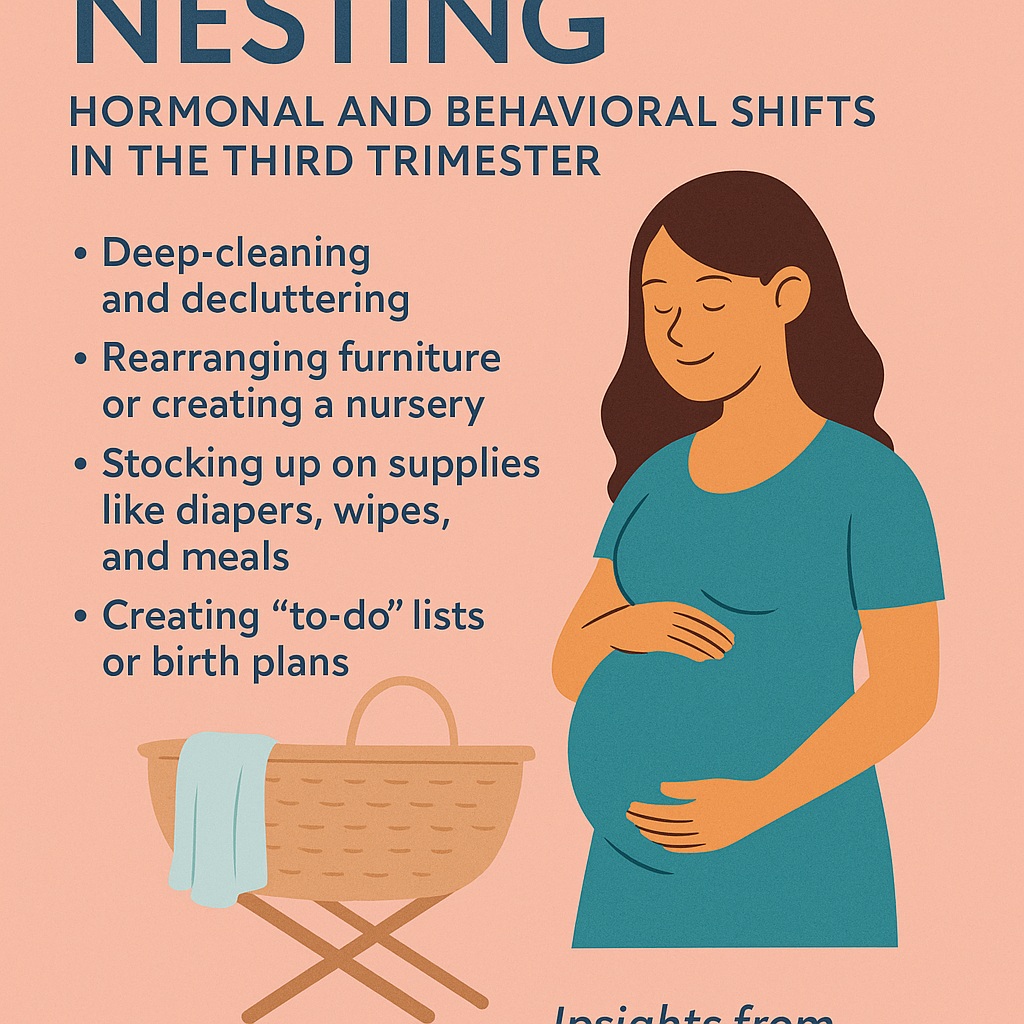
The sudden urge to clean, organize, and prepare the home as the due date nears is not just a quirky pregnancy stereotype—it’s a real, biologically-driven phenomenon known as nesting. Grounded in neuroendocrinology, this behavior reflects complex hormonal and psychological shifts in the third trimester that prepare a mother for labor, birth, and infant care.
What Is Nesting Behavior?
Nesting refers to a strong instinct or drive in late pregnancy to tidy, decorate, and organize the home in anticipation of the baby’s arrival. It often involves activities such as:
- Deep-cleaning and decluttering
- Rearranging furniture or creating a nursery
- Stocking up on supplies like diapers, wipes, and meals
- Creating “to-do” lists or birth plans
Though not all pregnant individuals experience it with the same intensity, the nesting instinct is a widely observed phenomenon across cultures—and even across species.
The Hormonal Drivers Behind Nesting
Nesting is largely driven by shifts in hormones during the third trimester. Key players include:
1. Estrogen
Estrogen levels peak in the final weeks of pregnancy, increasing alertness and energy. Studies show that high estrogen levels are linked to maternal vigilance, or the increased attention to environmental safety and preparation.
2. Progesterone
While progesterone plays a calming role throughout pregnancy, its ratio to estrogen starts to shift near the end of the third trimester. This change may contribute to bursts of energy, motivation, and restlessness that underlie nesting behavior.
3. Oxytocin
Often referred to as the “bonding hormone,” oxytocin prepares the body for labor and promotes emotional connection. It also contributes to maternal caregiving behavior, triggering the desire to nurture and create a safe environment.
4. Cortisol
Although usually associated with stress, cortisol levels rise naturally in the final weeks of pregnancy to help mature the baby’s lungs and prepare the mother’s body for labor. Higher cortisol levels may sharpen focus and support organizational behaviors.
What the Science Says
Research on nesting spans both human and animal models. For example:
- Studies in rodents show clear nesting behavior just before giving birth, with hormonal changes directly linked to nest-building.
- Human studies suggest that nesting may reflect a neurobiological shift toward protective maternal behavior, with increased motivation to create order and control in a time of uncertainty.
- Some evolutionary psychologists argue that nesting improves neonatal survival by ensuring a clean, safe, and resource-rich postnatal environment.
Emotional and Psychological Factors
While hormones play a key role, emotional and psychological changes also influence nesting behavior:
- Need for control: As birth approaches, many mothers experience anxiety. Nesting provides a sense of control and preparedness.
- Transition to motherhood: Nesting can be a symbolic way to embrace a new identity and create space—both physically and mentally—for a new baby.
- Family bonding: Involving partners or older siblings in nesting activities helps foster shared excitement and emotional connection.
When Does Nesting Usually Happen?
Nesting behavior most commonly appears in the final month of pregnancy, often peaking during weeks 36 to 39. Some mothers report a burst of energy and productivity within days—or even hours—of labor onset. However, the intensity and timing can vary greatly between individuals.
FAQs
Is it dangerous to overdo nesting activities?
While light activity is healthy during pregnancy, overexertion (e.g., heavy lifting, long hours of cleaning) should be avoided in the third trimester. Listen to your body, take breaks, and ask for help when needed.
What if I don’t feel the nesting urge?
Not everyone experiences nesting, and that’s completely normal. The absence of nesting behavior doesn't indicate anything wrong. Each pregnancy is unique.
Can nesting be an early sign of labor?
Some women experience a sudden nesting surge just before labor. However, it is not a reliable predictor and should be considered alongside other signs like contractions and cervical changes.
Conclusion
Nesting is more than just a cultural cliché—it reflects real biological and psychological shifts during the final weeks of pregnancy. Influenced by estrogen, oxytocin, and cortisol, it prepares both brain and body for caregiving and protection. Whether you're reorganizing the pantry or color-coding baby clothes, nesting is your body’s way of getting ready for one of life’s biggest transitions.
It takes a village to raise a child !
Join our Facebook Group For 2026 SG Mummies or Facebook Group 2027 SG Mummies
Link to our WhatsApp groups can also be found in the Facebook group
Subscribe to Our Newsletter to get important information about pregnancy and parenting.