10 Life Skills to Teach Before Starting Primary 1
Starting Primary 1 is a big step for children—and their parents. While academic readiness matters, life skills are just as essential for a smooth transition. These foundational abilities help children build confidence, navigate daily routines, and handle challenges independently.
Here are 10 practical life skills every child should learn before stepping into their first year of primary school.
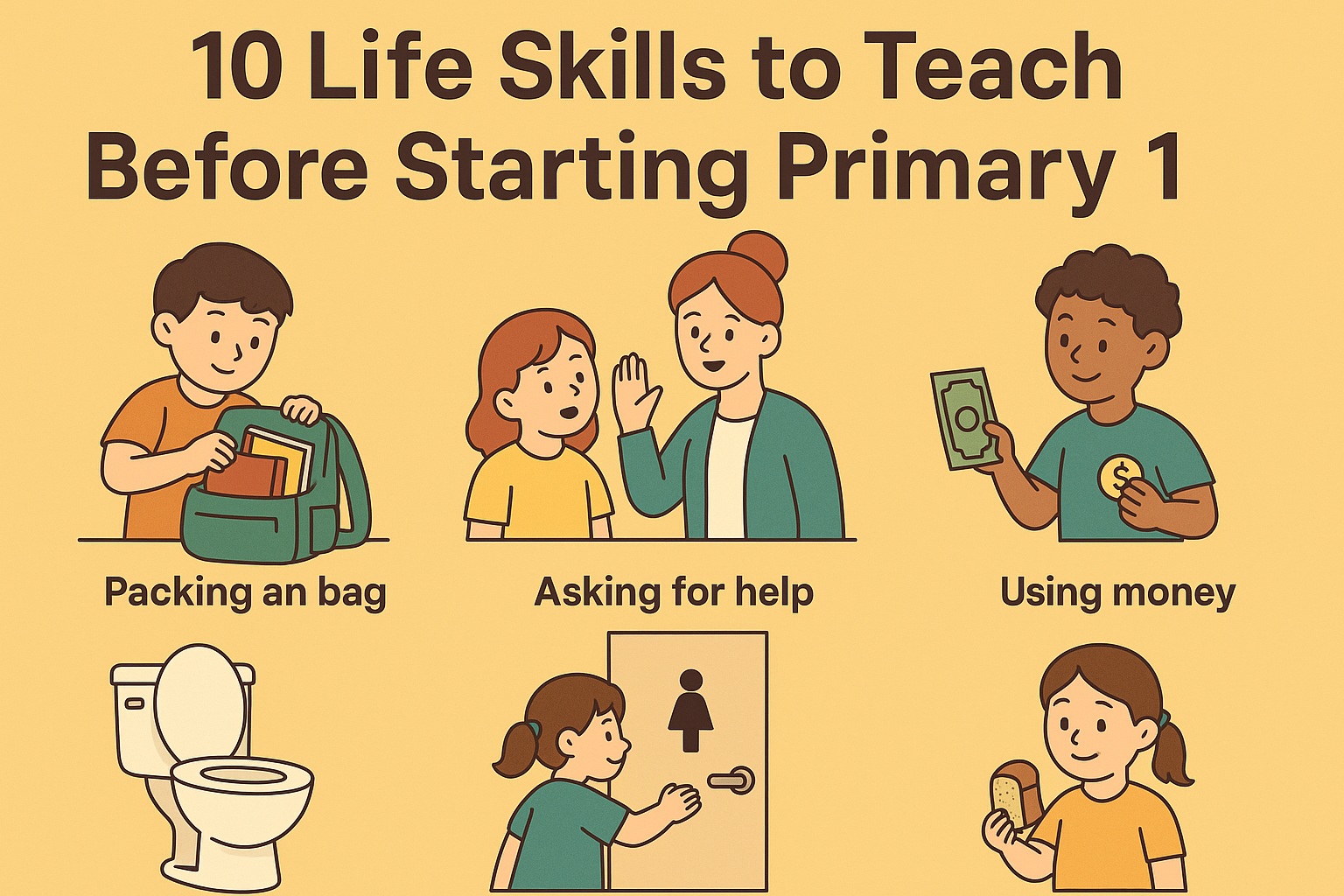
1. Packing and Unpacking Their School Bag
Teach your child how to organise their bag: keeping books in folders, placing lunch boxes in the right compartment, and checking their timetable. Practice packing together the night before school to build routine and responsibility.
2. Asking for Help
Children should feel comfortable approaching teachers or staff when they need help—whether they’re lost, feel unwell, or need assistance. Role-play common scenarios so your child knows it’s okay to speak up.
3. Handling Money
Teach basic money concepts, like counting coins and understanding change. Practice using real or play money at home. Let them try simple purchases at the canteen or minimart under your supervision before school starts.
4. Using the Toilet Independently
Your child should be able to use the toilet, flush, wash their hands, and manage zippers or buttons on their own. Visit public toilets together to familiarise them with cubicle locks and hand dryers.
5. Eating on Their Own
Children should know how to open food containers, unwrap sandwiches, use utensils, and clean up after meals. Practice during mealtimes at home or pack a lunchbox for a park outing to simulate school lunch routines.
6. Telling Time
While reading the full clock might take time, help your child understand school schedule basics: when recess or dismissal usually happens, or what “in 10 minutes” means. Use both analogue and digital clocks.
7. Following Instructions
Children will be expected to follow classroom routines and verbal directions. Encourage listening through simple multi-step tasks at home like “Put your shoes away and then wash your hands.”
8. Taking Care of Belongings
Label everything and teach your child to be responsible for their items. Reinforce the habit of checking for their water bottle, pencil case, or lunch box before leaving any location.
9. Social Skills and Turn-Taking
Practising how to wait, take turns, introduce themselves, or say “excuse me” helps your child adapt to the social environment of school. Play board games or do group activities to model these interactions.
10. Managing Small Accidents
Equip your child with the confidence to manage minor mishaps—like spills, getting dirty, or misplacing items. Reassure them that it’s okay to make mistakes and important to stay calm and ask for help if needed.
Final Thoughts
Preparing your child for Primary 1 goes beyond books and pencils. These life skills are the building blocks for independence and resilience. With practice and encouragement, your child will walk into school ready—not just to learn, but to thrive.
Frequently Asked Questions (FAQ)
- When should I start teaching these skills?
- Start at least 3–6 months before Primary 1 begins. Gradual learning is less stressful and more effective.
- What if my child is shy and won’t ask for help?
- Role-playing at home can help. Encourage small steps, like ordering food or asking a librarian a question, to build confidence.
- Is it okay if my child hasn’t mastered all 10 skills?
- Yes. Every child develops at their own pace. Reinforce what they know and gently support areas they’re still learning.
It takes a village to raise a child !
Join our WhatsApp Groups or Facebook Group to interact with parents about student care in Singapore..