After Getting a Primary 1 Place: What Parents Should Do Next
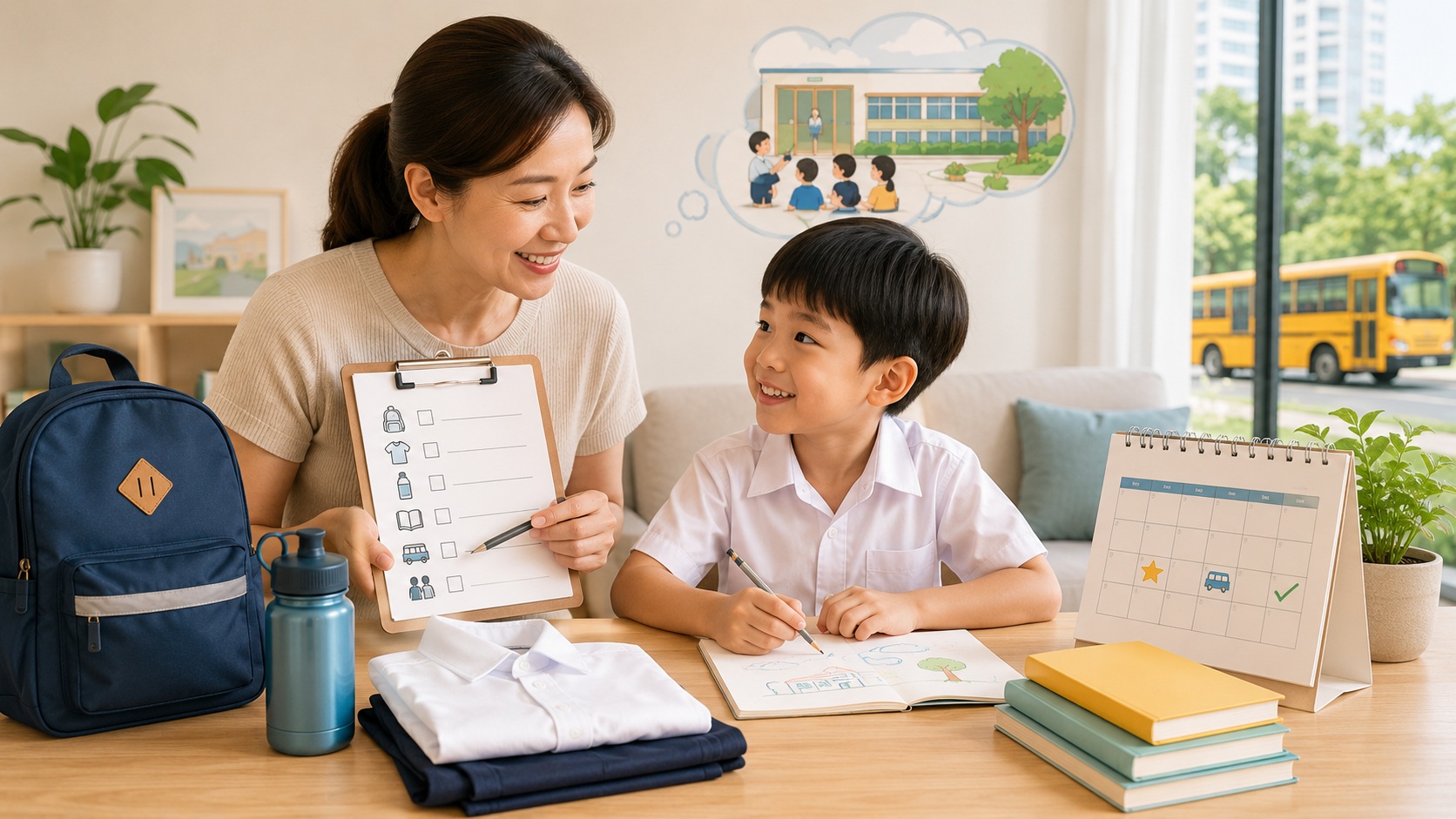
After Getting a Primary 1 Place: What Parents Should Do Next
Receiving confirmation of your child’s Primary 1 school place is an important milestone. After months of researching schools, checking registration phases and waiting for the result, parents can finally begin preparing for the next stage.
However, securing a school place is only the beginning. From attending school orientation to arranging student care, transport, uniforms and daily routines, there are several important matters to settle before your child starts Primary 1 in January 2027.
Here is a practical step-by-step checklist for Singapore parents.
1. Save the Registration Result
Once your child has been successfully registered, save a copy or screenshot of the registration result for your records.
You should also check that the following information is correct:
- Your child’s full name
- Your child’s identification details
- The name of the primary school
- Your home address
- Your contact number and email address
If any information is incorrect, contact the school as soon as possible instead of waiting until the school orientation.
2. Look Out for Information from the School
The school will usually provide parents with instructions about the next steps. These may be sent by email, letter, SMS or through the school’s website.
Important information may include:
- The Primary 1 orientation date
- School reporting instructions
- Administrative forms to complete
- Uniform and textbook purchasing arrangements
- School bus information
- Student care application details
- Medical and emergency contact forms
- Financial assistance information
Check your email regularly, including the spam or junk folder. Parents should also visit the school’s official website for announcements.
3. Attend the Primary 1 Orientation
Parents and children are strongly encouraged to attend the school’s Primary 1 orientation.
The orientation gives your child an opportunity to become familiar with the school environment. Depending on the school, your child may get to see the classroom, canteen, toilets, school hall and other important areas.
Parents may also receive information about:
- School hours and reporting time
- Arrival and dismissal arrangements
- School rules and routines
- Books and learning materials
- Communication between parents and teachers
- School bus services
- School-based student care
- Uniform and textbook purchases
Write down any questions before attending the orientation so that you do not forget to ask them.
Useful questions to ask during orientation
- What time should Primary 1 pupils arrive?
- Where should parents drop off and pick up their children?
- How will dismissal be managed?
- What should children bring during the first week?
- How will parents receive school announcements?
- What happens if a child is sick or injured?
- Who should parents contact about transport or student care?
4. Apply for Student Care Early
If your child needs care after school, enquire about student care as early as possible. School-based Student Care Centres provide children with a place to go after lessons without having to leave the school premises.
Places may be limited, and admission is not always automatic. Parents should check the centre’s application process, operating hours, fees and admission criteria.
Ask about:
- Operating hours
- Monthly fees
- Registration and deposit fees
- Meals and snacks
- Homework supervision
- School holiday programmes
- Enrichment activities
- Financial assistance or subsidies
- Arrangements when the child is sick
If the school-based centre is full, consider nearby community-based Student Care Centres or alternative arrangements involving grandparents, a helper or another caregiver.
5. Arrange School Transport
Parents should decide how their child will travel to and from school before the school year begins.
Possible arrangements include:
- School bus
- Public bus or MRT
- Parent drop-off and pick-up
- Walking with an adult
- Carpooling with another family
- Transport provided by a Student Care Centre
When comparing the options, consider travel time, cost, reliability, safety and your child’s ability to manage the journey.
If you plan to use a school bus, ask about:
- Monthly fees
- Pick-up and drop-off times
- Exact pick-up location
- Expected journey duration
- Bus safety arrangements
- Contact details of the operator
- What happens when your child is absent
- What happens if the bus is delayed
Have a backup plan in case the regular transport arrangement is unavailable.
6. Buy the School Uniform, Shoes and Books
Follow the school’s instructions on where and when to buy uniforms, textbooks and other required items.
Avoid buying too many pieces immediately because children may grow quickly. A practical starting quantity may include:
- Two or three sets of school uniform
- One or two sets of PE attire
- White or school-approved shoes
- School-approved socks
- A school bag
- A water bottle
- A pencil case
- A small wallet or coin pouch
Check the school’s official requirements before buying shoes, bags or stationery. Individual schools may have different rules.
7. Label Your Child’s Belongings
Primary 1 children commonly misplace water bottles, wallets, stationery, books and pieces of uniform.
Label important belongings with your child’s:
- Full name
- Class, once known
- Parent’s contact number, where appropriate
Items that should be labelled include:
- School bag
- Water bottle
- Wallet
- Pencil case
- Lunch box
- Books and files
- Uniform and PE attire
- Raincoat or umbrella
Avoid displaying too much personal information on the outside of the school bag. A parent’s telephone number can be placed on an internal label instead.
8. Prepare an Emergency Information Card
Prepare a small emergency card and place it in a secure compartment of your child’s school bag.
The card may contain:
- Your child’s name
- Parent or guardian contact numbers
- An alternative emergency contact
- Important allergies or medical conditions
- Student care contact details
- School bus operator’s contact details
Teach your child where the card is kept and when it should be shown to a trusted adult.
9. Update the School About Medical or Learning Needs
Inform the school early if your child has a medical condition, allergy, physical need, learning difficulty or special educational need.
Provide relevant documents and explain any support your child may require, such as:
- Medication during school hours
- Food allergy precautions
- Asthma management
- Hearing or vision support
- Mobility support
- Learning or behavioural support
- Help with transitions or communication
Early communication gives the school more time to understand your child’s needs and make appropriate arrangements.
10. Practise Buying Food at the Canteen
Recess can be one of the biggest changes for a Primary 1 child. Your child may need to queue, choose food, pay, carry a tray, find a seat, eat within a limited time and return the tray.
Practise these skills at home or at a food court:
- Reading or recognising simple menu items
- Choosing an affordable meal
- Ordering clearly and politely
- Using coins and notes
- Checking change
- Carrying food carefully
- Eating without constant adult assistance
- Cleaning up after eating
Parents can create a simple pretend canteen at home and let the child practise ordering and paying.
11. Decide How Much Pocket Money to Give
There is no single correct amount of pocket money for every Primary 1 child. The amount depends on the prices at the school canteen, whether the child brings food from home and whether the school uses cash or cashless payment.
During orientation, find out:
- The approximate cost of meals and drinks
- Whether cashless payment is available
- Whether pupils need money for other school purposes
Start with a manageable daily amount. Teach your child to keep the wallet in the same compartment of the school bag and to avoid showing money unnecessarily.
You may also keep a small amount of emergency money in a separate, labelled compartment.
12. Teach Essential Independence Skills
Primary 1 readiness is not only about reading, writing and mathematics. Children also need practical skills to manage themselves during the school day.
Before school starts, help your child practise:
- Using the toilet independently
- Washing and drying their hands
- Changing into PE attire
- Buttoning and unbuttoning clothes
- Tying shoelaces or managing shoe fasteners
- Opening food containers
- Filling and closing a water bottle
- Packing a school bag
- Keeping personal belongings safely
- Following two-step or three-step instructions
- Remembering important contact information
Allow your child to practise independently even if it takes longer. Avoid doing every task for the child simply because it is faster.
13. Teach Your Child How to Ask for Help
Children should know that asking for help is a responsible action, not something to be embarrassed about.
Teach your child to approach trusted adults such as:
- The form teacher
- A subject teacher
- School office staff
- A school counsellor
- A Student Care Centre teacher
- A school bus attendant
Practise simple sentences such as:
- “I do not know where to go.”
- “I cannot find my water bottle.”
- “I am feeling unwell.”
- “I need help opening this.”
- “Someone is hurting or frightening me.”
- “I missed my school bus.”
14. Familiarise Your Child with the School
If possible, show your child the school building and surrounding area before the first day.
You can also:
- Visit the school’s website together
- Look at photographs of the school
- Practise the journey to school
- Point out the entrance and dismissal area
- Talk about what classrooms and recess may be like
- Discuss who your child can approach for help
Familiarity can reduce anxiety because the school will feel less unknown.
15. Establish a School-Day Sleep Routine
Primary school may require your child to wake up much earlier than during preschool.
Do not wait until the night before school starts to change the sleep schedule. Begin adjusting bedtime and waking time gradually during the school holidays.
A helpful evening routine may include:
- Having dinner at a regular time
- Packing the school bag
- Preparing the uniform
- Bathing and brushing teeth
- Reading a book together
- Avoiding exciting activities close to bedtime
- Going to bed at a consistent time
Children who get sufficient rest are usually better able to concentrate, follow instructions and manage their emotions.
16. Practise the Morning Routine
A calm morning routine can prevent rushing, arguments and forgotten belongings.
Before the first day, conduct a few practice mornings. Ask your child to:
- Wake up when the alarm sounds
- Use the toilet and wash up
- Put on the school uniform
- Eat breakfast
- Check the school bag
- Wear shoes independently
- Leave home on time
Use a simple picture checklist if your child frequently forgets the steps.
17. Create a Home Study Area
Your child does not need an expensive study room. A small, comfortable and reasonably quiet area is usually enough.
Try to provide:
- A suitable table and chair
- Good lighting
- A place to store books and stationery
- A simple homework tray or folder
- As few distractions as possible
Keep frequently used stationery within reach, but avoid filling the space with too many decorations or learning materials.
18. Avoid Overloading Your Child with Preparation Work
It is understandable for parents to worry about whether their child is academically ready. However, completing large numbers of worksheets is not the only way to prepare for Primary 1.
Children also benefit from:
- Reading stories regularly
- Talking about everyday experiences
- Playing simple number games
- Following instructions
- Completing small responsibilities
- Learning to wait for their turn
- Solving simple problems independently
The goal is to help your child enter school feeling curious and confident, rather than frightened of making mistakes.
19. Talk About Feelings and Expectations
Your child may feel excited, worried or both. Give your child opportunities to talk about these feelings.
You can ask:
- “What are you looking forward to?”
- “Is there anything that worries you?”
- “What would you do if you could not find your classroom?”
- “Who could you ask for help?”
- “What would you like to know about Primary 1?”
Avoid telling your child that primary school will be frightening, extremely difficult or full of punishment. Speak positively while remaining realistic about new responsibilities.
20. Prepare Parents for the Transition Too
Starting Primary 1 is a major adjustment for parents as well as children. Parents may worry about academics, friendships, safety, homework and whether their child can cope independently.
Try not to pass excessive anxiety to your child. During the first few weeks:
- Expect some tiredness and emotional changes
- Keep after-school schedules manageable
- Ask specific but gentle questions about school
- Avoid comparing your child with classmates
- Give your child time to learn new routines
- Communicate respectfully with teachers
Most children need time to adjust. A difficult first day or first week does not mean that the whole school year will be difficult.
Suggested Preparation Timeline
Immediately after receiving the school place
- Save the registration result
- Check your contact information
- Visit the school website
- Watch for school communications
- Begin considering student care and transport
When orientation information is released
- Note the orientation date
- Complete required forms
- Apply for student care
- Enquire about school bus services
- Check uniform and textbook arrangements
During the year-end school holidays
- Purchase and label school items
- Practise the journey to school
- Practise canteen and money skills
- Develop independence skills
- Adjust sleep and morning routines
- Prepare a study area
One week before school starts
- Check the school’s latest instructions
- Confirm transport arrangements
- Prepare emergency contact information
- Pack the items required for the first day
- Conduct a full practice morning
- Keep the final few days calm and restful
Primary 1 Preparation Checklist
- ☐ Registration result saved
- ☐ Parent contact information checked
- ☐ School orientation date recorded
- ☐ Administrative forms completed
- ☐ Student care arranged
- ☐ School transport arranged
- ☐ Uniform and PE attire purchased
- ☐ Textbooks and stationery purchased
- ☐ Belongings labelled
- ☐ Emergency information card prepared
- ☐ Medical or learning needs communicated
- ☐ Pocket money arrangement decided
- ☐ Canteen skills practised
- ☐ Morning and bedtime routines established
- ☐ Child knows how to ask for help
Frequently Asked Questions
Do parents need to attend the Primary 1 orientation?
Parents and children are strongly encouraged to attend. Orientation provides important information about school procedures and helps children become familiar with the new environment.
When should parents apply for school-based student care?
Parents should enquire and apply as early as possible after receiving instructions from the school. Places may be limited, and admission may depend on the centre’s criteria and available capacity.
How many sets of school uniform should parents buy?
Many families begin with two or three sets of school uniform and one or two sets of PE attire. However, parents should consider the school timetable, laundry schedule and how quickly the child is growing.
Should children attend Primary 1 preparation classes?
Preparation classes are not compulsory. A child may benefit more from practising independence, communication, daily routines, reading and basic number skills than from completing excessive worksheets.
What should parents do if their child is anxious about Primary 1?
Listen to the child’s concerns, explain what to expect and practise common school situations through role-play. Familiarising the child with the school and daily journey may also reduce anxiety.
What is the most important skill before Primary 1?
There is no single most important skill. Children benefit from a combination of independence, communication, emotional regulation, social confidence and willingness to learn.
Final Thoughts
After securing a Primary 1 place, parents do not need to prepare everything at once. Start with urgent matters such as school communication, orientation, student care and transport. You can then gradually work on uniforms, routines, canteen skills and independence.
The aim is not to create a perfectly prepared child. It is to help your child enter Primary 1 feeling secure, capable and ready to learn.
School procedures and requirements may differ. Parents should always follow the latest instructions issued by their child’s school and Singapore’s Ministry of Education.
It takes a village to raise a child !
Join our WhatsApp Groups or Facebook Group to interact with parents about student care in Singapore..