Helping Your Child Make Friends at School
Helping Your Child Make Friends at School
Practical strategies for social confidence, easy conversation starters, and handling common peer issues.
Key Takeaways
- Confidence grows from small, repeatable wins: daily greetings, short chats, and shared play.
- Conversation starters work best when they are specific to the moment (class, recess, bus, CCA/after-school).
- Coach skills at home with quick role-plays and debriefs; partner with teachers when problems persist.
- Distinguish ordinary conflict from bullying so you can respond proportionately and protectively.
Why School Friendships Matter
Having even one or two “good-enough” friends can boost your child’s classroom participation, resilience, and sense of belonging. Friendship skills are learnable: greeting others, joining play, taking turns in conversation, and solving small disagreements.
Build Social Confidence (5 Everyday Habits)
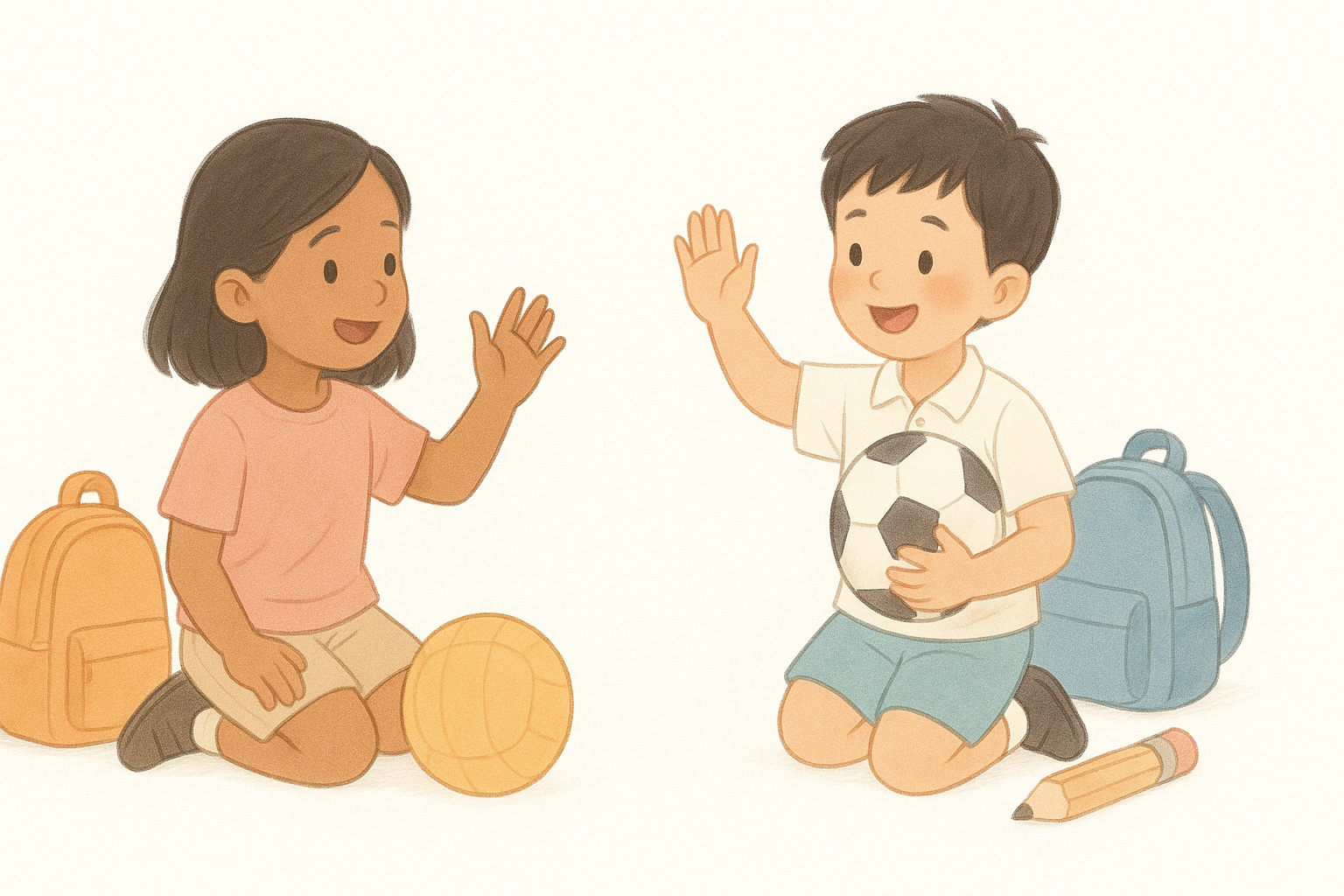
- The 3-Step Hello: Smile → say the person’s name → add a short line (“Hi Aiden, see you at recess?”). Practice in the mirror for 30 seconds.
- Back-Pocket Topics: Prepare 3 safe topics your child enjoys (e.g., football, drawing, pets). Rotate them so chats don’t feel repetitive.
- Join-In Lines: Teach two direct, polite entries: “Can I play the next round?” or “Where could I help?” Most groups accept clear, low-effort offers.
- Share & Swap: Encourage bringing an extra (pencil, sticker, simple game rules). Sharing creates quick positive interactions without bribery.
- Body Language Basics: Stand side-by-side (not face-to-face) to reduce pressure; look toward the person occasionally; keep hands busy (ball/book) to ease nerves.
Conversation Starters That Actually Work
Short, specific openers beat generic “How are you?” lines. Try these, then listen and add one follow-up question:
In Class
- “Which book did you pick for reading time?”
- “Do you understand question 3? I got stuck at… ”
- “Your drawing looks cool—how did you make that shadow?”
At Recess / Canteen
- “Want to play [tag/four square/chapteh]?”
- “What snack did you bring today?”
- “Can I join the next round?”
On the Bus / After School / CCA
- “Are you going for any CCA this term?”
- “What game do you like on the bus?”
- “I’m new to this—what should I know for the first session?”
Simple Follow-Ups
- “Oh really? What made you choose that?”
- “Then what happened?”
- “Can you show me?”
Mini-scripts for joining play: “Hi, I’m Rae. What are the rules?” → (Listen) → “Got it—can I start here?”
Practice & Coach at Home (10–Minute Routine)
- Pick a Skill: Greeting, joining a group, or giving a compliment.
- Role-Play: Parent acts as classmate; child tries the skill twice.
- Swap Roles: Child plays “difficult but polite” peer; this builds flexibility.
- Feedback Sandwich: One thing that worked → one tweak → end with praise.
- Daily Micro-Goal: “Say hello to two classmates today.” Celebrate effort, not outcome.
Five-Day Mini Plan: Mon—Greetings; Tue—Join-in line; Wed—Ask a follow-up; Thu—Give a compliment; Fri—Invite someone to play.
Managing Peer Issues
Normal Conflict vs Bullying
- Conflict: Disagreement between kids of equal power; usually occasional and not targeted.
- Bullying: Repeated, intentional harm with a power imbalance (physical, verbal, social exclusion, or online).
If it’s conflict: Coach your child to use CALM—Cool voice, Ask for needs (“Please give it back when you’re done”), Listen briefly, Make a small plan (“I’ll wait two turns”).
If it might be bullying: Teach a clear boundary line: “Stop. That’s not okay.” Then exit and tell a trusted adult. Document dates/names; loop in the form teacher or year head early.
Handling Rejection or Shyness
- Normalize it: “Not everyone says yes, and that’s okay. Try someone else.”
- Keep the next step ready: “If Group A says no, I’ll invite one person from Group B for a quick game.”
- Use low-pressure activities (drawing side-by-side, trading stickers, simple ball games) to reduce performance anxiety.
For Different Temperaments & Needs
- Introverted/Anxious: Prefer pairs over big groups; rehearsed lines; arrive a few minutes early to start one-to-one chats.
- Bilingual / New to English: Practice set phrases with pictures; encourage nonverbal invitations (showing how a game works).
- Neurodivergent: Use visual scripts (“First greet, then ask, then wait”); pick structured games with clear rules; agree on a signal for “break time.”
Work With the School
- Give teachers a brief snapshot of your child’s interests and any worries.
- Ask about natural friendship opportunities: class jobs, seating, reading buddies, CCAs.
- Arrange short playdates (45–60 min, simple activity, snack) with one potential friend at a time.
Quick Dos & Don’ts
- Do praise effort (“You tried two openers today!”) rather than popularity.
- Do model friendly habits yourself—greet neighbours, thank bus captains.
- Don’t over-engineer every interaction or speak for your child.
- Don’t force play with kids who are consistently unkind; help your child widen their circle.
FAQ
My child says “no one wants to play with me.” What should I do first?
Listen and validate feelings, then get concrete: “When did this happen? Which game?” Role-play two join-in lines, identify one friendly classmate to approach tomorrow, and inform the teacher if it seems frequent or targeted.
How many friends does a child need?
Quality beats quantity. One or two dependable friends are enough for a strong sense of belonging.
Should I step in when kids argue?
Coach first. If there is persistence, cruelty, or a power imbalance, involve the teacher. Document incidents if needed.
What if my child prefers solo play?
Solo time is fine. Aim for short daily social moments (greeting, one shared activity). Respect temperament while keeping skills growing.
Are online group chats a concern for older primary kids?
Yes—set rules: only known classmates, no forwarding images, no posting when upset, and show adults any mean messages.
It takes a village to raise a child !
Join our WhatsApp Groups or Facebook Group to interact with parents about student care in Singapore..