Helping Children Manage Screen Use: Evidence Based Strategies for Parents
Helping Children Manage Screen Use: Evidence-Based Strategies for Parents
“Screen addiction” isn’t a formal diagnosis for children in most clinical manuals, but research consistently links problematic or excessive screen use with sleep disruption, attention and mood difficulties, and family conflict. The good news: small, consistent changes at home can make a big difference.
What the research tells us
- Associations with wellbeing: Meta-analyses and cohort studies show small-to-moderate links between heavier screen use and internalising (anxiety/depression) and externalising (behavioural) symptoms.
- Patterns matter more than hours: Compulsive, uncontrolled use (e.g., strong cravings, withdrawal, interference with daily life) is a stronger risk signal than total time alone.
- Sleep, activity, and relationships: Excess screen time often displaces sleep, physical activity and face-to-face socialising—core ingredients for healthy development.
- Family environment counts: Children are more likely to develop problematic habits when parents themselves have high or compulsive screen use, are highly stressed, or when rules are inconsistent.
- Interventions help: Behavioural approaches (clear limits + alternatives), parent training, family-based routines, and in older children/adolescents, CBT-style strategies show benefit.
Remember: correlation does not imply causation. But when screen use crowds out sleep, exercise, homework, or relationships, most families see improvements after structured changes.
Practical strategies for parents
1) Model healthy habits
- Declare and follow device-free zones (mealtimes, bedrooms, family activities).
- Say your behaviour out loud: “I’m putting my phone away so I can focus on dinner with you.”
2) Set clear, age-appropriate rules
- Create a family media plan: what devices, how long, where, and after which tasks (homework, chores, reading, outdoor play).
- Use timers and built-in tools (Screen Time, Digital Wellbeing, Family Link). Keep sessions to 30–45 minutes with a planned stop.
- Prioritise school/learning tasks; allocate leisure screens last.
3) Improve quality, not just quantity
- Favour co-viewing/co-play and interactive learning over passive scrolling.
- Pre-approve games/apps; avoid auto-play and “endless feed” designs for younger kids.
- Discuss media: “What do you like about this? How does it make you feel after?”
4) Protect sleep and attention
- Stop personal devices at least 60 minutes before bedtime; charge devices outside bedrooms.
- Replace late screens with calming routines (bath, reading, journaling).
5) Offer appealing alternatives
- Daily movement (parks, cycling, ball games), hobbies, board games, arts & crafts.
- Make weekends “experience-first”: plan one out-of-home activity before any screens.
6) Use collaborative problem-solving
- Hold a weekly 10-minute check-in: review what worked, what didn’t; tweak the plan together.
- Reward progress (stickers, privileges) rather than punish lapses.
Tips for Singapore families
- Differentiate required (homework/learning platforms) vs leisure screen time; track them separately.
- Leverage local options: neighbourhood parks, libraries, ActiveSG, community clubs for screen-free activities.
- Align rules with grandparents/caregivers; share simple guidelines and the daily schedule.
Sample weekly screen-use plan (Age 8–12)
| Day | Before screens | Leisure screen limit | Cut-off |
|---|---|---|---|
| Mon–Fri | Homework -> 20 min reading -> 30 min outdoor play | 30–60 min (split in 2 blocks) | Off 60 min before bed |
| Sat | Morning outdoor activity / family outing | Up to 90 min (30–45 min blocks) | Off 60 min before bed |
| Sun | Family time / preparation for school week | Up to 60 min | Off 60 min before bed |
Tip: Keep devices in shared spaces. Prefer a family TV (co-viewing) over private phones or tablets.
Warning signs of problematic use
- Escalating conflict around devices; strong distress when stopped.
- Drop in school performance, chores, or interest in offline activities.
- Sleep difficulties, late-night secret use, persistent fatigue.
- Using screens to cope with negative emotions most of the time.
When to seek professional help
If your child shows loss of control (can’t stop despite wanting to), persistent mood or sleep disturbance, or significant impairment at school or in relationships, speak with your paediatrician or a child psychologist. Behavioural therapies (including CBT-style approaches) and family-based routines are commonly recommended. If ADHD, anxiety, or depression are present, coordinate screen strategies with the treating clinician and school.
Frequently Asked Questions
1) How much screen time is “too much”?
There’s no universal cutoff, but risk rises when screens displace sleep, physical activity, homework, and socialising, or when use becomes compulsive. For school-age children, many families do well with 30–60 minutes of leisure screens on weekdays and up to 90 minutes on weekends, with devices off an hour before bed.
2) Is “screen addiction” a diagnosis?
“Screen addiction” is a popular term, but most manuals focus on specific behaviours like problematic internet or gaming. In practice, look for loss of control, withdrawal-like distress, and life interference—these are stronger risk signals than total minutes alone.
3) What’s better: banning devices or setting limits?
Extreme bans often trigger conflict and sneaky use. Consistent limits + alternatives (sleep, exercise, hobbies) work better. Co-view, discuss content, and keep devices in shared spaces.
4) Do educational apps “not count”?
They still count toward overall stimulation and bedtime cut-offs. Prioritise required learning but avoid late sessions; short, focused blocks with breaks are best.
5) My child melts down when I take the device away. What do I do?
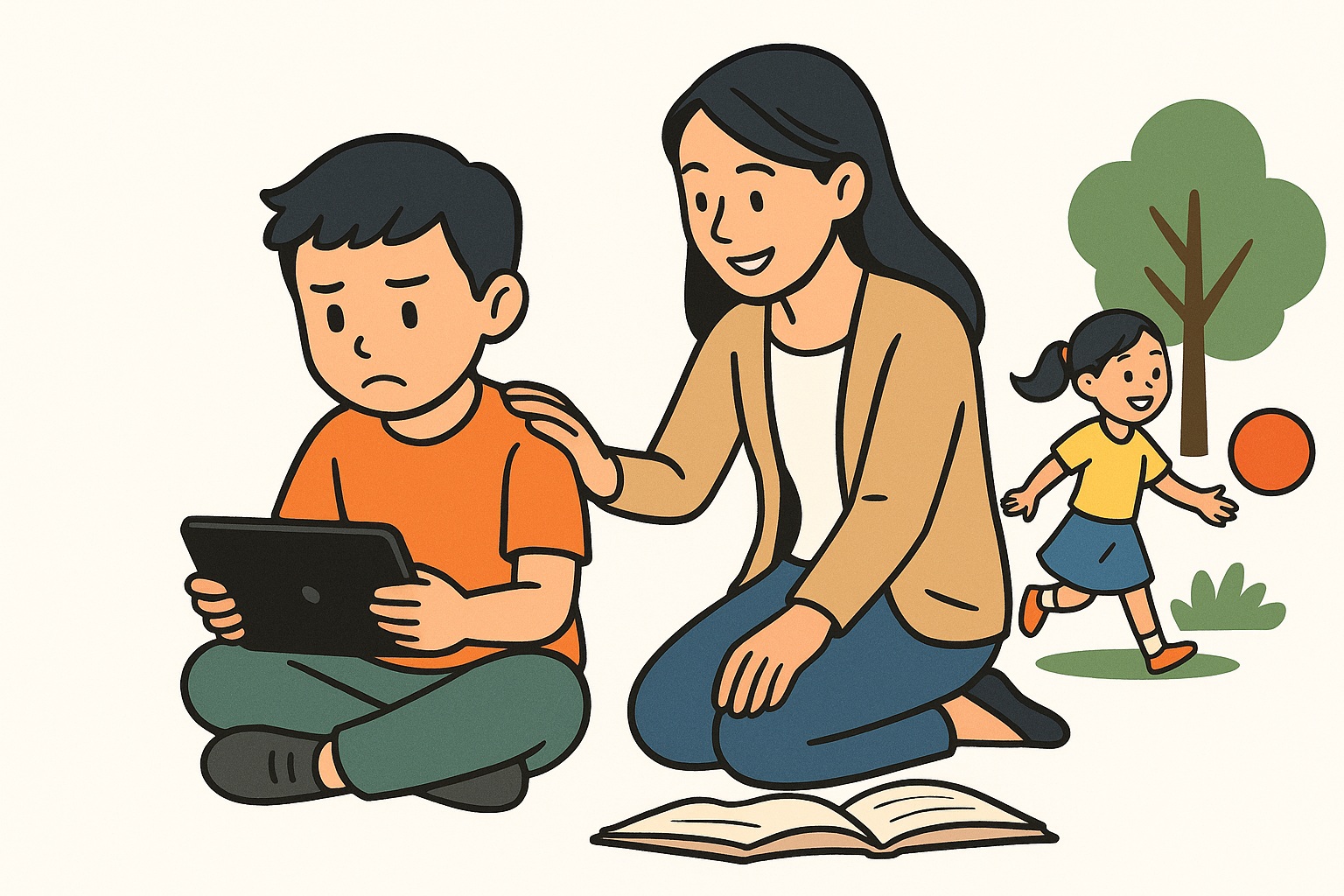
Pre-announce limits, use timers and visual schedules, and give transition warnings (e.g., “5 minutes left”). Pair the stop with a next activity your child likes (snack, outdoor play, board game). Praise successful transitions.
6) Are night-mode or blue-light filters enough for sleep?
Helpful but not sufficient. The content and arousal still matter. Keep personal devices out of bedrooms and stop use at least 60 minutes before sleep.
It takes a village to raise a child !
Join our WhatsApp Groups or Facebook Group to interact with parents about student care in Singapore..