
How to Make Homework Time Smooth and Stress Free
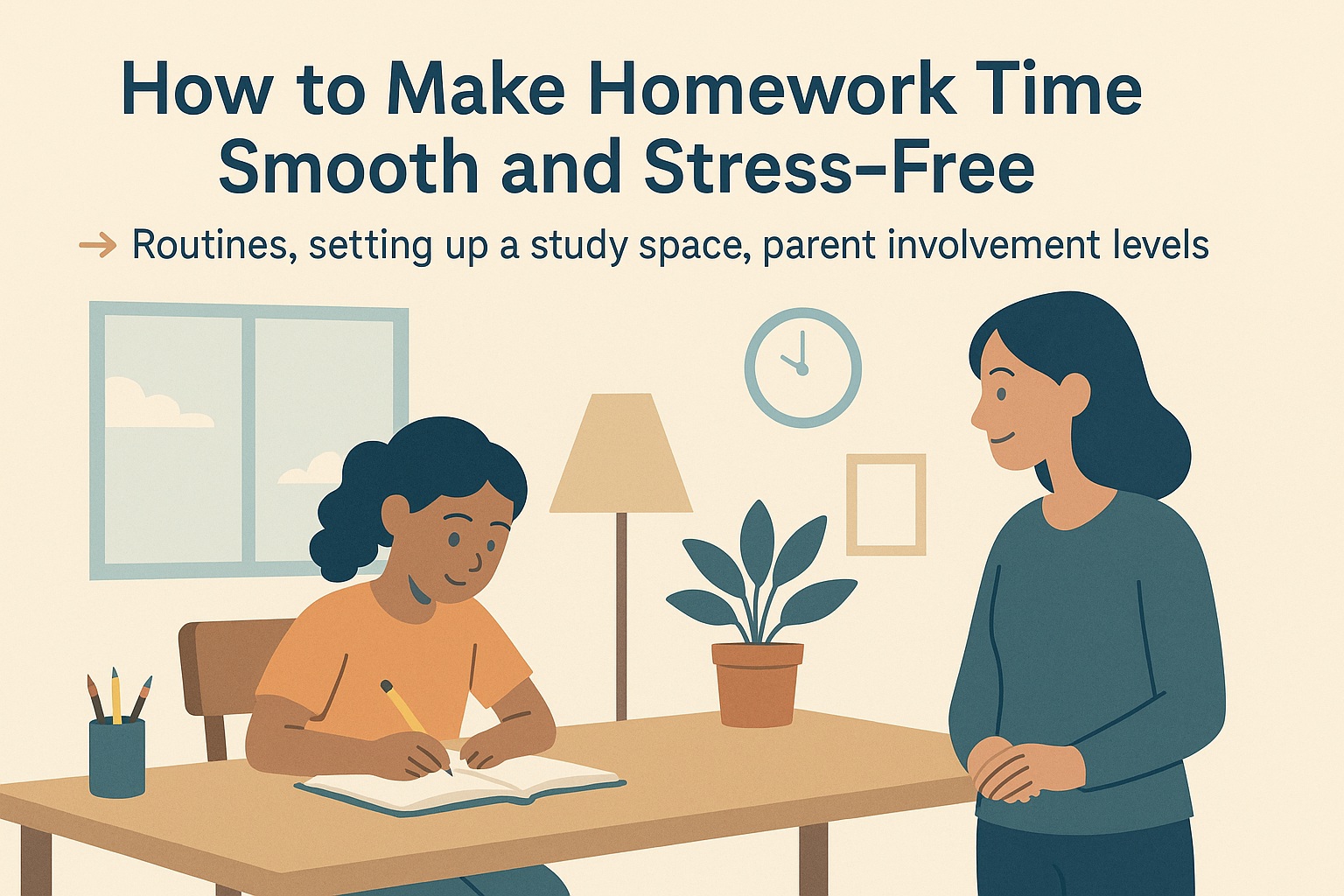
For many families, homework time can quickly turn into a daily source of stress. Between distractions, resistance, and time constraints, helping your child stay focused can feel like a challenge. Fortunately, there are research-backed strategies that parents can use to transform homework time into a calm and productive experience.
1. Establish a Consistent Routine
Children thrive on predictability. According to the American Academy of Pediatrics (AAP), setting up a consistent homework routine helps children feel more in control and reduces resistance. Try to set a regular time each day for homework—ideally after a short break and snack following school.
- Pick a time that works with your child’s energy levels (e.g., not when they're overly tired).
- Use a visual schedule so your child knows what to expect each day.
- Stick to the routine consistently, even on weekends or school holidays when applicable.
2. Create a Dedicated Study Space
The environment plays a big role in your child’s ability to concentrate. Research from Harvard University shows that environmental distractions can reduce focus by up to 40%. Help your child create a homework space that is:
- Quiet and distraction-free: Avoid high-traffic or noisy areas.
- Well-lit and comfortable: Ensure proper lighting and seating to prevent eye strain and fatigue.
- Stocked with supplies: Keep pencils, erasers, paper, and other essentials nearby.
Avoid doing homework on beds or couches, as these can signal relaxation rather than productivity.
3. Set Realistic Expectations and Break Tasks Into Chunks
Young children often struggle with long assignments or multiple tasks. The Pomodoro Technique—working in short, focused bursts (e.g., 25 minutes) followed by short breaks—can improve attention and reduce burnout.
- Break large assignments into smaller, manageable tasks.
- Celebrate small wins to build motivation and confidence.
- Use timers to keep track of work and break intervals.
4. Adjust Your Level of Involvement
Parental involvement matters—but the right kind. According to a 2014 study published in Psychological Science, too much parental control can reduce a child’s intrinsic motivation. Instead, aim to:
- Encourage independence—be available, but let your child take the lead.
- Provide guidance when asked, rather than hovering constantly.
- Avoid doing the work for your child, even if it’s tempting.
Supportive, non-controlling involvement fosters better academic outcomes and greater self-esteem in children.
5. Manage Emotions and Frustration
Homework can be an emotional trigger for both kids and parents. Stay calm and model emotional regulation. If your child becomes frustrated:
- Pause the work and take a short break.
- Offer empathy and help your child name their emotions.
- Use calming techniques like deep breathing or stretching.
Creating an emotionally safe environment encourages perseverance and resilience.
6. Communicate with Teachers
If homework regularly causes stress, confusion, or excessive time commitment, reach out to your child’s teacher. Some issues may be due to unclear instructions or a mismatch in expectations. Teachers can offer clarification or adjustments if needed.
Conclusion
With the right structure, environment, and emotional support, homework time can be a smooth, productive part of the day. Focus on building routines, encouraging independence, and maintaining a calm atmosphere. Over time, these strategies can help your child develop valuable study habits and reduce stress for the entire family.
FAQ
Q1: How long should my child spend on homework each day?
Experts often recommend about 10 minutes of homework per grade level (e.g., 30 minutes for a Primary 3 student). If it takes significantly longer, discuss this with the teacher.
Q2: What if my child refuses to do homework?
Look for root causes—tiredness, overwhelm, or confusion. Use routines and breaks, and consider using a reward system to motivate reluctant learners.
Q3: Should I sit with my child the entire time?
Not necessarily. It’s best to gradually encourage independence while letting your child know you’re nearby for help if needed.
Q4: Is it okay to let my child do homework with background music?
Light, instrumental music can help some children concentrate, but lyrics and loud sounds are generally distracting. Monitor how your child responds.
Q5: What if we have after-school activities and little time for homework?
Work with your child to create a time management plan. Prioritize important tasks and use weekends or mornings when needed.
It takes a village to raise a child !
Join our WhatsApp Groups or Facebook Group to interact with parents about student care in Singapore..