Literacy and Numeracy Skills to Build Before Primary 1
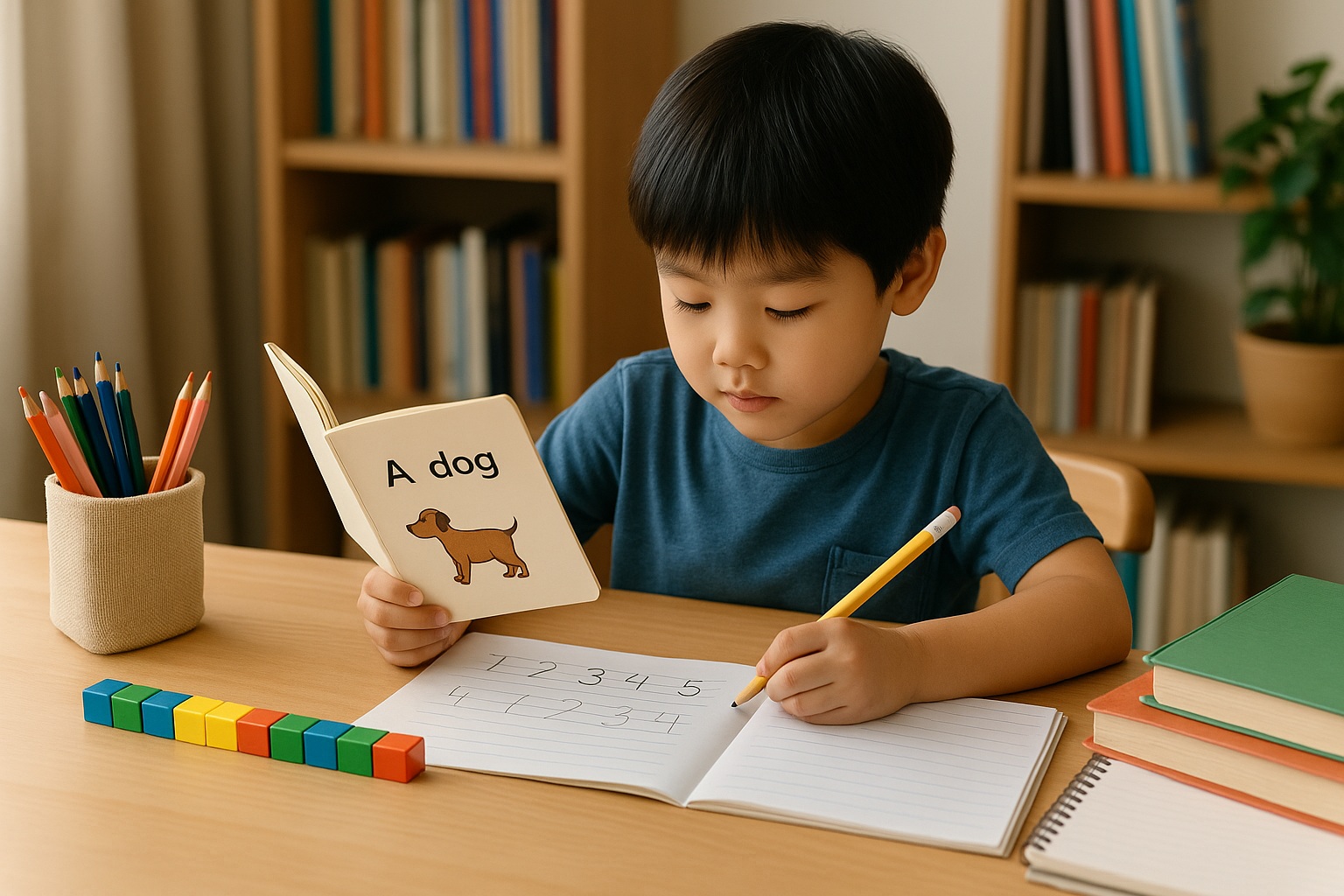
Entering Primary 1 is a big step, and while Singapore’s primary schools are well-equipped to support new students, having a strong foundation in basic literacy and numeracy skills can ease the transition and boost confidence. Here’s what parents can do to help their child feel ready and capable.
1. Literacy Skills
1.1. Letter Recognition
- Recognise both uppercase and lowercase letters
- Match letters to their sounds (e.g., A says “ah”)
- Identify the first letter in common words and names
1.2. Phonemic Awareness
- Hear and identify beginning, middle, and ending sounds in simple words
- Recognise rhyming words
- Blend sounds to form simple words (e.g., /c/ /a/ /t/ = cat)
1.3. Basic Reading
- Read and understand simple sight words (e.g., “the,” “is,” “I”)
- Read short, simple sentences
- Follow left-to-right reading and turn pages independently
1.4. Writing Skills
- Hold a pencil correctly and write letters clearly
- Write their own name
- Form simple sentences (e.g., “I see a dog.”)
- Copy short sentences or words from a model
2. Numeracy Skills
2.1. Number Recognition
- Recognise numbers from 1 to 20
- Count forward and backward within 20
- Understand “more than,” “less than,” and “equal to”
2.2. Counting Objects
- Count up to 20 everyday objects accurately
- Match numerals to quantities (e.g., 5 = five apples)
- Use counting in play (e.g., counting blocks, snacks)
2.3. Simple Patterns and Shapes
- Recognise basic shapes (circle, square, triangle, rectangle)
- Continue simple AB or AAB patterns (e.g., red-blue-red-blue)
- Sort objects by size, colour, or shape
2.4. Number Writing
- Write numbers 1–10 legibly
- Understand basic number order (what comes before/after)
3. Learning Through Play
Foundational literacy and numeracy can be built naturally through everyday activities:
- Reading together: Point out words, ask questions about the story
- Board games: Use number and letter recognition games (e.g., Uno, Scrabble Jr)
- Cooking: Measure ingredients, count scoops, talk about sizes
- Shopping: Spot numbers and words on packaging and price tags
4. Fine Motor Skills for Writing
These physical skills support pencil control and writing fluency:
- Playdough to build finger strength
- Tracing letters or drawing shapes
- Using scissors, tongs, or tweezers for fun activities
5. Building Confidence, Not Pressure
Not all children will master every skill before Primary 1, and that’s okay. What matters most is encouraging curiosity, confidence, and a love for learning. Avoid drilling or over-teaching. Keep learning light, playful, and positive.
Frequently Asked Questions (FAQ)
1. What if my child can’t read yet?
That’s okay. Primary 1 teachers are trained to support a wide range of abilities. Focus on phonics awareness and enjoying books together.
2. Should I buy assessment books or start tuition?
It’s not necessary for most children before P1. If your child enjoys activity books, keep it fun and brief. Emphasise daily learning through play.
3. What language should I use at home?
Use the language you're most fluent in to build strong thinking and communication skills. Exposure to the Mother Tongue can be added gradually through books, songs, and videos.
4. How do I know if my child is ready?
Readiness is about more than academics—look for signs of independence, curiosity, and the ability to follow simple instructions.
5. Should I worry if my child is ahead or behind?
No. Children develop at different paces. The school system is designed to accommodate different learners, especially in early years.
Conclusion
Supporting your child with basic literacy and numeracy before Primary 1 lays a strong foundation—not just for academics, but for confidence and motivation. Keep learning playful, praise effort over results, and celebrate small wins. With your guidance, your child will start Primary 1 with curiosity and joy.
Sources
- MOE Kindergarten Framework
- Singapore Ministry of Education – “Transition to Primary 1” Guide
- National Library Board Singapore – Early Literacy Resources
It takes a village to raise a child !
Join our WhatsApp Groups or Facebook Group to interact with parents about student care in Singapore..