Screen Time for P1: Preventing Myopia, Screen Limits and Posture Tips
For Singapore Primary 1 families: practical, evidence-based tips to reduce myopia risk, set healthy screen limits, and fix posture.
Key Takeaways
- Recreational screen time: Keep it under 2 hours/day for ages 7–12 (schoolwork excluded). Avoid screens during meals and within an hour before bedtime.
- Outdoor time is protective: Aim for ≥2 hours outdoors daily in daylight to lower myopia risk.
- Breaks & distance: Use the 20-20-20 rule; hold books/tablets at about 30–40 cm (Harmon distance); keep monitors at ~50–70 cm and slightly below eye level.
- Blue-light glasses: Not proven to reduce digital eyestrain or prevent myopia; focus on habits instead.
- Watch for signs: Squinting, headaches, rubbing eyes, sitting close to screens/TV—seek an eye exam if you notice these.
Why It Matters in Singapore
Singapore has one of the world’s highest myopia rates—around 60–65% of children are myopic by Primary 6, and many progress through their school years. Early prevention in P1 helps delay onset and slow progression.
Quick Reference: Screen Guidance (Age 7–12)
| Organisation | Guidance | Notes |
|---|---|---|
| Singapore MOH (2025) | < 2 hours/day recreational (exclude schoolwork) | Avoid screens during meals & within 1 hour before bedtime |
| American Academy of Pediatrics | No single “number” for 6+; use a Family Media Plan | Protect sleep, activity, learning; avoid bedroom screens |
| Canada (24-Hour Movement Guidelines) | ≤ 2 hours/day recreational screen time | Emphasise physical activity & sleep |
| Australia (Dept of Health) | ≤ 2 hours/day sedentary recreational screen time | Balance with active time and outdoor play |
These figures guide recreational use. Schoolwork is separate. Prioritise sleep, exercise, reading, and face-to-face time.
The Science in Short
- More screen time → higher myopia odds: A 2025 dose–response meta-analysis found ~21% higher odds of myopia for each extra hour of daily digital screen time (risk rises most between 1–4 hours/day).
- Outdoor time protects: A randomized school trial adding 40 minutes outdoors daily reduced incident myopia over 3 years; programmes targeting ~120 minutes/day outdoors show population benefits.
- Near work & close viewing: Shorter reading distances (<30 cm) and prolonged continuous near tasks are associated with more myopic refraction; maintaining the child’s Harmon distance helps.
- Blue light: Blue-light filtering lenses probably do not reduce digital eyestrain or improve sleep; they don’t prevent myopia. Prioritise habits: breaks, distance, posture, lighting, and outdoor time.
What To Do This Term (P1 Action Plan)
- Set a family screen timetable: Cap recreational use to < 2 hours/day; no screens at meals; stop 1 hour before bed. Post it where everyone can see it.
- Protect outdoor time daily: Aim for at least 2 hours (recess + after-school play). Weekends are great for parks and sports.
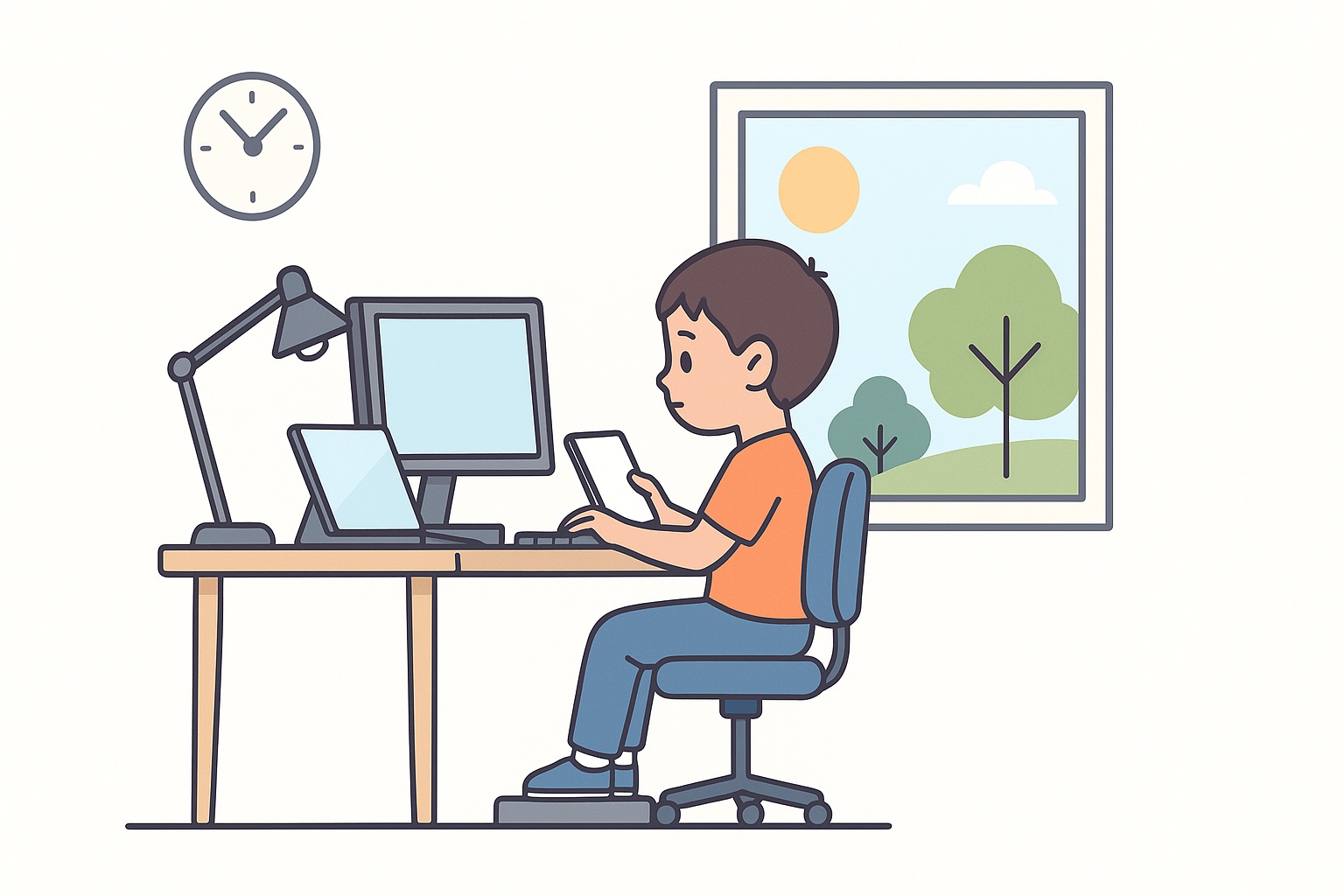
- Optimise desk setup: Screen an arm’s length away; top of screen at or slightly below eye level; external keyboard/mouse for laptops.
- Use the 20-20-20 rule: Every 20 minutes, look 20 feet away for 20 seconds; blink consciously to prevent dry eye.
- Mind the distance: Books and tablets ≈ 30–40 cm (Harmon distance). If your child creeps closer, increase font size or viewing distance.
- Lighting & glare: Seat side-on to windows; use a diffuse task lamp; avoid reflections on the screen.
- Know the signs: Squinting, eye rubbing, headaches, sitting very close to screens/TV, or avoidance of reading—book an eye exam.
FAQ
Should my child wear blue-light glasses?
No. High-quality evidence shows little to no benefit for eyestrain or sleep. Good habits and outdoor time matter more.
Is e-reading worse than paper?
What matters most is time on near work, viewing distance, and breaks. Increase font size, keep distance, and take regular breaks.
How often are school eye checks done?
HPB conducts vision screening in primary schools. Follow up if your child is referred or if you notice symptoms.
Any bedtime advice?
Avoid screens in the last hour before bedtime; keep devices out of bedrooms; maintain a consistent sleep schedule.
References (Selected)
- MOH Singapore. Guidance on Screen Use in Children (Jan 2025).
- Ha A, et al. Digital Screen Time & Myopia: Systematic Review & DRMA, JAMA Netw Open, 2025.
- He M, et al. Time Outdoors at School & Myopia, JAMA, 2015.
- International Myopia Institute. Risk Factors for Myopia, 2021.
- Cochrane Review. Blue-light filtering spectacle lenses, 2023.
- AOA. Computer vision syndrome & 20-20-20 rule, accessed 2025.
- Canada (CSEP). 24-Hour Movement Guidelines (5–17).
- Australia Dept of Health. Guidelines for 5–17 yrs.
- HPB/HealthHub. School health screening.
- Viewing distance & Harmon distance: Bhandari KR et al., 2021; Naipal S et al., 2024.
It takes a village to raise a child !
Join our WhatsApp Groups or Facebook Group to interact with parents about student care in Singapore..