Understanding the Primary School Curriculum in Singapore
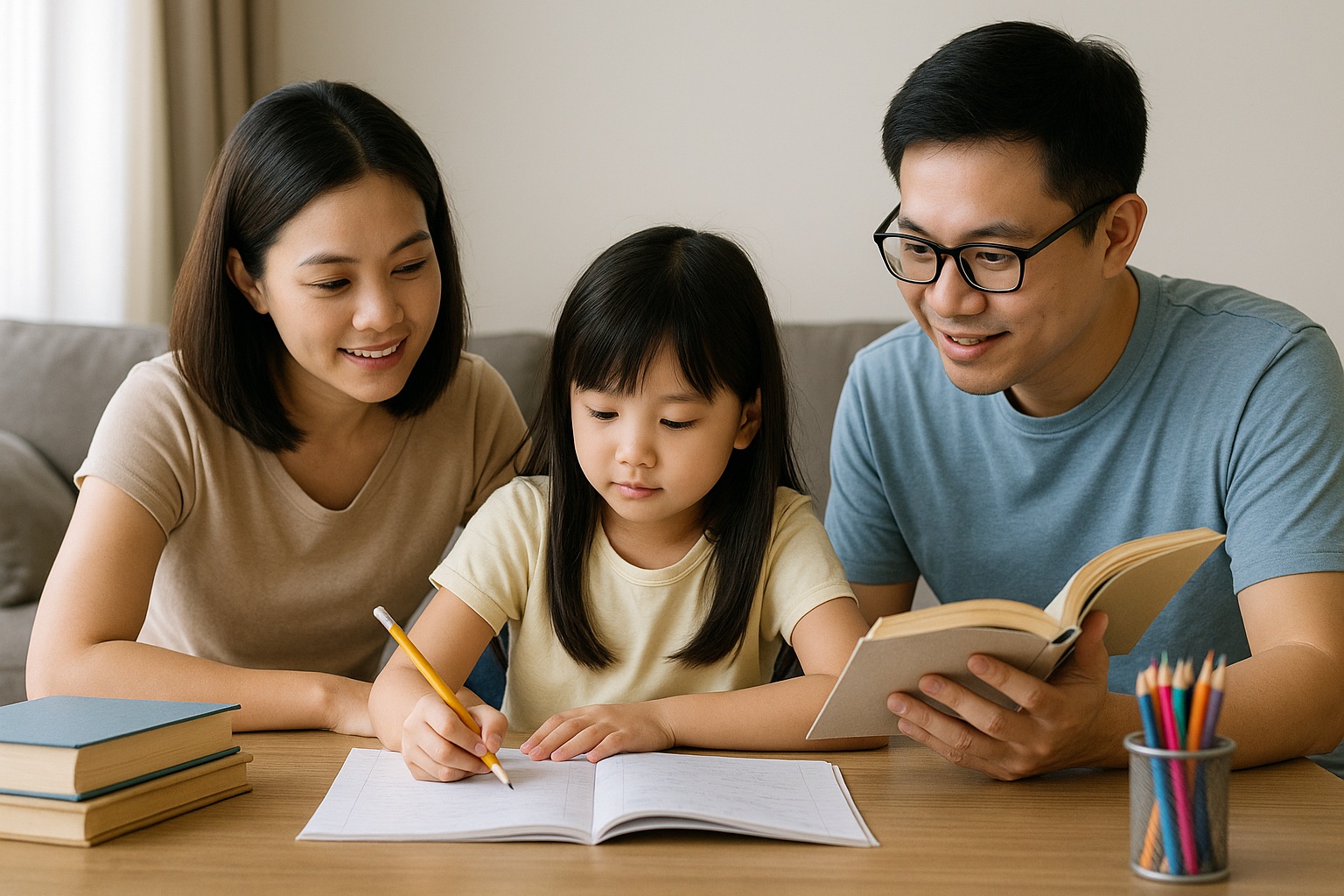
The Singapore primary school curriculum is designed to build strong academic foundations while supporting holistic development. Whether your child is just entering Primary 1 or progressing through the levels, understanding what they learn and how they are assessed can help you support their learning journey meaningfully—without unnecessary stress or over-reliance on tuition.
1. Overview of Subjects
Primary school students in Singapore study the following core subjects:
Primary 1 and 2
- English Language
- Mother Tongue Language (Chinese, Malay, Tamil)
- Mathematics
- Social Studies, Music, Art, and PE
- PAL (Programme for Active Learning)
From Primary 3 Onward
- Science is introduced
- More in-depth assessment for academic subjects
The curriculum focuses on skills like communication, critical thinking, and character development, not just content mastery.
2. Overview of Subject-Based Banding in Primary School (P5–P6)
Starting in Primary 5, students can take core subjects—English, Mathematics, Science, and Mother Tongue—at either Standard or Foundation level, based on their strengths and performance in Primary 4 exams.
Schools assess each child’s progress at the end of Primary 4 and recommend a level through parental option forms. Adjustments may be made in Primary 5 if needed.
Students who pass three or more subjects typically take all four at Standard level. High proficiency in Mother Tongue may qualify them for Higher Mother Tongue in Primary 6.
3. Continuous Assessment vs. Exams
MOE has moved towards reducing high-stakes exams and increasing continuous assessment:
- No weighted assessments or exams in Primary 1 and 2. Teachers use bite-sized assessments and observations to track progress.
- From Primary 3 onward: Schools may include weighted assessments and semestral exams.
- Primary 6: Students sit for the PSLE (Primary School Leaving Examination), which helps place them in suitable secondary schools.
This approach helps reduce stress and allows students to develop learning habits at their own pace.
4. How to Support Learning Without Tuition
Parents can create a home environment that encourages curiosity and consistent effort:
- Read together: Daily reading builds vocabulary and comprehension naturally.
- Use everyday math: Involve your child in measuring ingredients, calculating change, or telling time.
- Ask open-ended questions: Encourage your child to explain what they learned in school and how they solved problems.
- Use free resources: Leverage MOE’s Student Learning Space (SLS) and school-recommended websites for revision.
- Keep a routine: Have regular short study sessions instead of long, stressful ones. Include breaks and physical activity.
- Focus on progress: Celebrate effort and improvement rather than just marks or comparisons with others.
Frequently Asked Questions (FAQ)
1. Is tuition necessary for my child to do well in primary school?
No. With a supportive home environment, many children do well without tuition. Focus on consistent practice, encouragement, and communication with teachers.
2. What is the difference between Standard and Foundation subjects?
Foundation subjects have a reduced curriculum load and pace. They’re meant to help students grasp key concepts more comfortably and build confidence.
3. How do I know if my child is coping with the curriculum?
Speak with your child’s teachers during PTM (Parent-Teacher Meetings) or contact the school if you notice persistent stress or academic struggles.
4. What can I do at home to help without being a teacher?
Be a learning partner. Show interest in their school life, provide a quiet study space, help them stay organised, and encourage resilience.
Conclusion
The Singapore primary school curriculum is evolving to focus on the whole child—academically, socially, and emotionally. By understanding the structure, assessments, and FSBB, parents can support their children effectively and build a strong, confident foundation for lifelong learning—without excessive pressure or over-scheduling.
It takes a village to raise a child !
Join our WhatsApp Groups or Facebook Group to interact with parents about student care in Singapore..