Morning Sickness Meal System: Safe Foods, Snack Timing and Hydration Hacks
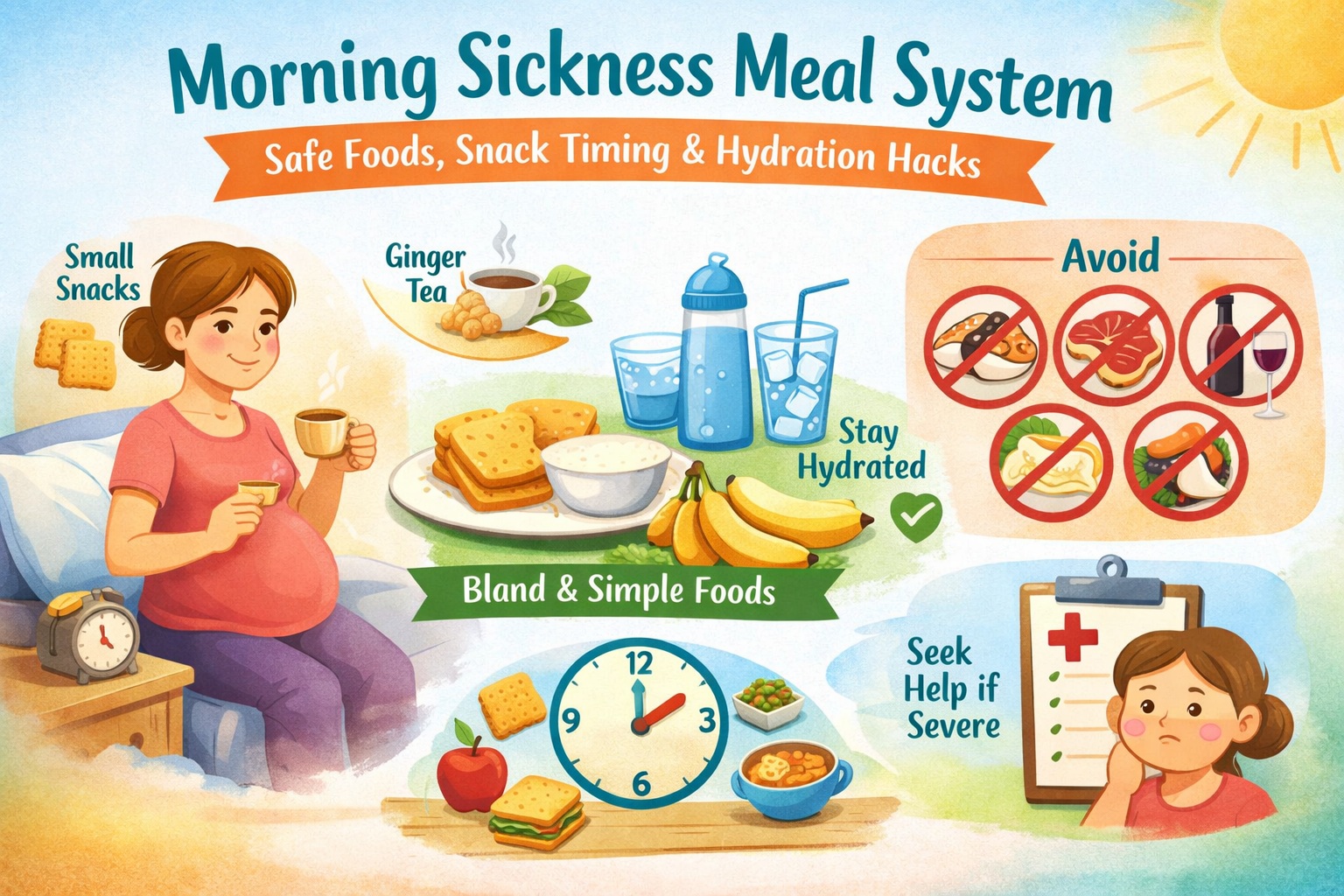
Morning Sickness Meal System: Safe Foods, Snack Timing and Hydration Hacks
Morning sickness can make even simple eating feel like a full-time job. The good news is that many people feel better with a practical food system rather than trying to force three normal meals a day. A gentler routine often means eating small amounts, choosing easy foods, drinking differently, and avoiding an empty stomach for too long.
What morning sickness usually feels like
Morning sickness can happen at any time of day, not just in the morning. It often starts early in pregnancy and may improve by the second trimester, though some people have symptoms for longer. For many, nausea gets worse with an empty stomach, strong smells, tiredness, dehydration, or large heavy meals.
The basic meal system that often works best
Instead of aiming for big meals, think in terms of a steady “mini-meal and sip” rhythm across the day.
- Eat a small snack before getting out of bed if mornings are the worst.
- Have something light every 2 to 3 hours.
- Choose bland or simple foods first if richer foods trigger nausea.
- Try adding a little protein when you can tolerate it.
- Drink in small frequent amounts instead of taking large gulps.
The goal is not a perfect diet on your worst days. The goal is to keep some food and fluids going in, reduce nausea triggers, and prevent the stomach from becoming completely empty.
Safe foods that are often easier to tolerate
Pregnancy-safe foods that many people tolerate better during nausea include:
- Dry toast, crackers, rice cakes, plain biscuits
- Bananas, applesauce, plain rice, noodles, pasta
- Plain porridge or oatmeal
- Boiled or baked potatoes
- Yoghurt, if dairy is tolerated and it is pasteurised
- Nut butters on toast or crackers, if tolerated
- Scrambled or fully cooked eggs
- Simple sandwiches with fully cooked fillings
- Soup, if warm smells are not a trigger
- Cold foods, if hot foods smell too strong
Some people do better with dry foods first. Others tolerate cold foods more easily because they smell less. You do not need to force “healthy-looking” foods if they make you gag. Start with what stays down.
Foods and drinks that may make nausea worse
- Large meals
- Greasy, fried, or very fatty foods
- Spicy foods, if they trigger symptoms
- Very strong smells
- An empty stomach for long periods
- Large amounts of fluid taken quickly
Tiredness can also make nausea worse, so eating and resting patterns often work together.
Snack timing: a sample day that feels more manageable
Before getting out of bed
Keep plain crackers, dry toast, or a simple biscuit by the bed. Eat a few bites, then get up slowly.
Early breakfast
Choose something light such as toast, oatmeal, a banana, plain cereal, or yoghurt.
Mid-morning snack
Try crackers with nut butter, fruit, or a small sandwich.
Lunch
Keep it simple: rice, noodles, baked potato, soup, toast, or a small portion of a plain meal.
Mid-afternoon snack
Eat before nausea builds again. Plain biscuits, fruit, yoghurt, or toast may help.
Evening meal
Have a smaller meal instead of a heavy dinner. Some people tolerate cold or room-temperature foods better at this time.
Before bed
A light snack can help prevent waking up nauseated from an empty stomach.
Hydration hacks that often help
Dehydration can make nausea worse, and pregnancy increases fluid needs. Many people find that how they drink matters as much as what they drink.
- Take small sips often instead of drinking a full glass at once.
- Try cold drinks, ice chips, or ice lollies if liquids feel easier cold.
- Use a straw if that helps you sip more slowly.
- Try water with lemon, a little cordial, or a splash of juice if plain water tastes bad.
- Separate food and fluids a little if drinking with meals makes nausea worse.
- Keep a bottle nearby and sip throughout the day instead of catching up later.
A general pregnancy water goal is often around 8 to 12 cups a day, but when nausea is bad, the first step is simply to keep fluids going in however you can tolerate them.
Can ginger help?
For some pregnant women, ginger can help reduce nausea. This may be ginger tea, ginger candies, ginger biscuits, or ginger made with real ginger. It does not work for everyone, but it is a common non-drug option worth trying if your doctor says it is suitable for you.
Important pregnancy food safety reminders
When you are choosing easy foods, make sure they are also safe in pregnancy. Avoid:
- Raw or undercooked meat and poultry
- Raw shellfish and some raw seafood
- Unpasteurised milk and dairy products
- Soft cheeses that are not pregnancy-safe
- Pâté
- High-mercury fish such as shark, swordfish, and marlin
- Alcohol
Wash fruits, vegetables, and salads well, and choose fully cooked foods when in doubt.
What if even small meals are hard?
If solids feel impossible, try working backwards from the easiest wins:
- Small sips of fluid
- Ice chips or cold drinks
- Dry crackers or plain toast
- Simple carbs like rice, pasta, or potatoes
- Then add protein when you can
Do not wait too long to seek help if you are struggling to keep down both food and fluids.
When to call a doctor
Contact your doctor, midwife, or obstetric provider if:
- You cannot keep food or fluids down
- You feel dizzy, faint, or very weak
- You pass very little urine or your urine is dark
- You are losing weight
- You are vomiting frequently or symptoms are affecting daily life
- Your nausea or vomiting starts later than expected or you also have pain or fever
Severe pregnancy vomiting can become hyperemesis gravidarum and may need treatment, sometimes including medication or IV fluids.
The bottom line
The best morning sickness meal system is usually simple: do not let your stomach stay empty for too long, keep portions small, choose bland pregnancy-safe foods, add protein when possible, and drink in small frequent amounts. On rough days, “good enough” nutrition is still progress. The priority is getting through the day safely and comfortably while protecting hydration.
FAQ
What should I eat first thing in the morning for morning sickness?
Many people do best with a small dry snack before getting out of bed, such as crackers, toast, or a plain biscuit.
How often should I eat with morning sickness?
Small meals or snacks every 2 to 3 hours often work better than three large meals.
What fluids are easiest to tolerate?
It varies, but many people tolerate cold drinks, ice chips, or lightly flavoured water in small sips better than large glasses of plain water.
Can ginger help pregnancy nausea?
It can help some women and is commonly used as a non-drug option, though response varies.
When is morning sickness serious?
It needs medical review if you cannot keep fluids down, have dehydration symptoms, lose weight, or feel very unwell.
It takes a village to raise a child !
Join our Facebook Group For 2026 SG Mummies or Facebook Group 2027 SG Mummies
Link to our WhatsApp groups can also be found in the Facebook group
Subscribe to Our Newsletter to get important information about pregnancy and parenting.